In 2025 I finished two films, both coming out of the project Virtual Sanctuary for Fertilizing Mourning. Walking and Singing Endangered Worlds is a feature film of 00:97:00 and has a shorter version, Asking Trees, Birds, and Ghosts about Future Images and Sound, which lasts 00:30:00. I made them both thanks to the support of Pixel, Bytes + Film and the Austrian Federal Ministry for Housing, Arts, Culture, Media and Sport.
En 2025 terminé dos películas, ambas derivadas del proyecto Santuario Virtual para un Duelo Fertilizante. Caminando y Cantando Mundos en Peligro es un largometraje de 00:97:00 y tiene una versión más corta, Preguntando a Árboles, Pájaros y Fantasmas sobre Imágenes y Sonidos del Futuro, que dura 00:30:00. Ambas fueron realizadas gracias al apoyo de Pixel, Bytes + Film y el Ministerio Federal de Vivienda, Arte, Cultura, Medios de Comunicación y Deporte de Austria.
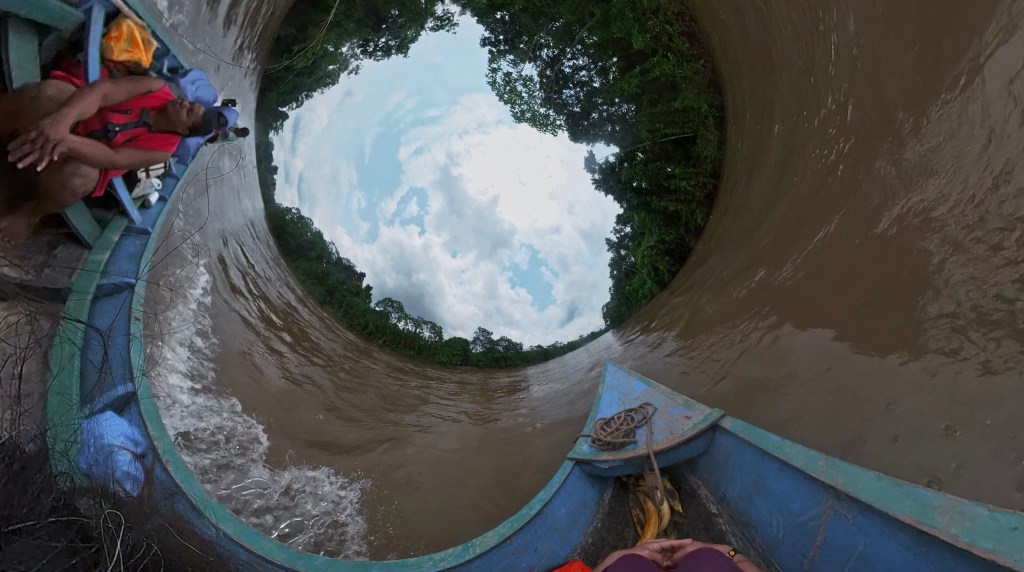
Walking and Singing Endangered Worlds / Caminando y Cantando Mundos en Peligro
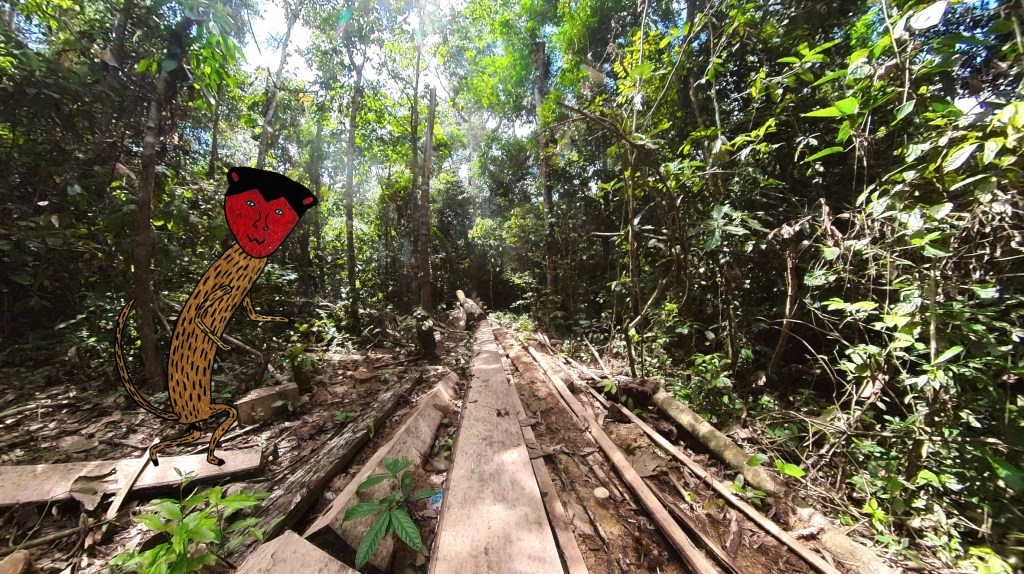
Walking and Singing Endangered Worlds is a poetic exploration of 360-degree footage recorded while walking through the Peruvian Amazon, in territories of Indigenous communities where leaders and environmental defenders were recently murdered. The experimental film was created by delving into the possibilities of editing 360-degree video, combining traditional animation techniques and collaborating with sound artists, poets and Indigenous painters. The gathered visual and sonic offerings aim to honor the rich complexity of the entangled sentient networks they depict. The forest, its spirits and ethical codes are introduced by the artists Lastenia Canayo and Enrique Casanto, whose voices weave this collective homage to life’s regenerative capacities and the beings, human and non-human, that sustain them.
Caminando y Cantando Mundos en Peligro es una exploración poética de imágenes de 360 grados grabadas durante una caminata por la Amazonía peruana, en territorios de comunidades indígenas donde líderes y defensores ambientales fueron asesinados recientemente. Esta película experimental se creó explorando las posibilidades de la edición de video de 360 grados, combinando técnicas de animación tradicionales y colaborando con artistas sonoros, poetas y pintores indígenas. Las propuestas visuales y sonoras reunidas buscan honrar la rica complejidad de las redes de sentimientos entrelazadas que representan. El bosque, sus espíritus y códigos éticos son presentados por los artistas Lastenia Canayo y Enrique Casanto, cuyas voces tejen este homenaje colectivo a las capacidades regenerativas de la vida y a los seres, humanos y no humanos, que las sustentan.

Reparto / Cast: Beatríz Pío, Víctor Pío, Emilio Maraví, Nelvi Bolívar, Rodrigo and Jefferson Sinto, Jhover Meléndez
Director: Eliana Otta, Editores / Editors: Eliana Otta, Nuno Cassola, Diseño sonoro / Sound Design: Lisa-Maria Hollaus , Color correction: Nuno Cassola
Música / Music: Coral Rojo, Edith Ramos singing “Canto Ave” and “Ojo Mundo”, written by Tilsa Otta, Yorgia Karidi, Zosia Holubowska, Yeni Ccorahua singing a text written by Imayna Caceres.
Voces / Voice Overs: Lastenia Canayo, Enrique Casanto, Hernando Chindoy, Ana Cristina Rodríguez, Inti Chindoy Rodríguez, Marcela Torres, Susana Ojeda, Yeni Ccorahua, Imayna Caceres (Bloco Decolonial Feminista) voicing texts written by Imayna Caceres
Paintings: Lastenia Canayo and Enrique Casanto Animations: Diego Vizcarra and Martin Aramburu
Apoyo de / Support by: Pixel, Bytes + Film (BMKWOES Austria)
Year: 2025, Genre: Experimental, Documentary, Countries of Production Peru, Austria, Duration: 00:97:00
Language: Spanish, Ashaninka, Kakataibo, English, Subtitles: English, Format: Digital 4K, Sound format: Stereo, Distribution: Pai Films
Asking Trees, Birds, and Ghosts about Future Images and Sound / Preguntando a Árboles, Pájaros y Fantasmas sobre Imágenes y Sonidos Futuros
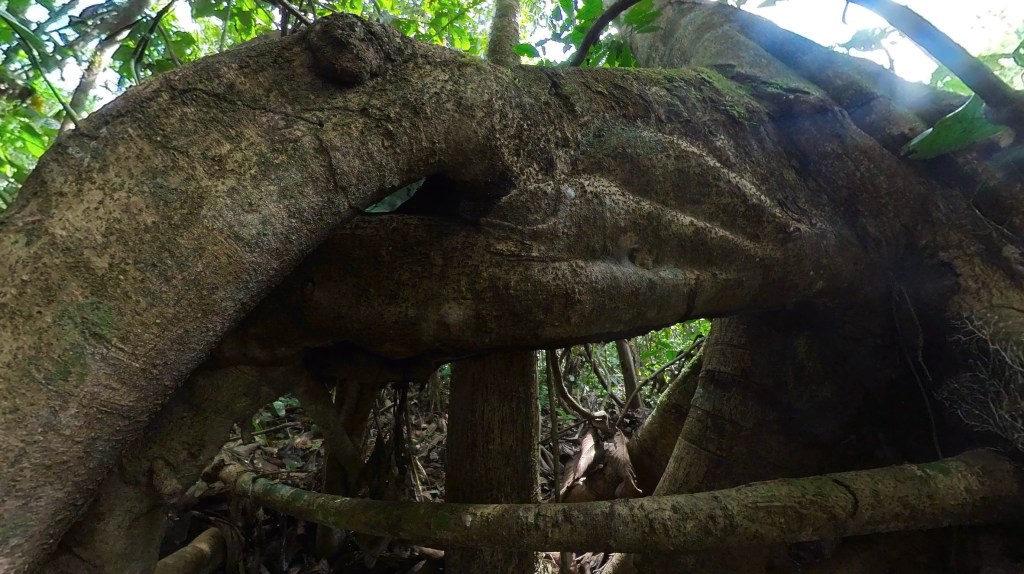
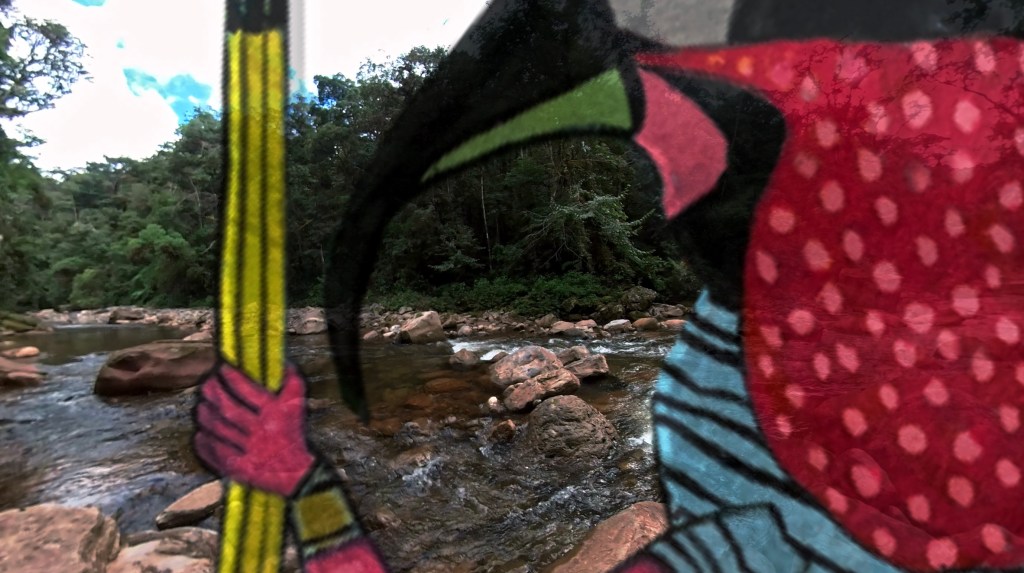
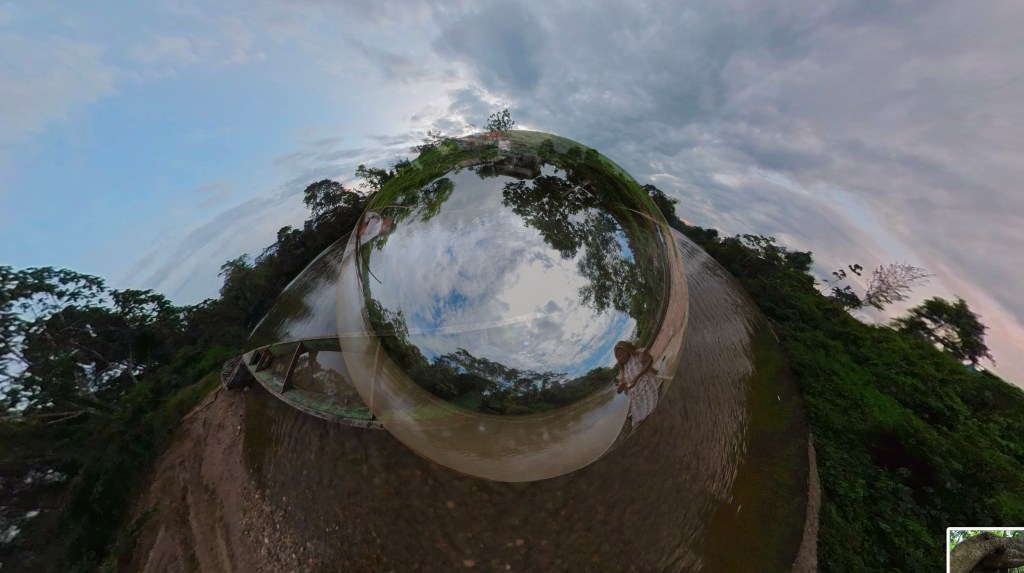
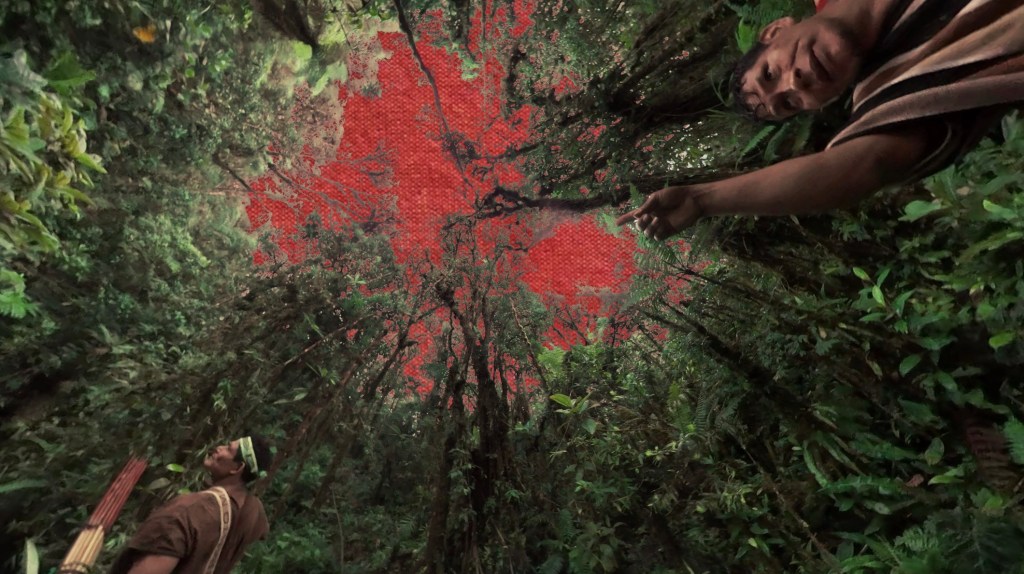
Asking Trees, Birds, and Ghosts about Future Images and Sound / Preguntando a Árboles, Pájaros y Fantasmas sobre Imágenes y Sonidos Futuros
Asking Trees, Birds, and Ghosts about Future Images and Sound is a poetic exploration of 360-degree video material recorded in the Peruvian Amazon, in Indigenous communities where leaders and environmental defenders were recently murdered. By delving into the possibilities of editing 360-degree video, combining animation techniques and collaborating with sound artists and poets, I created an experimental film. The original footage has been now taken in unexpected audiovisual directions, aiming to honor the rich complexity of the entangled sentient networks it depicts and to create a collective homage to life’s regenerative capacities and the beings, both human and non-human, that sustain them.
Preguntando a Árboles, Pájaros y Fantasmas sobre Imágenes y Sonidos Futuros es una exploración poética de material de video de 360 grados grabado en la Amazonía peruana, en comunidades indígenas donde líderes y defensores del medio ambiente fueron asesinados recientemente. Al explorar las posibilidades de la edición de video de 360 grados, combinar técnicas de animación y colaborar con artistas sonoros y poetas, hice esta película experimental. El material original ha sido llevado en direcciones audiovisuales inesperadas, tratando de honrar la rica complejidad de las redes sensible entrelazadas que retrata y de crear un homenaje colectivo a las capacidades regenerativas de la vida y a los seres, tanto humanos como no humanos, que las sustentan.
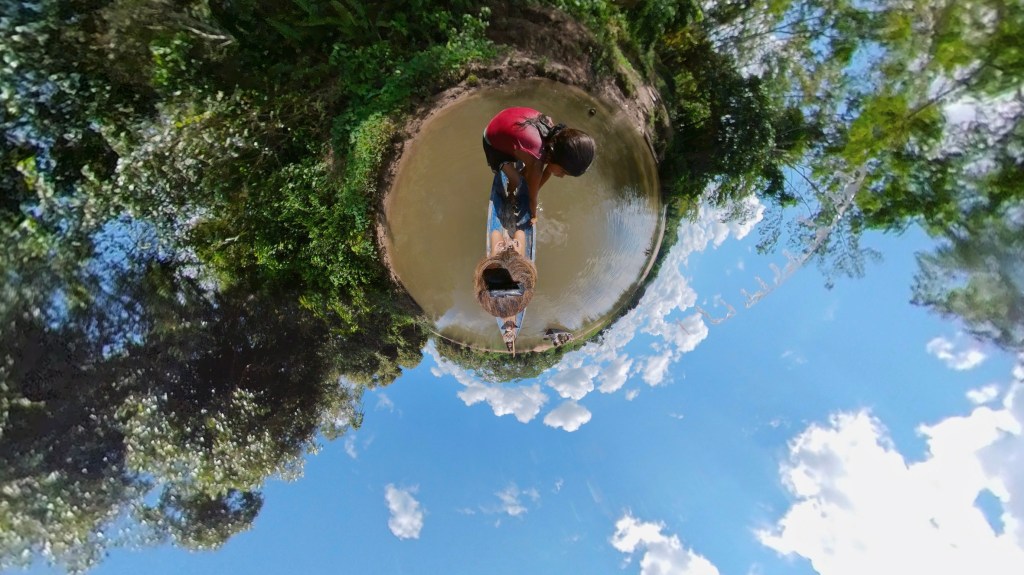

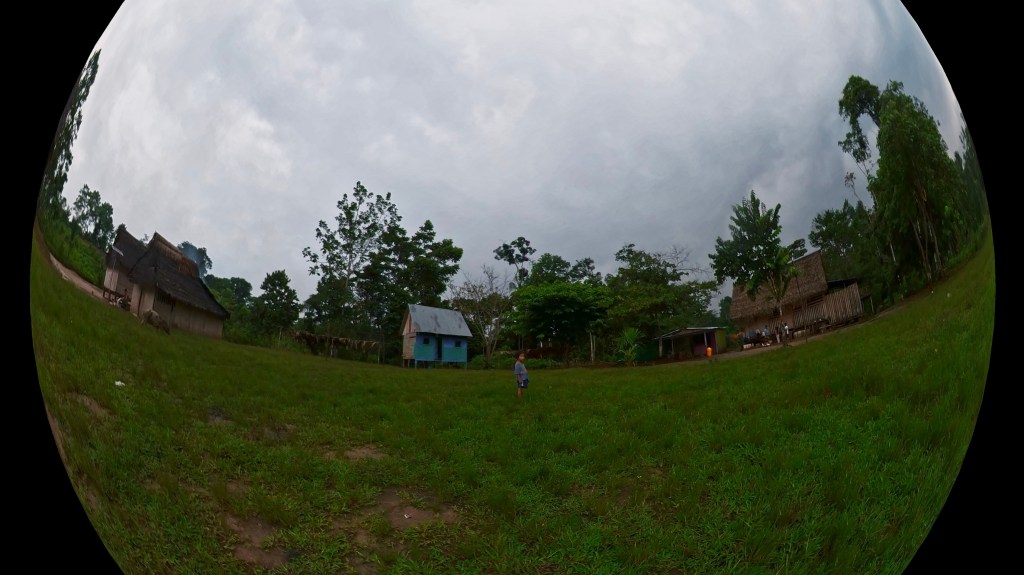
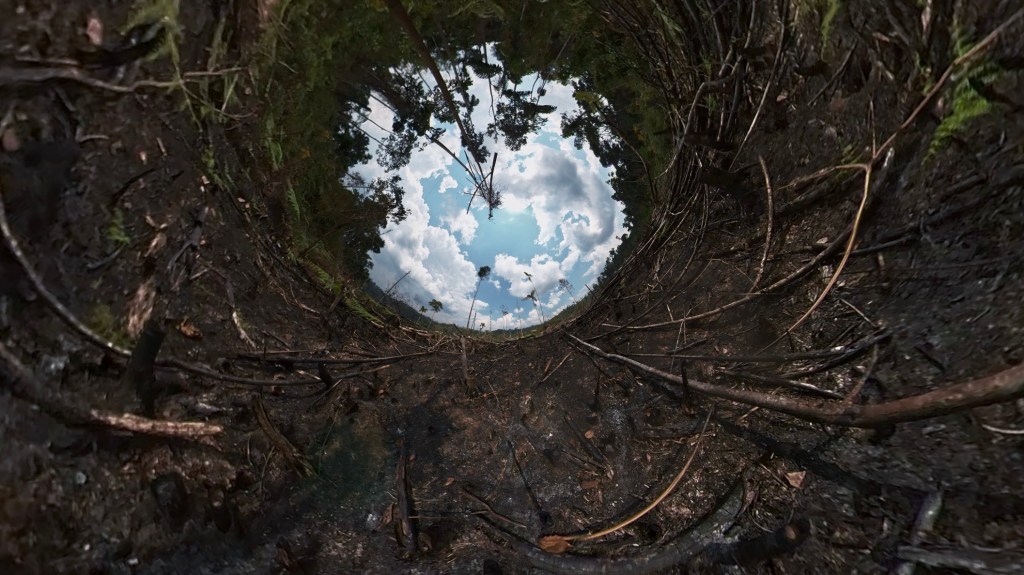
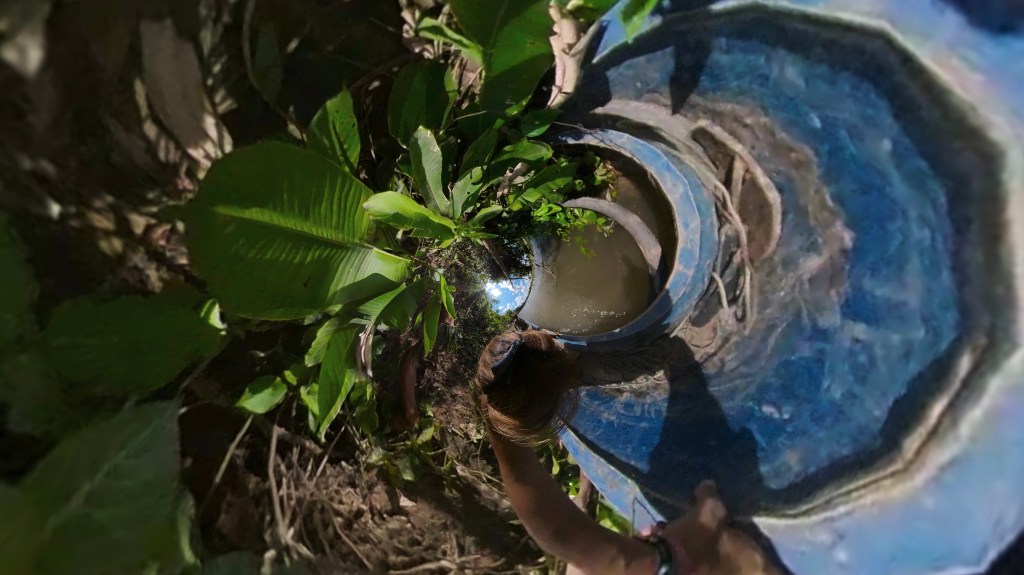
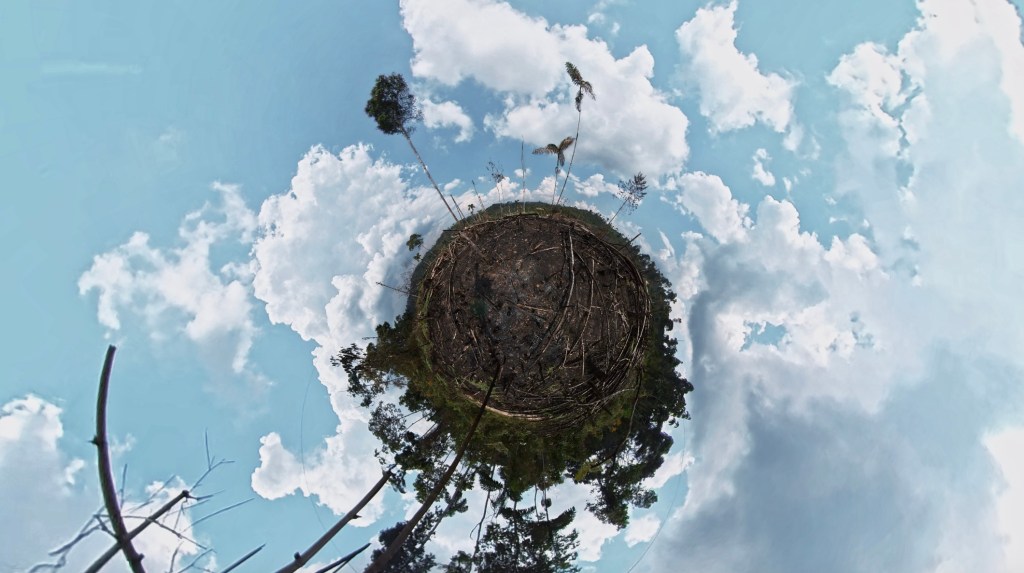
Between 2021 and 2023, I worked on «Virtual Sanctuary for Fertilizing Mourning,» an artistic project developed through drawings, audio pieces, 360-degree videos, and a VR application now hosted on a website dedicated to recently slain Indigenous leaders and environmental activists from the Peruvian Amazon. The website is www.lutoverde.com, and the project became possible through the funding provided by the German initiative «Driving the Human,» after it was selected through an open call. For this project, I traveled several times to four Indigenous communities that agreed to share their stories and showcase their territories. Alongside them and a team, we produced 35 short films from countless hours of material recorded while wearing a 360-degree camera on my head. In this way, the 360-degree videos aimed to capture the experience of my body in those spaces, as I got to know communities threatened by deforestation, drug trafficking, and land trafficking.
As an artist, I had not previously worked with technologies such as 360-degree or VR, nor did I have the budget or time to guide others in realizing my idea. The abundance of resources became accessible when I received funding after responding to an open call, but this also imposed a limited timeframe for completing the project. Some ideas were developed while others were not due to time constraints. Nevertheless, I had a substantial archive of footage that I didn’t use for the short films, material with big potential for extensive exploration and transformation. This is because 360-degree videos offer almost limitless possibilities for editing.
Since the project had a clear mission of denouncing these killings while serving as a pedagogical and informative portal into the lives of the communities, the subjective dimension of my approach was not fully explored. What I did now thanks to Pixel, Bytes and Film, is to freely delve into the gathered material, remaining open to follow its sensory possibilities, towards generating a poetic, less rational, and more experimental approach to portraying the forms of life it represents.
While my artistic work encourages critical perspectives on climate change and the current crisis the planet faces, I wanted to seize this opportunity to embrace a process of work without a predetermined message to convey. I allowed its content to be guided by the overwhelming celebration of life provided by access to the Amazonian rainforest and by the contributions of sound and vocal artists whom I invited to be part of the process. The content was also be enriched by animations made out of drawings by the Peruvian artists Enrique Casanto and Lastenia Canayo, from the Asháninka and Shipibo indigenous communities respectively. The animations were made by the Peruvian artists Diego Vizcarra and Martín Aramburu. The vocal contributions were created by: Sozia Holubowska (Austria), Imayna Caceres with Yeni Ccorahua, Susana Ojeda and Marcela Torres from Feministiches* Bloco Decolonial (Austria), Yorgia Karidi (Greece), Edith Ramos with Tilsa Otta (Peru), Coral Rojo (Chile).
The film was produced after being selected by Pixel, Bytes + Film, supported by BMKWOES Austria. It was broadcasted through the Austrian Broadcasting channel ORF and can be watched here (If in Austria).
Entre 2021 y 2023, trabajé en «Santuario Virtual para el Duelo Fertilizante», un proyecto artístico desarrollado a través de dibujos, audios, videos de 360 grados y una aplicación de realidad virtual (RV) alojada en un sitio web dedicado a líderes indígenas y activistas ambientales de la Amazonía peruana recientemente asesinados. El sitio web es http://www.lutoverde.com, y el proyecto fue posible gracias a la financiación de la iniciativa alemana «Impulsando lo Humano», tras ser seleccionado mediante una convocatoria abierta. Para este proyecto, viajé varias veces a cuatro comunidades indígenas que aceptaron compartir sus historias y mostrar sus territorios. Junto a ellas y un equipo, produjimos 35 cortometrajes a partir de incontables horas de material grabado con una cámara de 360 grados en la cabeza. De esta manera, los videos de 360 grados buscaban capturar la experiencia de mi cuerpo en esos espacios, mientras conocía comunidades amenazadas por la deforestación, el narcotráfico y el tráfico de tierras.
Como artista, no había trabajado previamente con tecnologías como 360 grados o realidad virtual, ni contaba con el presupuesto ni el tiempo para guiar a otros en la realización de mi idea. Los recursos fueron posibles cuando recibí financiación tras responder a una convocatoria abierta, pero esto también impuso un plazo limitado para completar el proyecto. Algunas ideas se desarrollaron, mientras otras no por limitaciones de tiempo. Sin embargo, contaba con un archivo de material que no utilicé para los cortometrajes, con gran potencial para una exploración y transformación exhaustivas. Esto se debe a que los videos de 360 grados ofrecen posibilidades de edición casi ilimitadas.
Dado que el proyecto tenía la clara misión de denunciar estos asesinatos, y de servir como un portal pedagógico e informativo sobre la vida de las comunidades, la dimensión subjetiva de mi enfoque no se exploró por completo. Lo que hice ahora, gracias a Pixel, Bytes y Film, es ahondar libremente en el material recopilado, explorando sus posibilidades sensoriales, para generar un enfoque poético, menos racional y más experimental para retratar las formas de vida que representa.
Si bien mi trabajo artístico promueve perspectivas críticas sobre el cambio climático y la crisis actual que enfrenta el planeta, quise aprovechar esta oportunidad para abordar un proceso de trabajo sin un mensaje predeterminado que transmitir. Dejé que su contenido se guiara por la conmovedora celebración de la vida que ofrece el acceso a la selva amazónica y por las contribuciones de artistas sonoros y vocales a quienes invité a formar parte del proceso. El contenido también se enriqueció con animaciones realizadas a partir de dibujos de los artistas peruanos Enrique Casanto y Lastenia Canayo, de las comunidades indígenas Asháninka y Shipibo, respectivamente. Las animaciones fueron realizadas por los artistas peruanos Diego Vizcarra y Martín Aramburu. Las contribuciones vocales fueron creadas por: Sozia Holubowska (Austria), Imayna Cáceres con Yeni Ccorahua, Susana Ojeda y Marcela Torres de Feministiches* Bloco Decolonial (Austria), Yorgia Karidi (Grecia), Edith Ramos con Tilsa Otta (Perú), Coral Rojo (Chile).
La película fue producida tras ser seleccionada por Pixel, Bytes + Film, con el apoyo de BMKWOES Austria. Se emitió a través del canal de radiodifusión austriaco ORF y puede verse aquí (si se encuentra en Austria).
 Eliana Otta