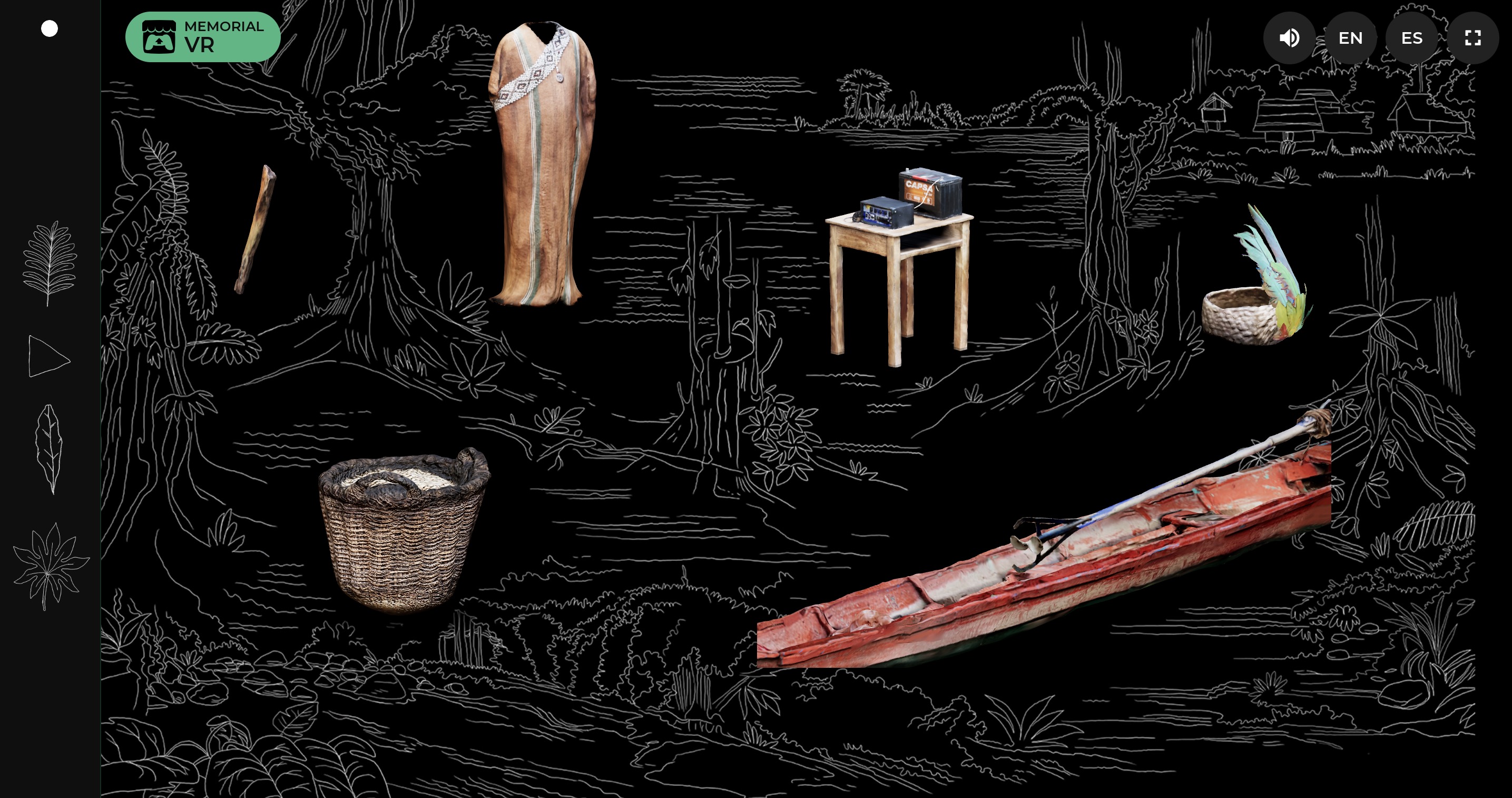
A long process of a year and a half ended up producing the website Luto Verde. This project, made thanks to having been chosen as one of the Seven Prototypes for Eco-Social Renewal by Driving the Human, was focused on stories of recently killed Indigenous leaders and environmental defenders from the Peruvian Amazon.
In a time in which we had to adapt ourselves to digital interaction and isolation, how can virtuality help us to be closer instead of more distant, more present instead of alienated? How can it help us to re enchant our relationship with the world and with others?
Since 360 videos and VR experiences are mostly utilized to speculate about the future and create fantastic scenarios, I wanted to use them to talk about the future, the present and the past of these communities. Since their accounts of lived experiences were done orally, since their lands and houses host their ancestors (especially in the Kakataibo communities, which bury them under their homes), and since the memories of the gone are lively evoked in the conversations we had, in this case this technology was used to portray a non-linear, complex, and nonwestern relationship with time.
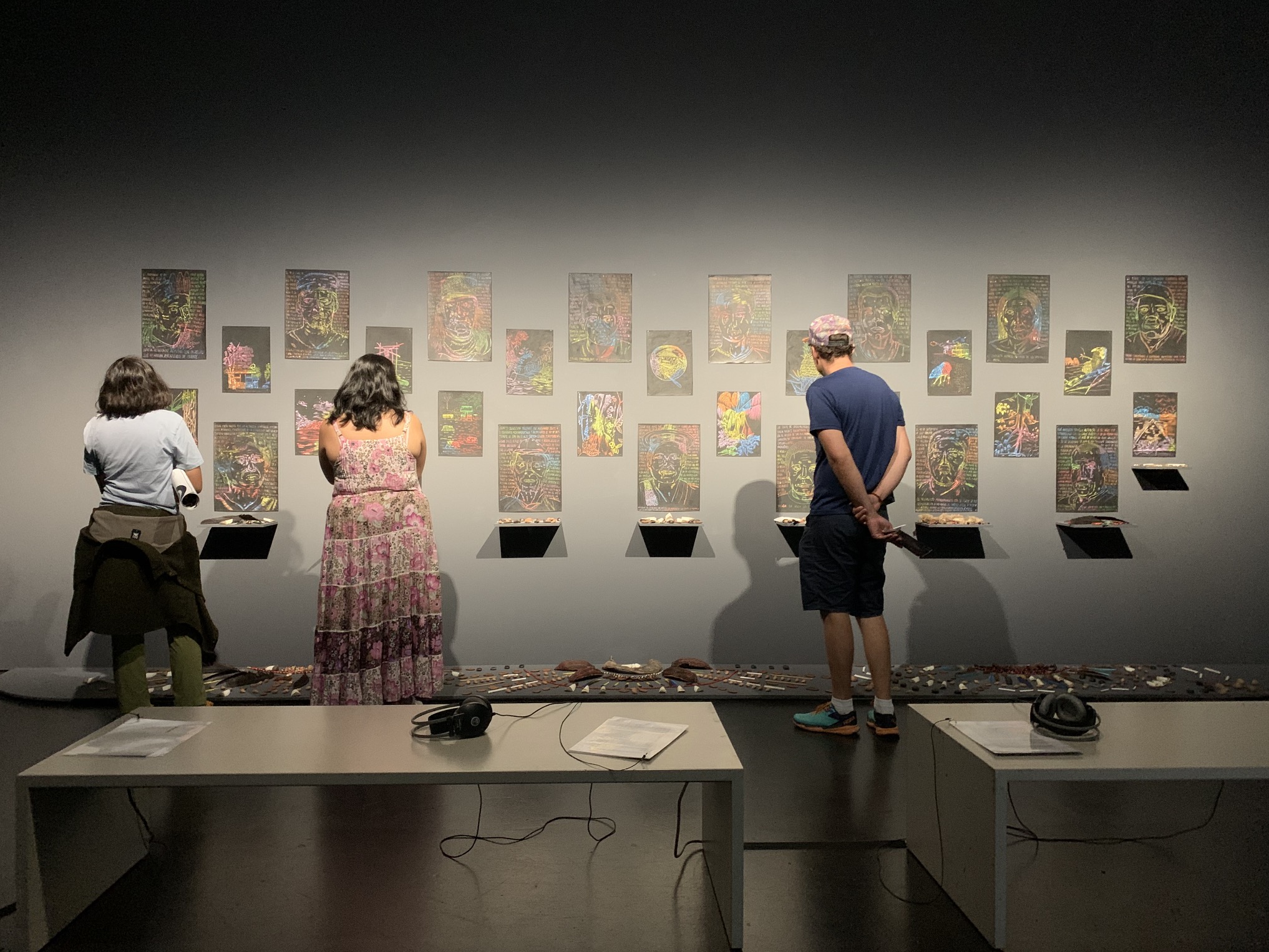
The website comprises 35 videos made with a 360 camera I used on my head, recording the territories that the threatened communities defend and showing what they wanted to share with us of their daily lives. The VR version contains 3D scans made on the territories from crucial elements of those communities and the stories shared with us and 12 videos. Iterations of the project also include drawings, sound pieces, photographs. It has been shown at the 7 Prototypes for Eco-Social Renewal at Silent Green in Berlin and at the exhibition Shared Learning in Common Ground in ZKM in Germany, Bienal de Fotografia do Porto, Portugal and participated in the Biennale Hold On For Dear Life: relationships in uncertain times.
This project was made in collaboration with the artists Nuno Cassola, Diego Vizcarra y Gabriel Alayza, directing the team of Hermanos Magia in charge of the website and the VR production.
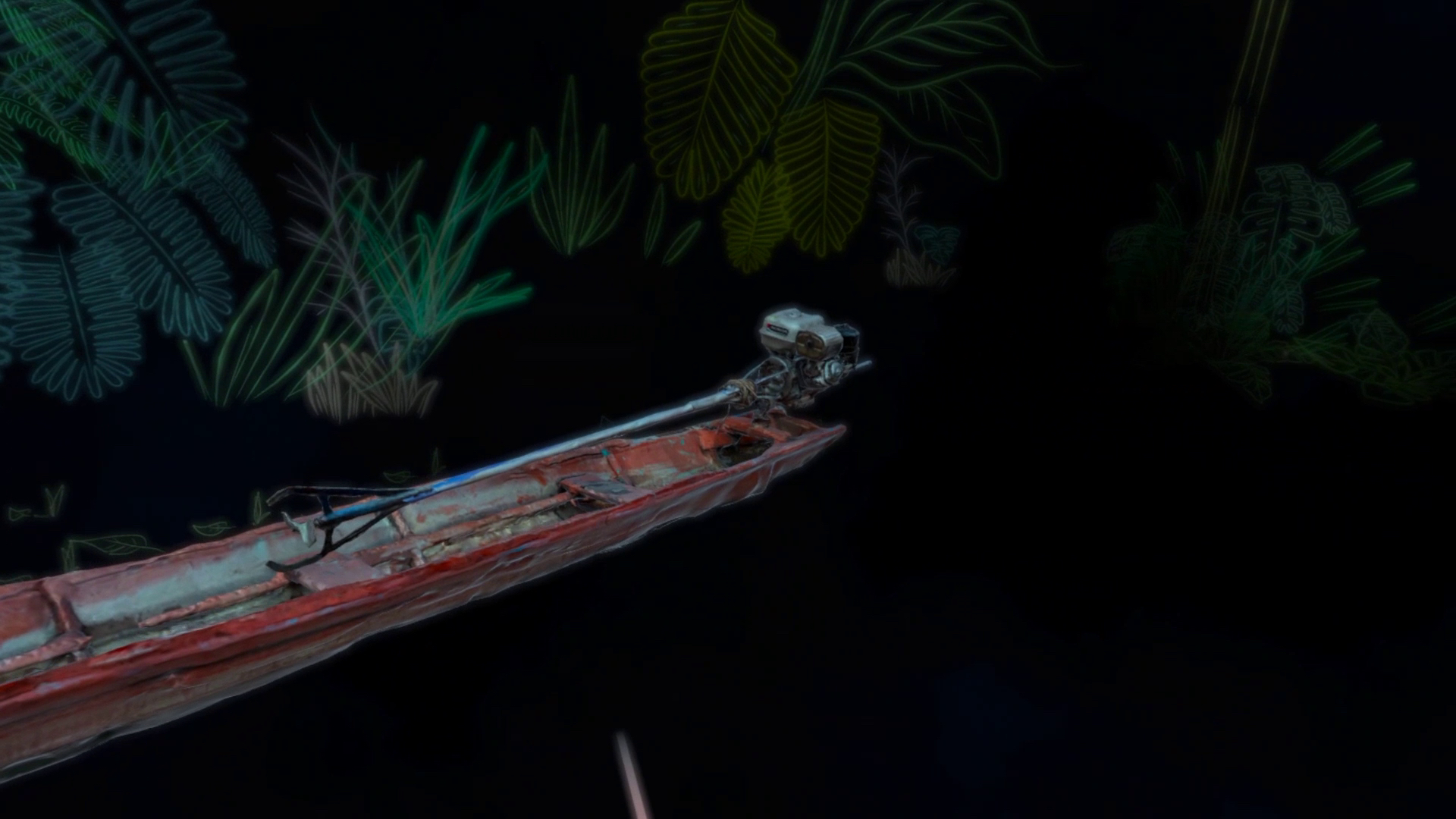
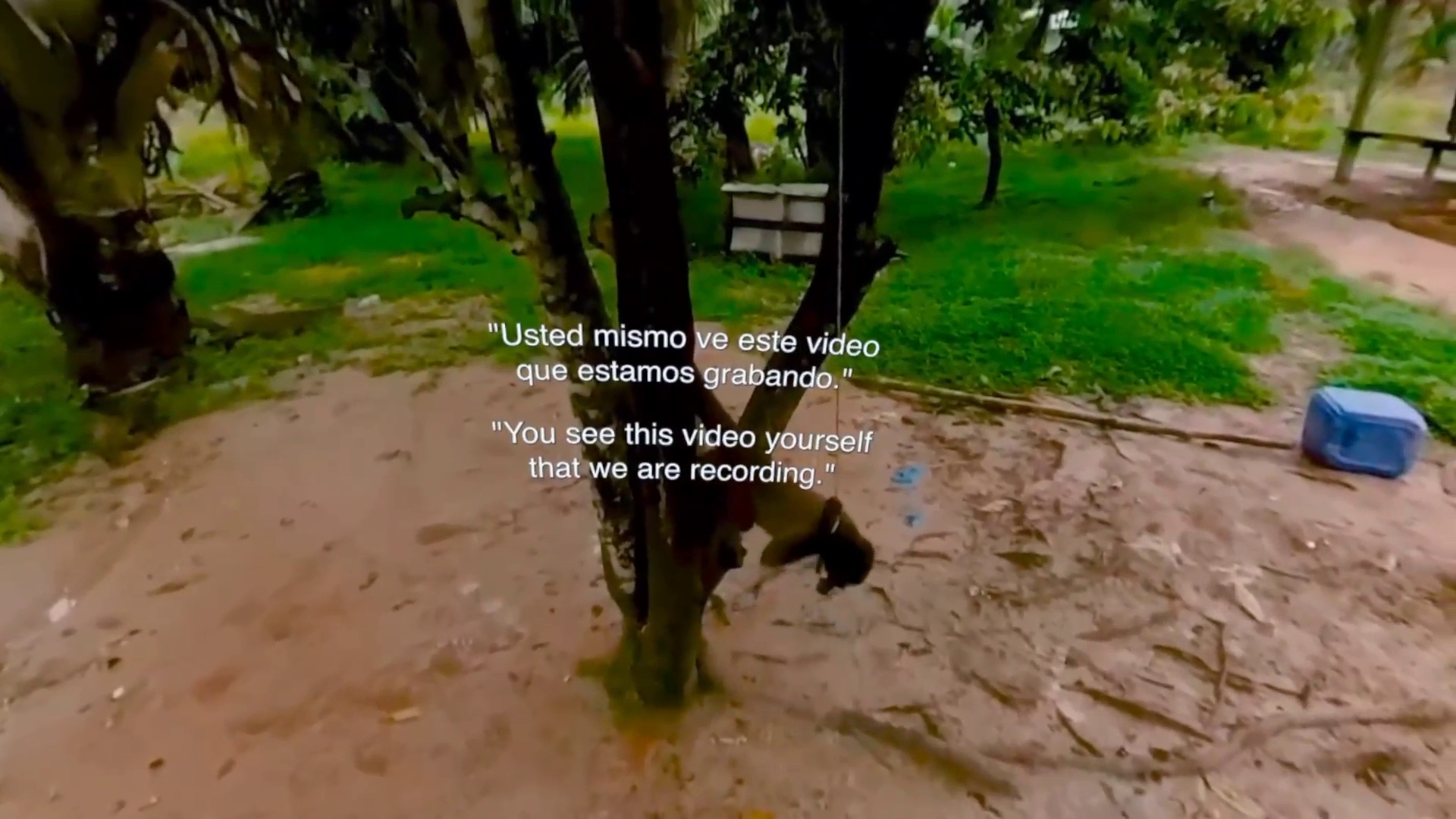
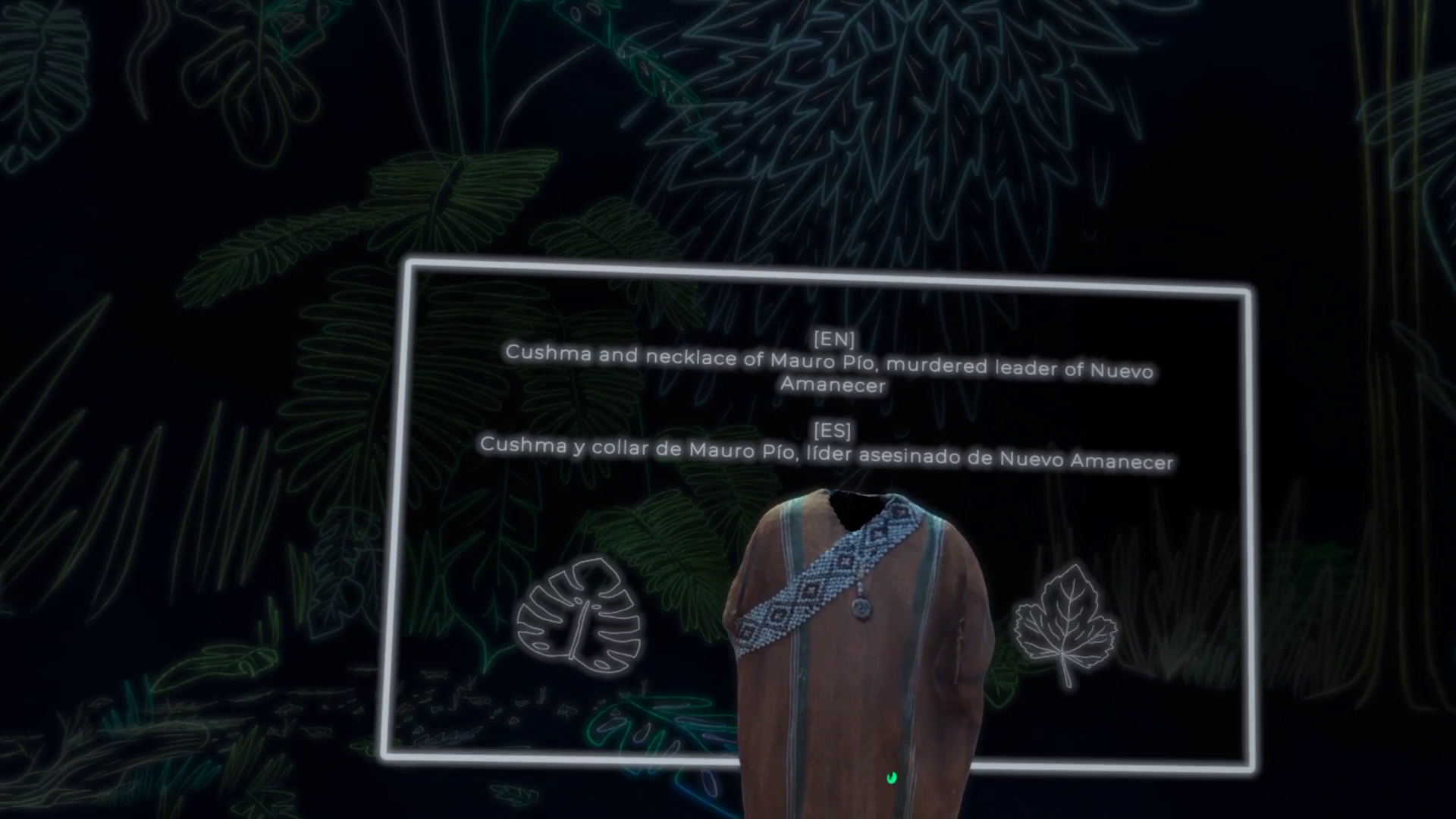
Screen captures of the VR version.
Un largo proceso de un año y medio terminó produciendo el sitio web Luto Verde. Este proyecto, realizado gracias a haber sido elegido como uno de los Siete Prototipos de Renovación Eco-Social de Driving the Human, se centró en las historias de líderes indígenas y defensores ambientales asesinados recientemente en la Amazonía peruana.
En una época en la que tuvimos que adaptarnos a la interacción digital y al aislamiento, ¿cómo puede la virtualidad ayudarnos a estar más cerca en lugar de más distantes, más presentes en lugar de alienados? ¿Cómo puede ayudarnos a reencantar nuestra relación con el mundo y con los demás?
Dado que los vídeos 360 y las experiencias de realidad virtual se utilizan principalmente para especular sobre el futuro y crear escenarios fantásticos, quería usarlos para hablar sobre el futuro, el presente y el pasado de estas comunidades. Dado que sus relatos de experiencias vividas fueron hechos oralmente, ya que sus tierras y casas albergan a sus antepasados (especialmente en las comunidades Kakataibo, que los entierran bajo sus casas), y dado que los recuerdos de los desaparecidos son evocados vivamente en las conversaciones que tuvimos. En este caso, esta tecnología se utilizó para representar una relación no lineal, compleja y no occidental con el tiempo.
El sitio web consta de 35 videos realizados con una cámara 360 que utilicé en mi cabeza, registrando los territorios que defienden las comunidades amenazadas y mostrando lo que querían compartir con nosotros de su vida cotidiana. La versión VR contiene escaneos 3D realizados en los territorios a partir de elementos cruciales de esas comunidades y las historias compartidas con nosotros y 12 videos. Las iteraciones del proyecto también incluyen dibujos, piezas sonoras y fotografías. Se ha mostrado en los 7 Prototipos para la Renovación Eco-Social en Silent Green en Berlín y en la exposición Shared Learning in Common Ground en ZKM en Alemania, Bienal de Fotografia do Porto, Portugal y participó en la Bienal Hold On For Dear Life: Relaciones en tiempos de incertidumbre.
Este proyecto se realizó en colaboración con los artistas Nuno Cassola, Diego Vizcarra y Gabriel Alayza, quien dirigió el equipo de Hermanos Magia a cargo del sitio web y la producción VR.

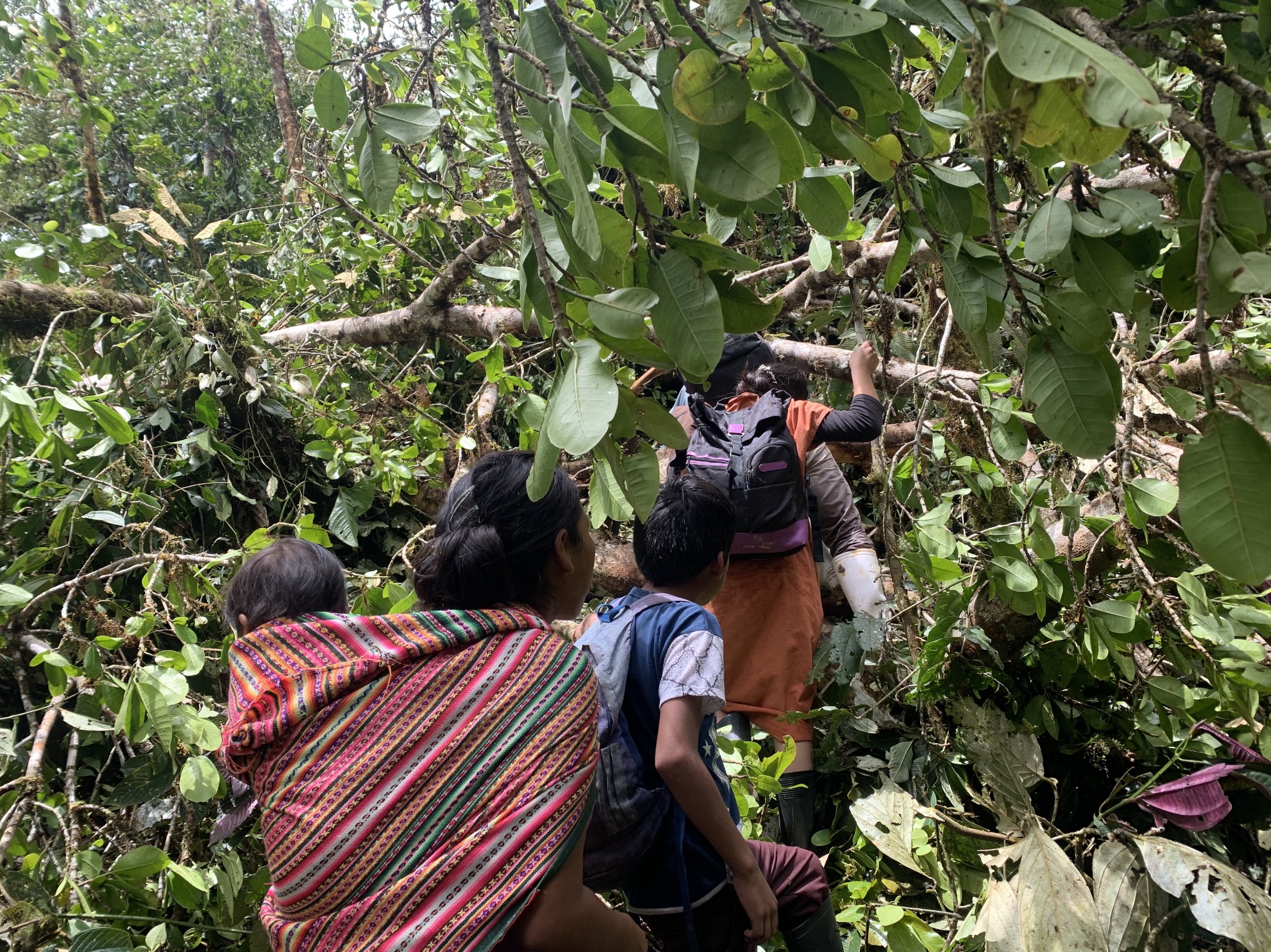
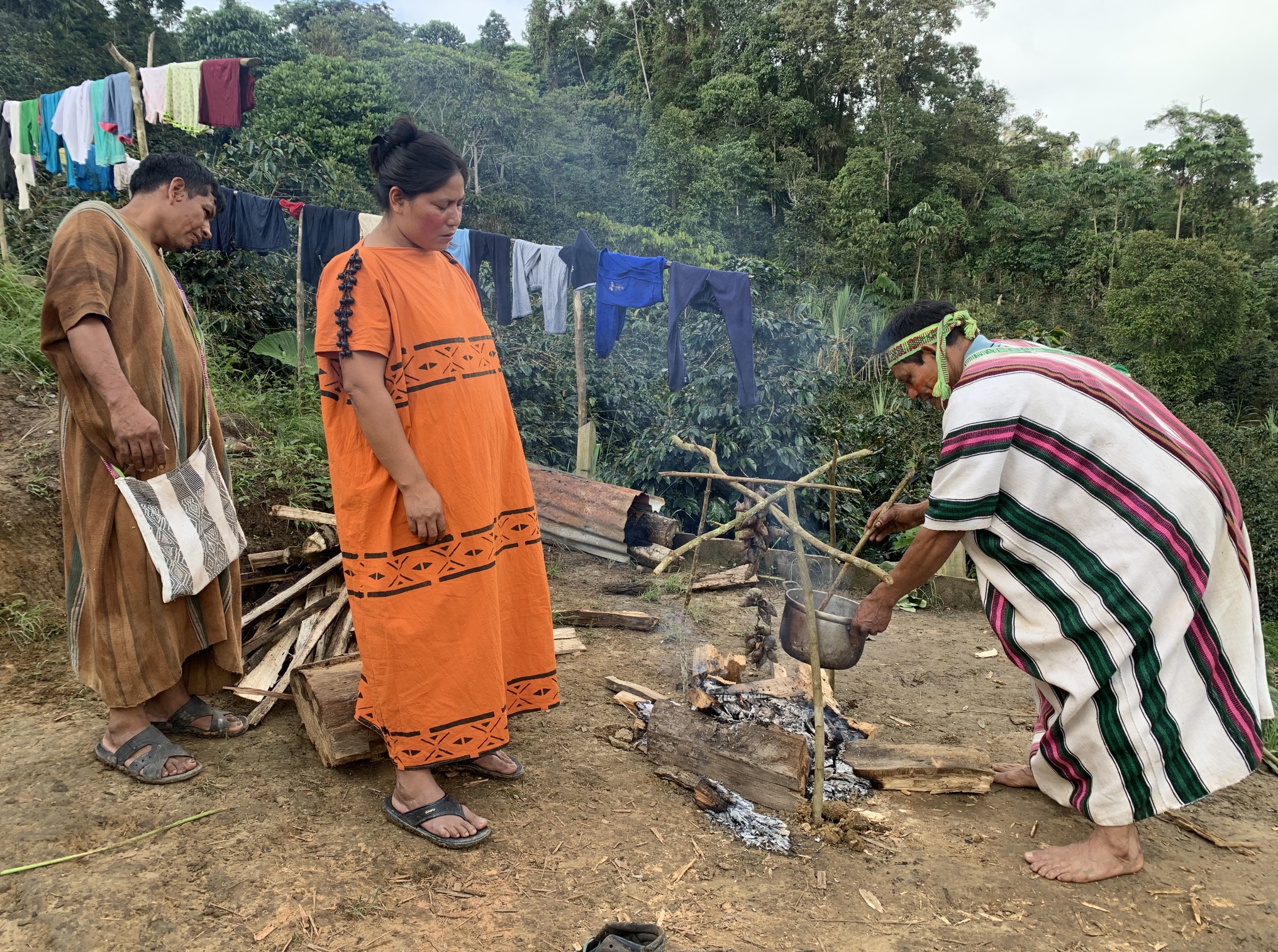
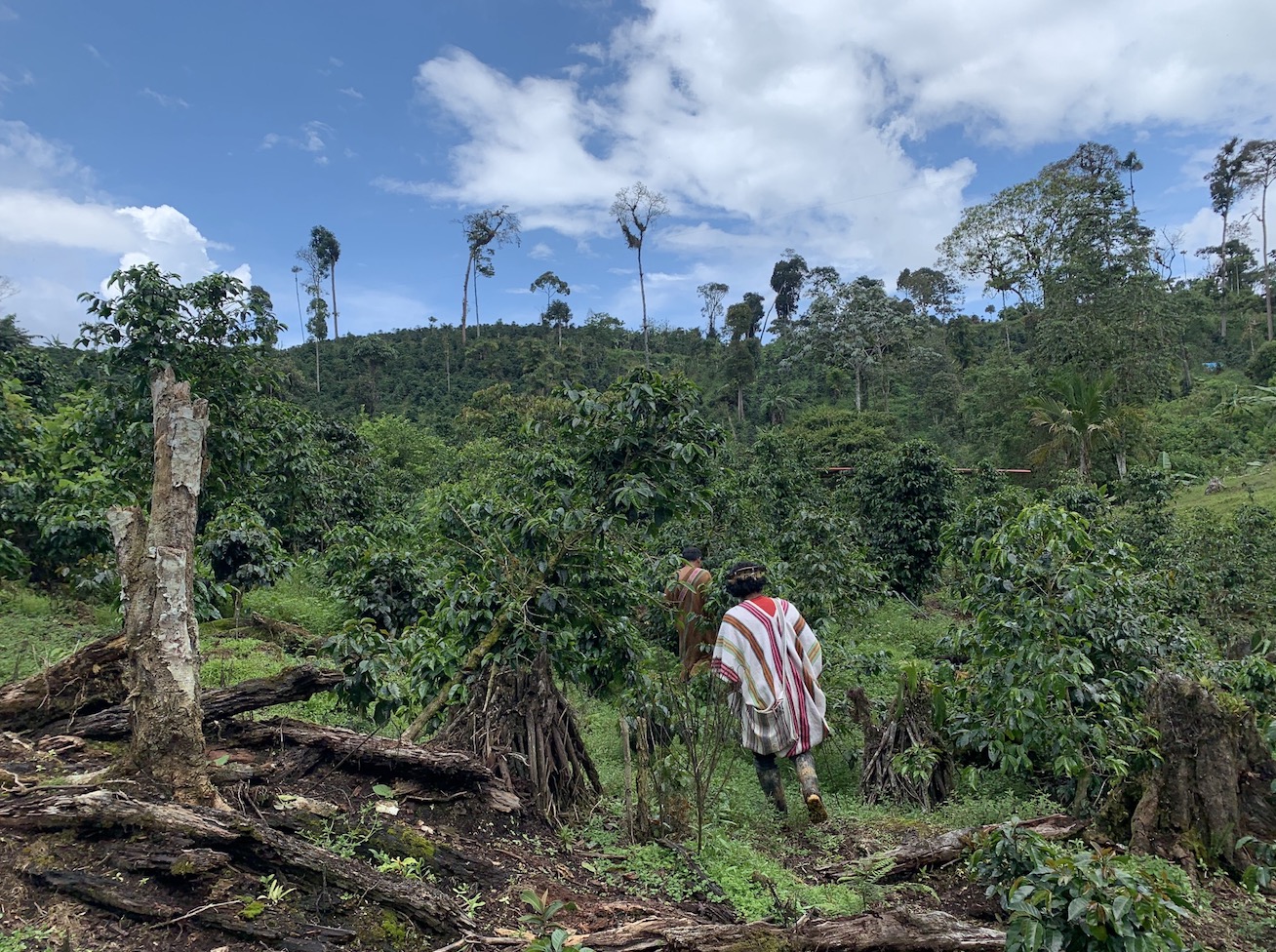
Nuevo Amanecer Hawai community, where Mauro Pío was assassinated in 2013 and Gonzalo Pío in 2020.
Comunidad Nuevo Amanecer Hawai, donde Mauro Pío fue asesinado en 2013 y Gonzalo Pío en 2020.
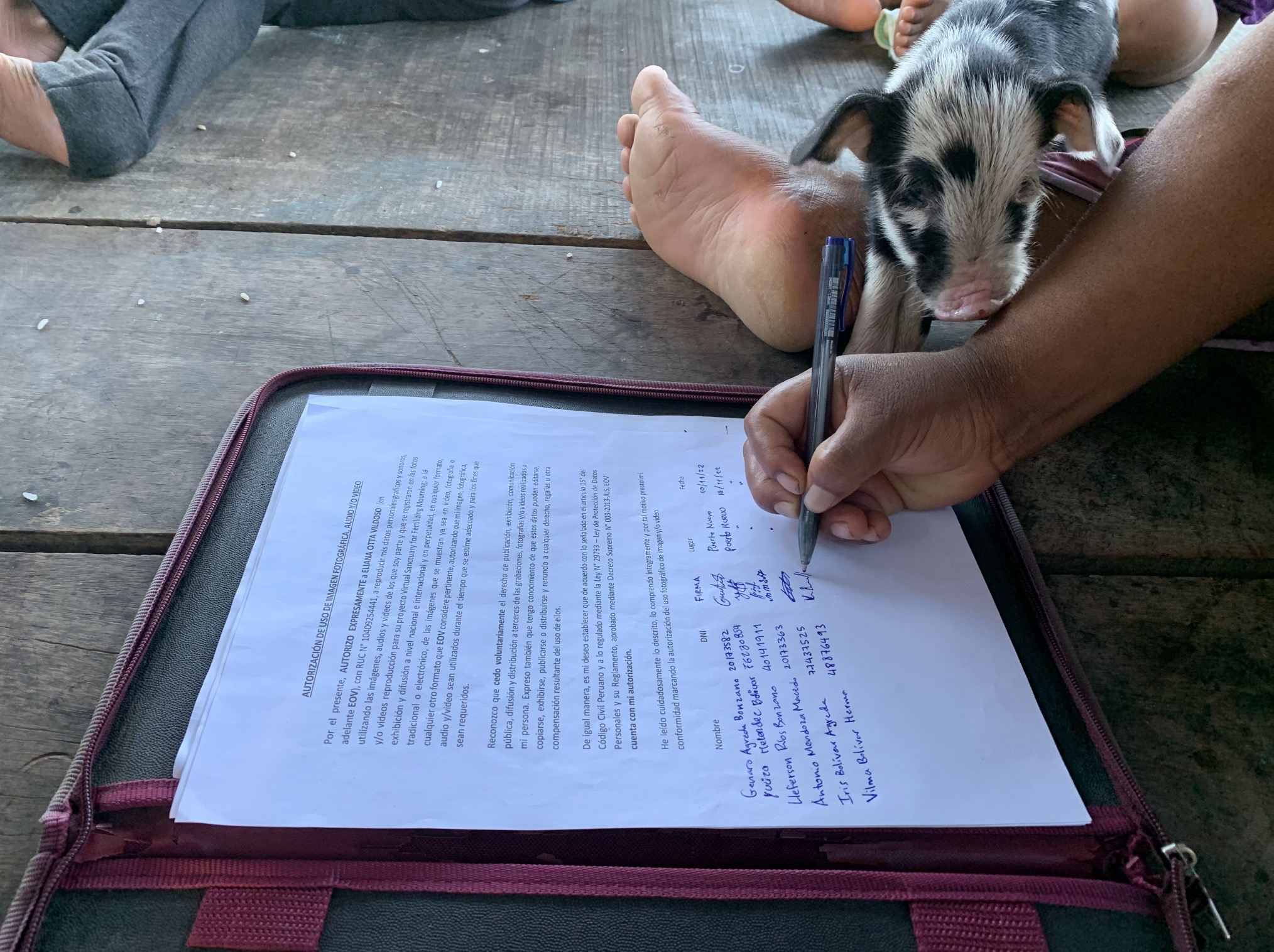
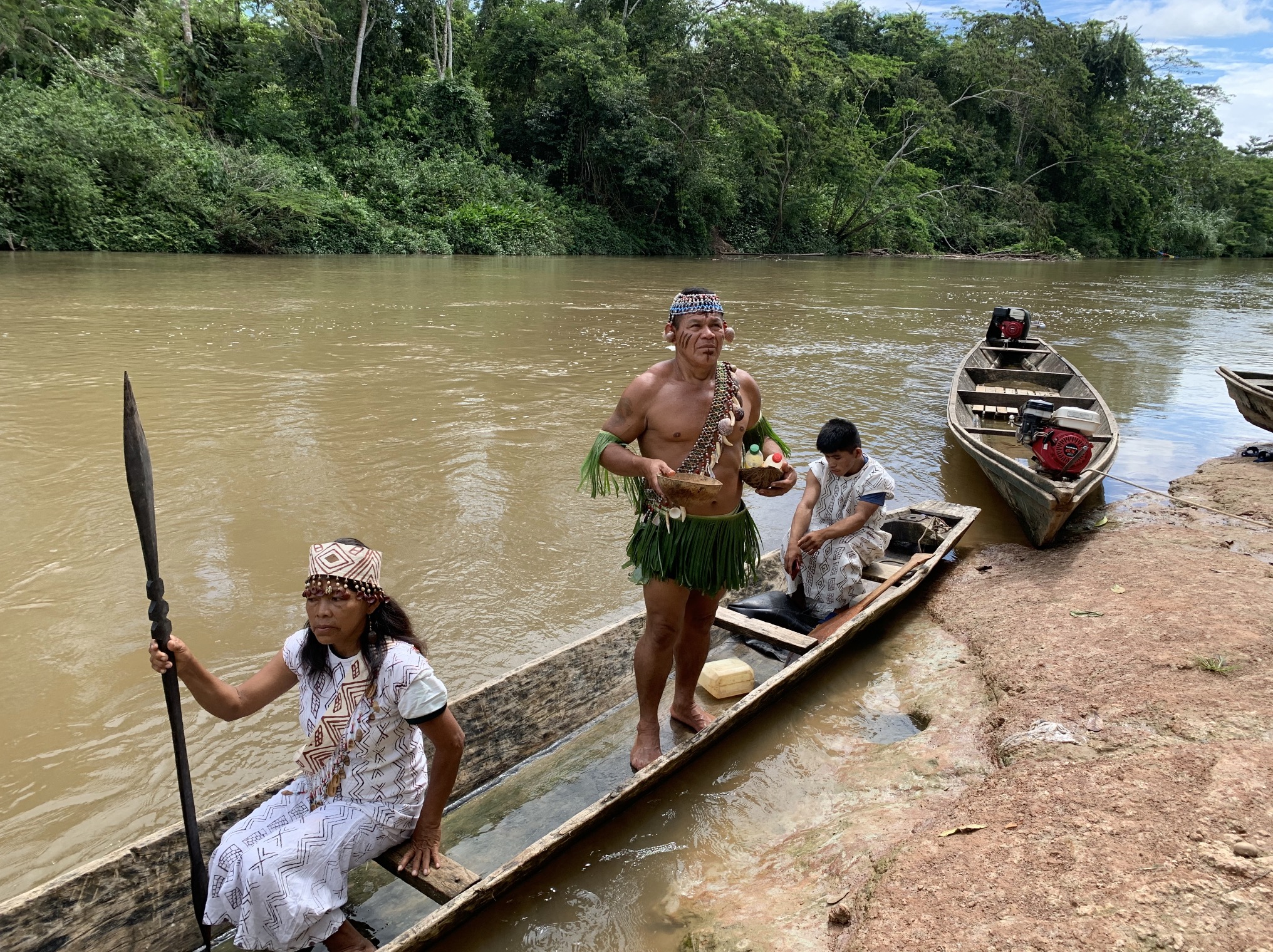
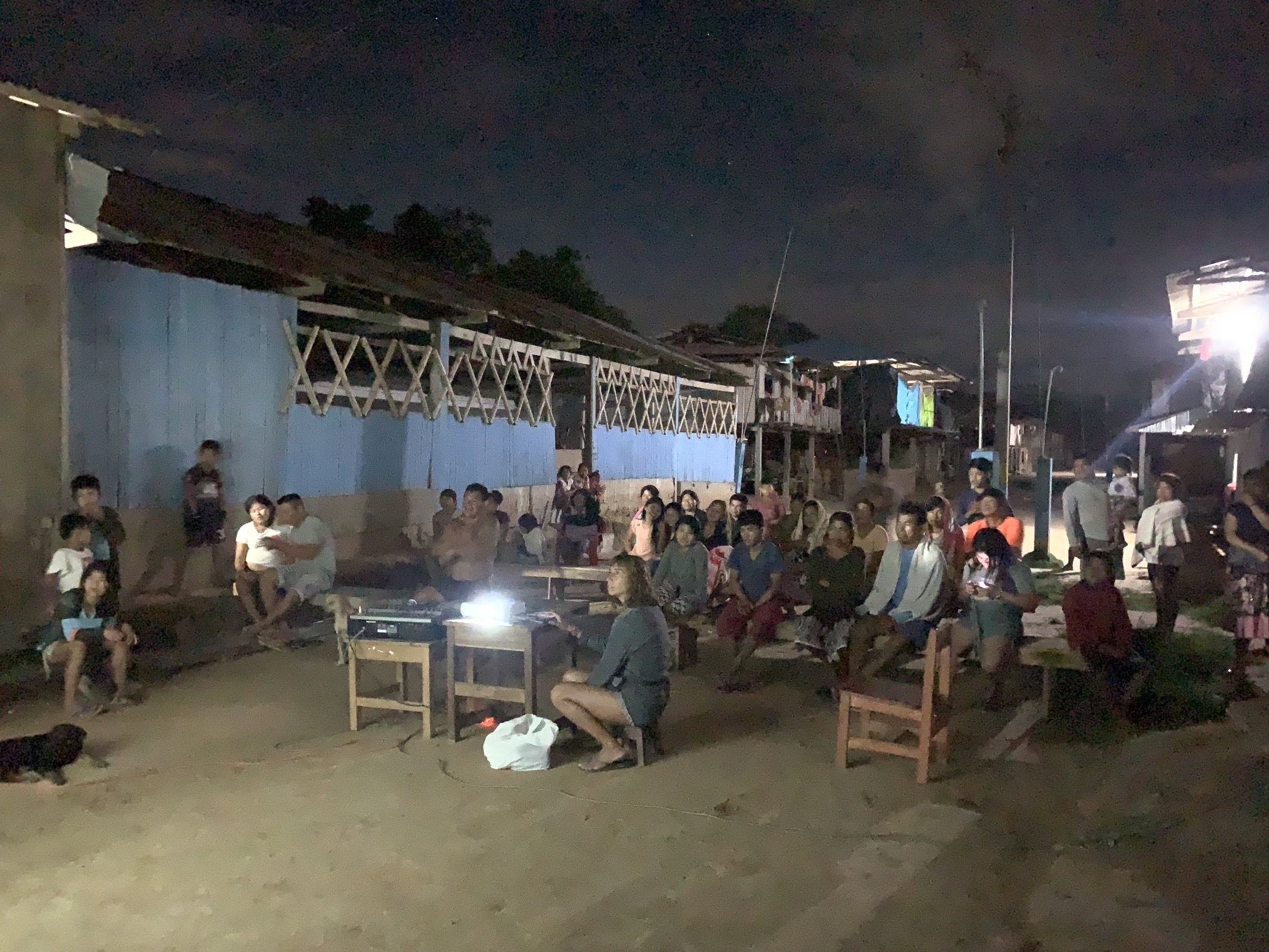
Puerto Nuevo Community, where Yenser Ríos, member of the forests’ guardians was murdered in 2021.
Comunidad Nuevo Amanecer Hawai, donde Mauro Pío fue asesinado en 2013 y Gonzalo Pío en 2021.
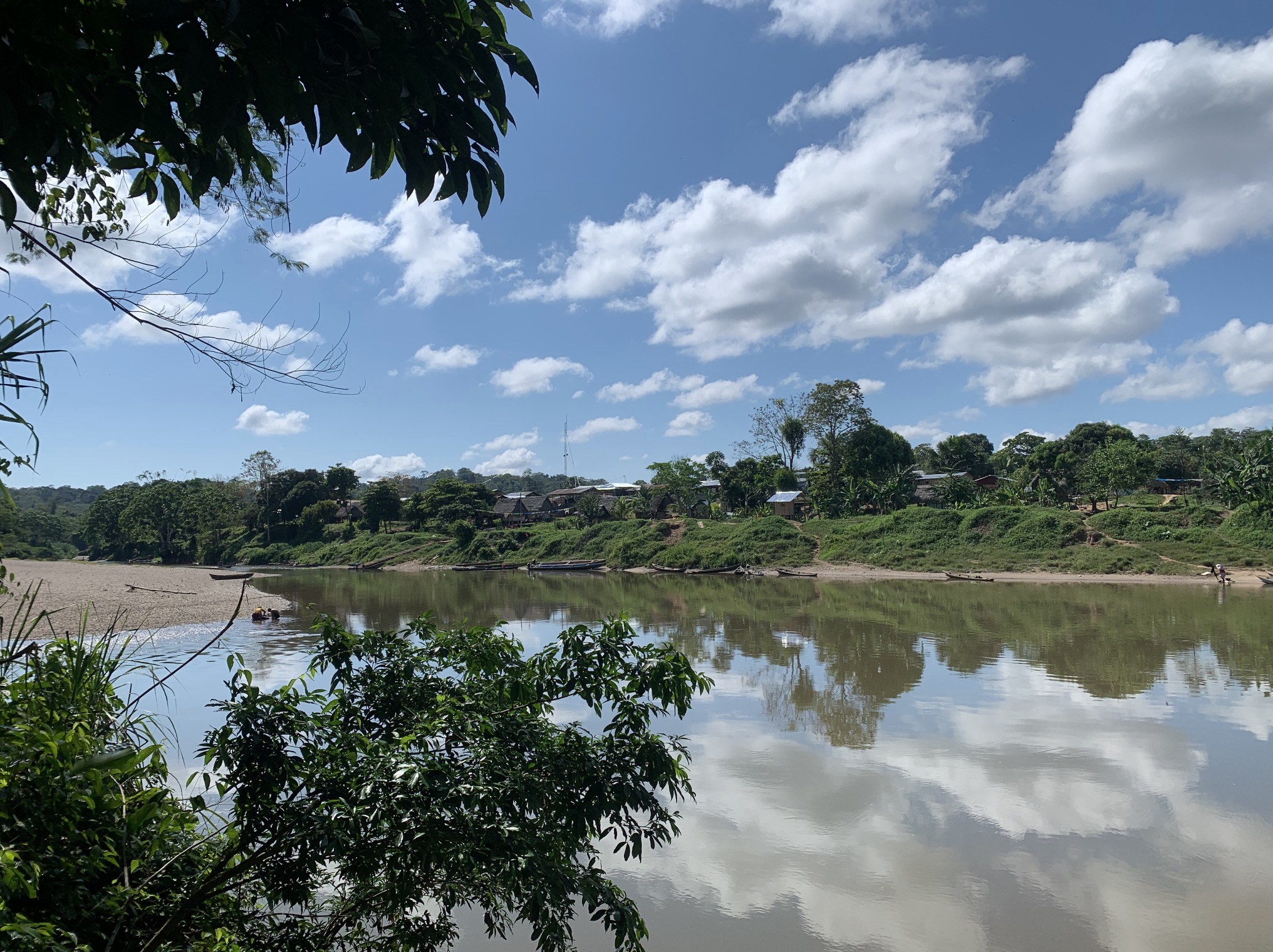
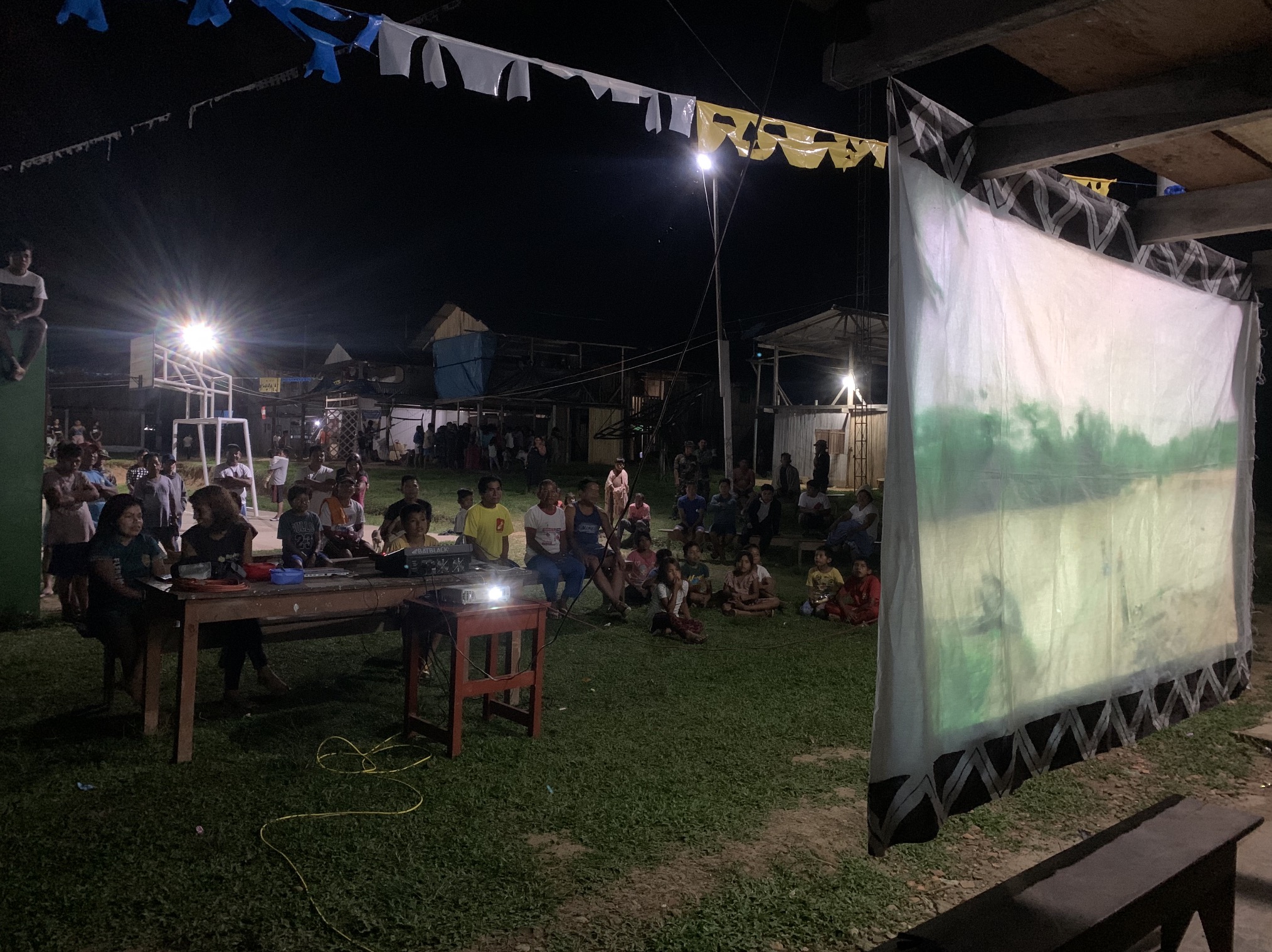
Sinchi Roca Community, where Santiago Vega and Herasmo García, members of the forests’ guardians were murdered in 2020 and 2021 respectively.
Comunidad Sinchi Roca, donde Santiago Vega y Herasmo García, miembros de los guardianes de los bosques fueron asesinados en 2020 y 2021 respectivamente.
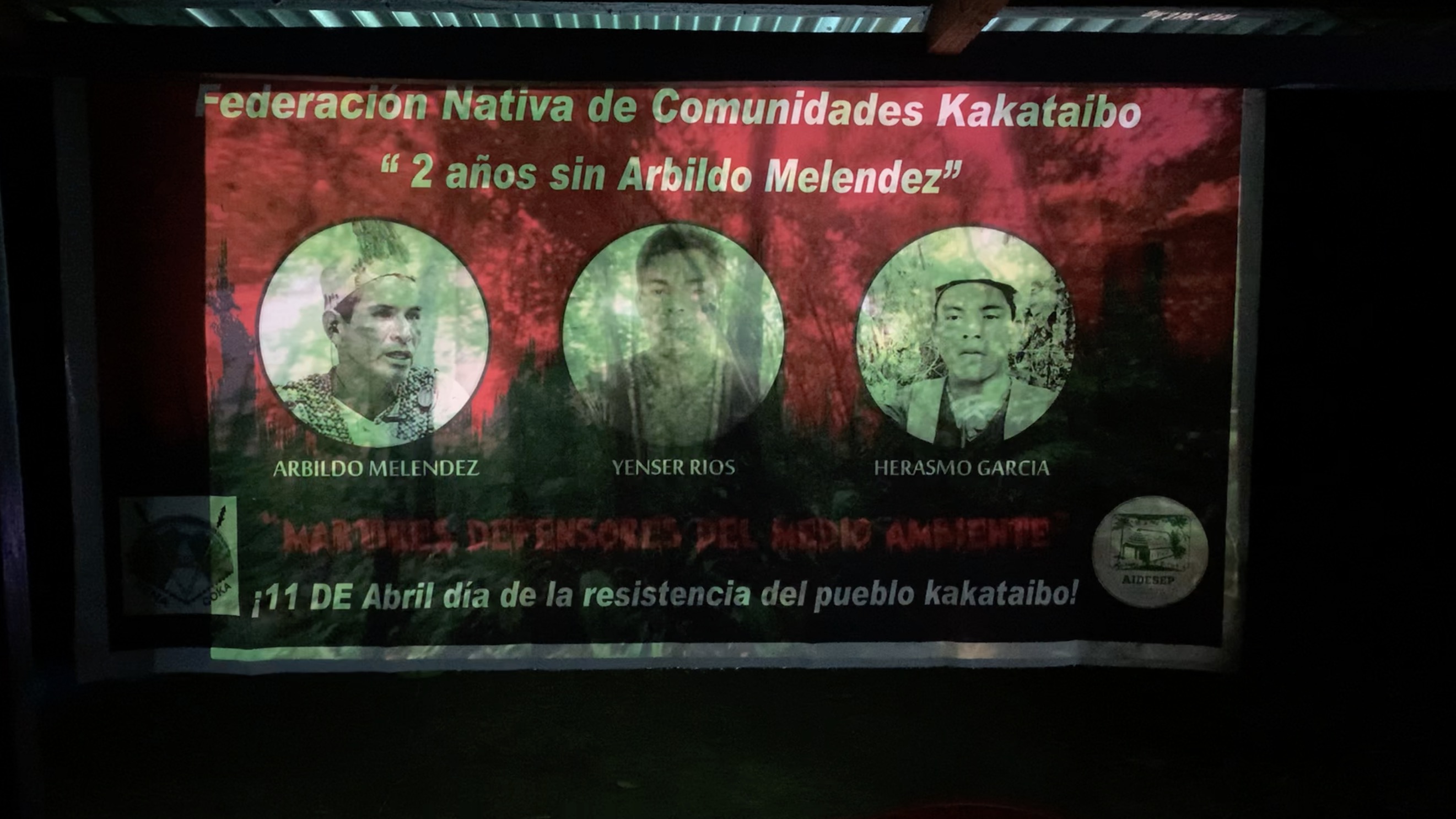
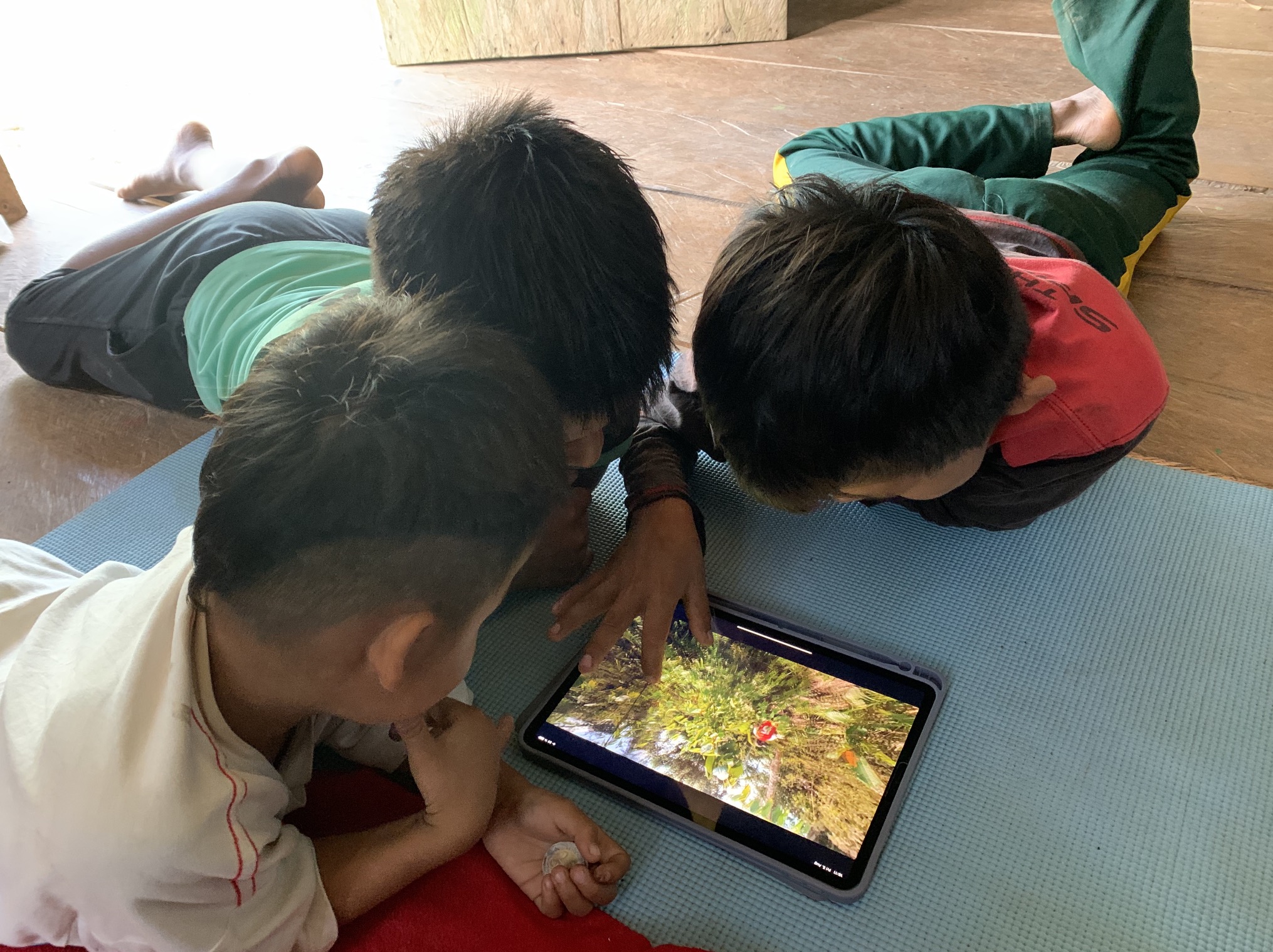

Unipacuyacu community, where the leader Arbildo Meléndez was murdered in 2020.
Comunidad de Unipacuyacu, donde fue asesinado el líder Arbildo Meléndez en 2020.
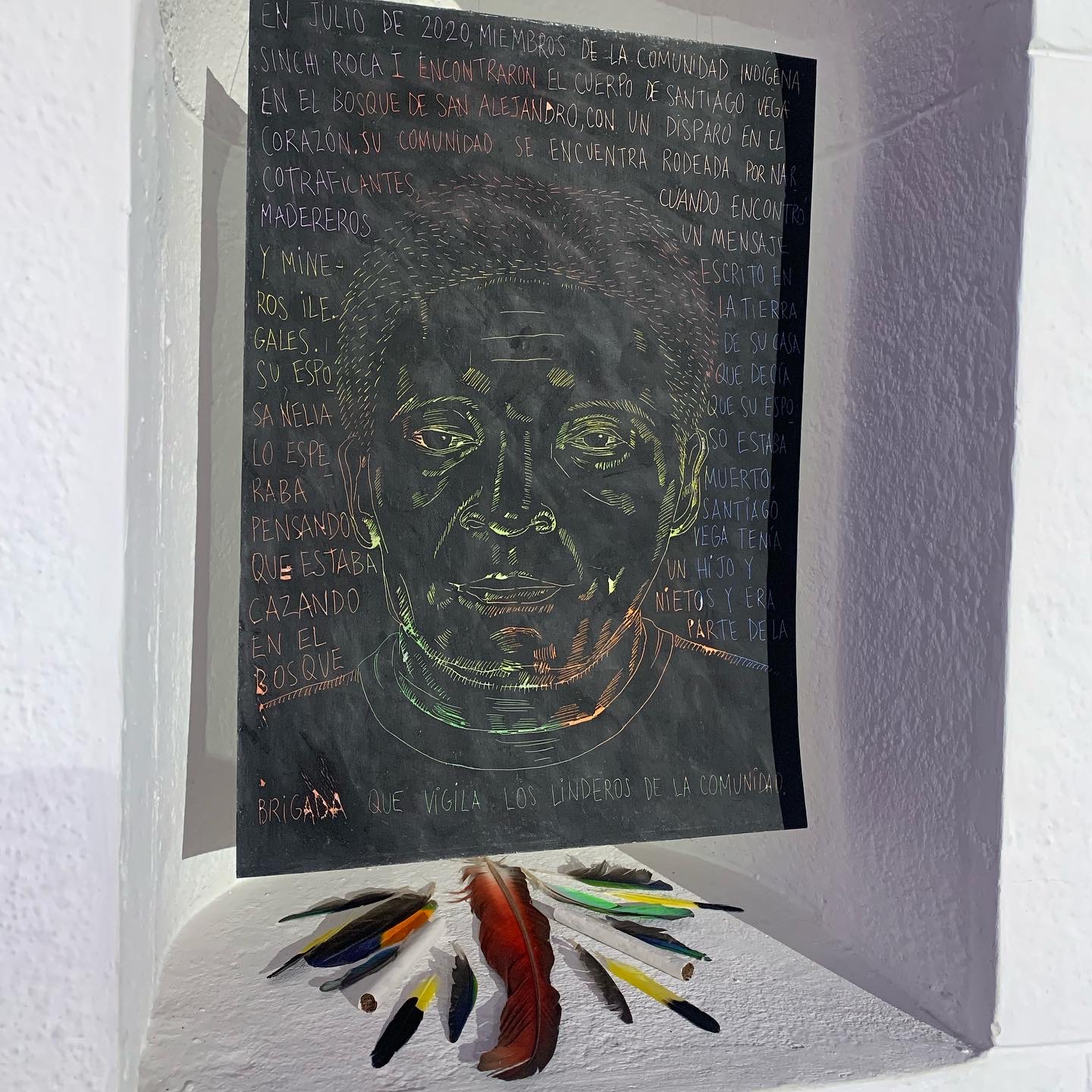
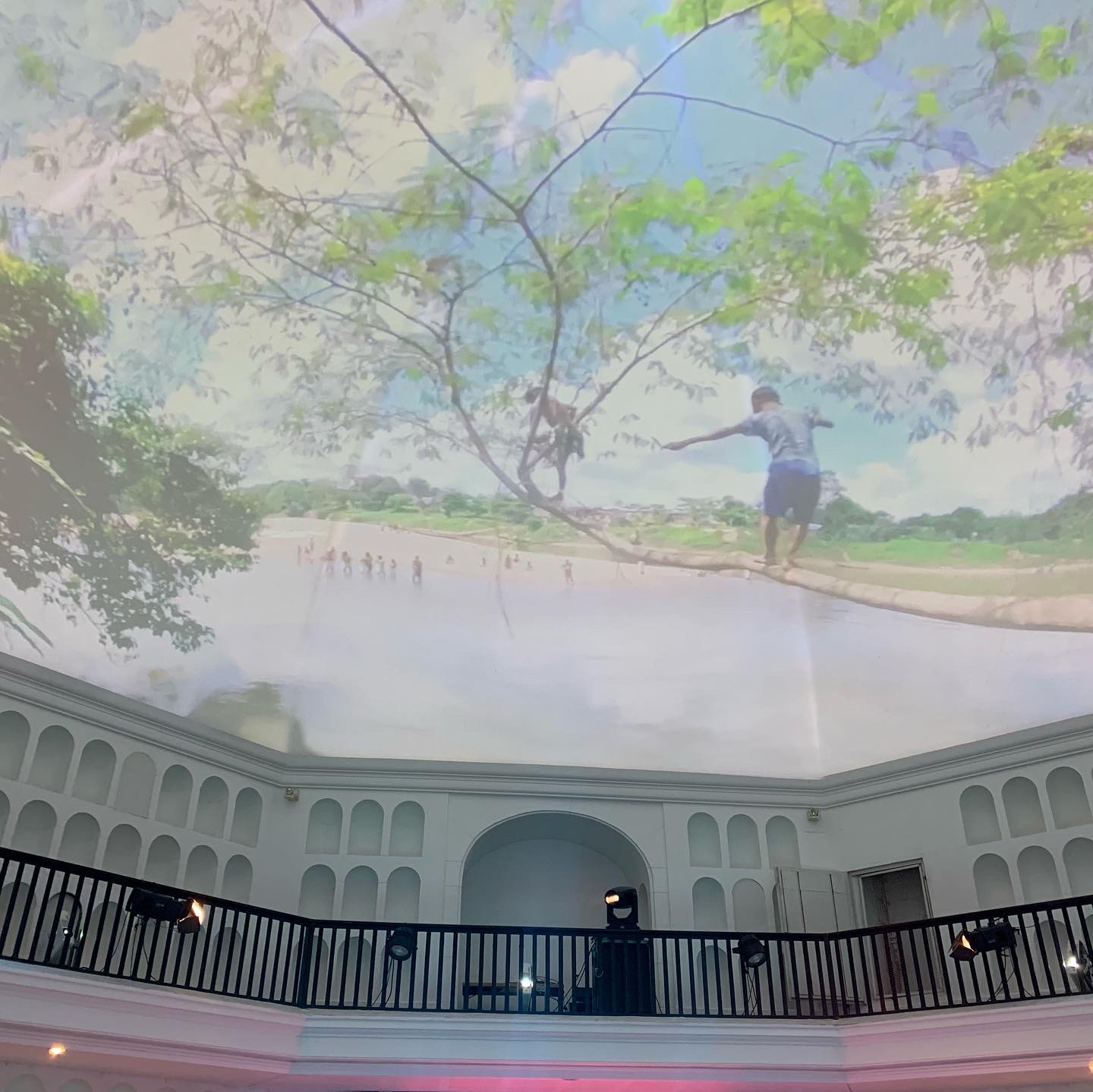

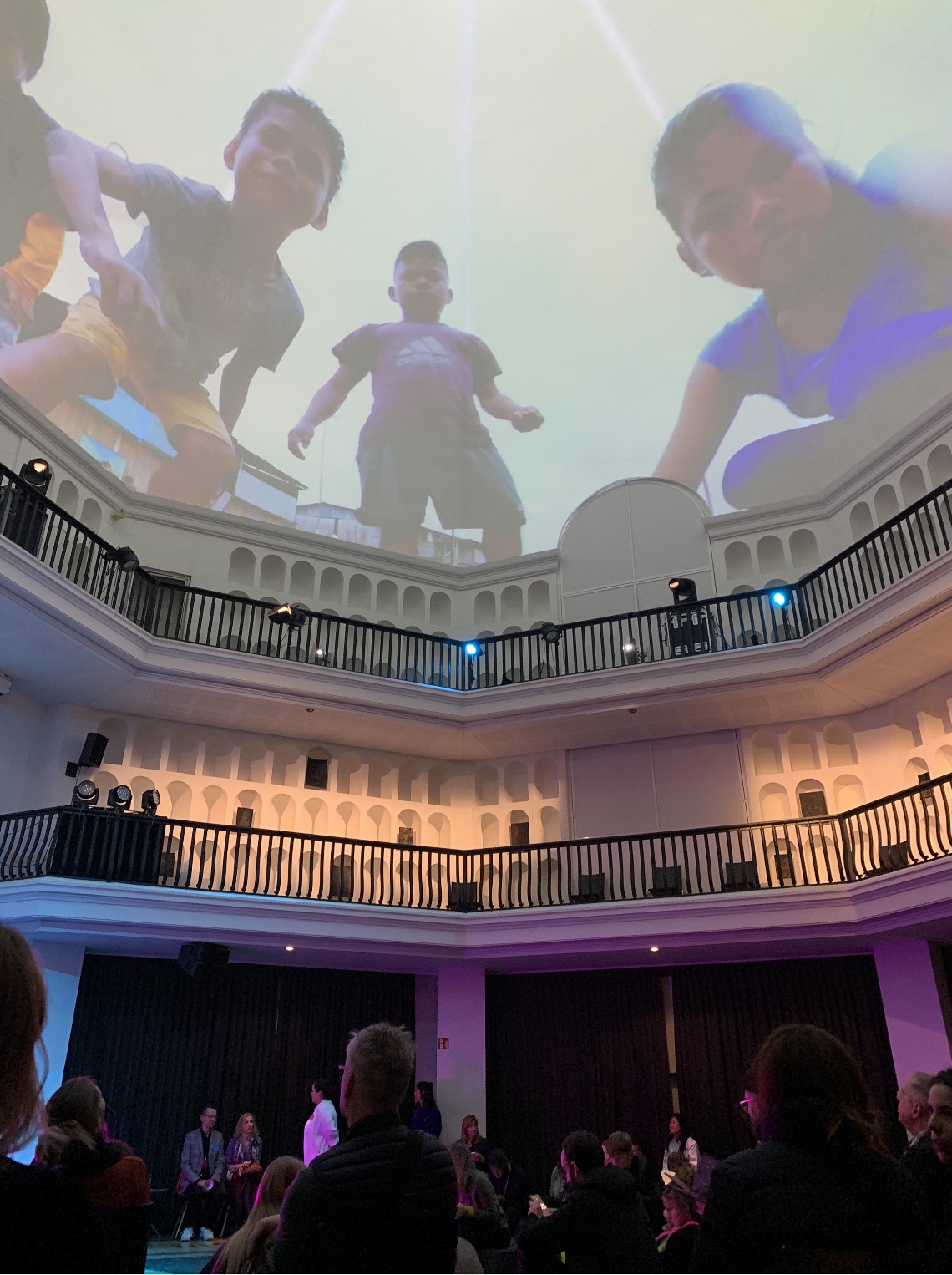
Installation views at Silent Green, Berlin.
Vistas de instalación en Silent Green.
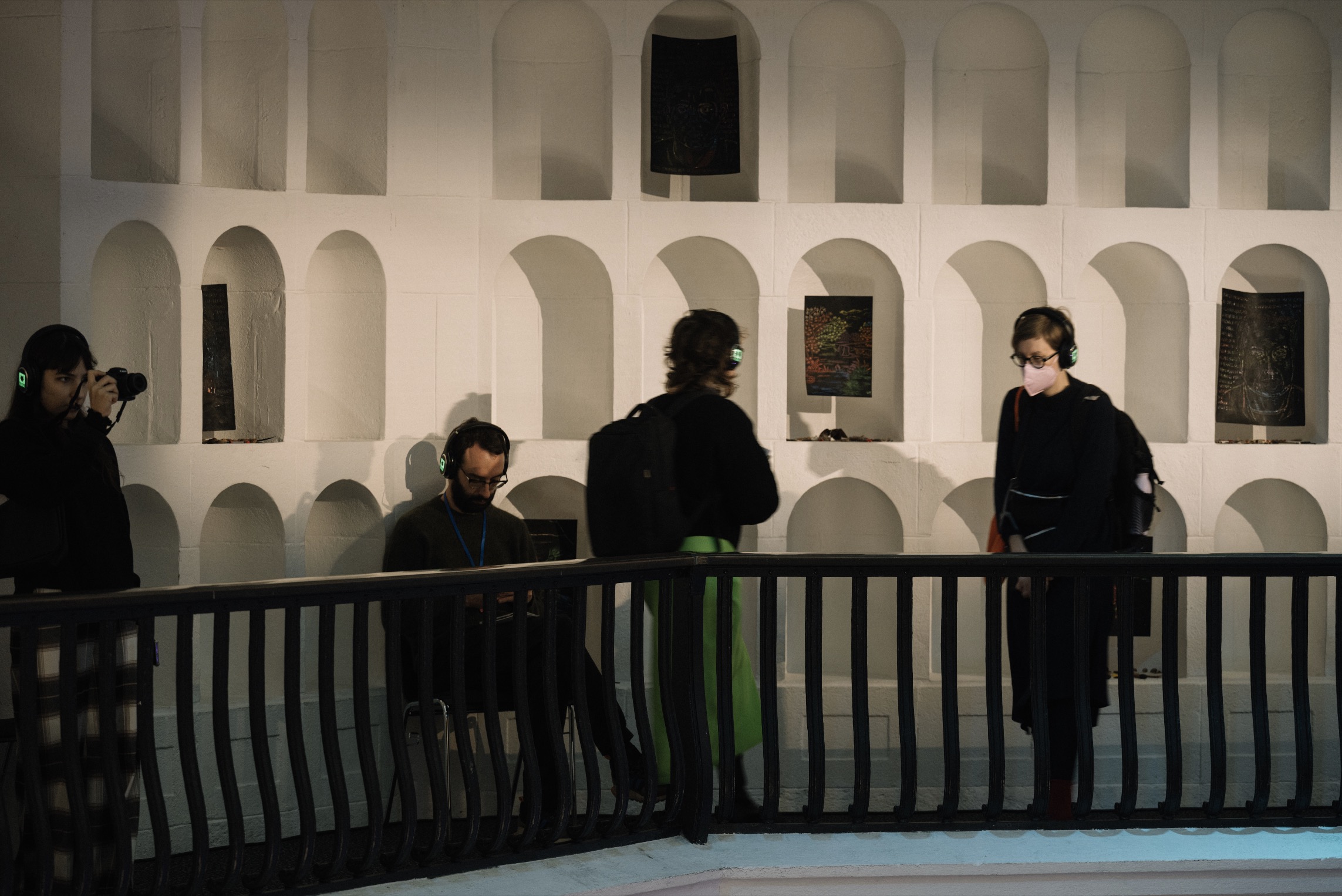
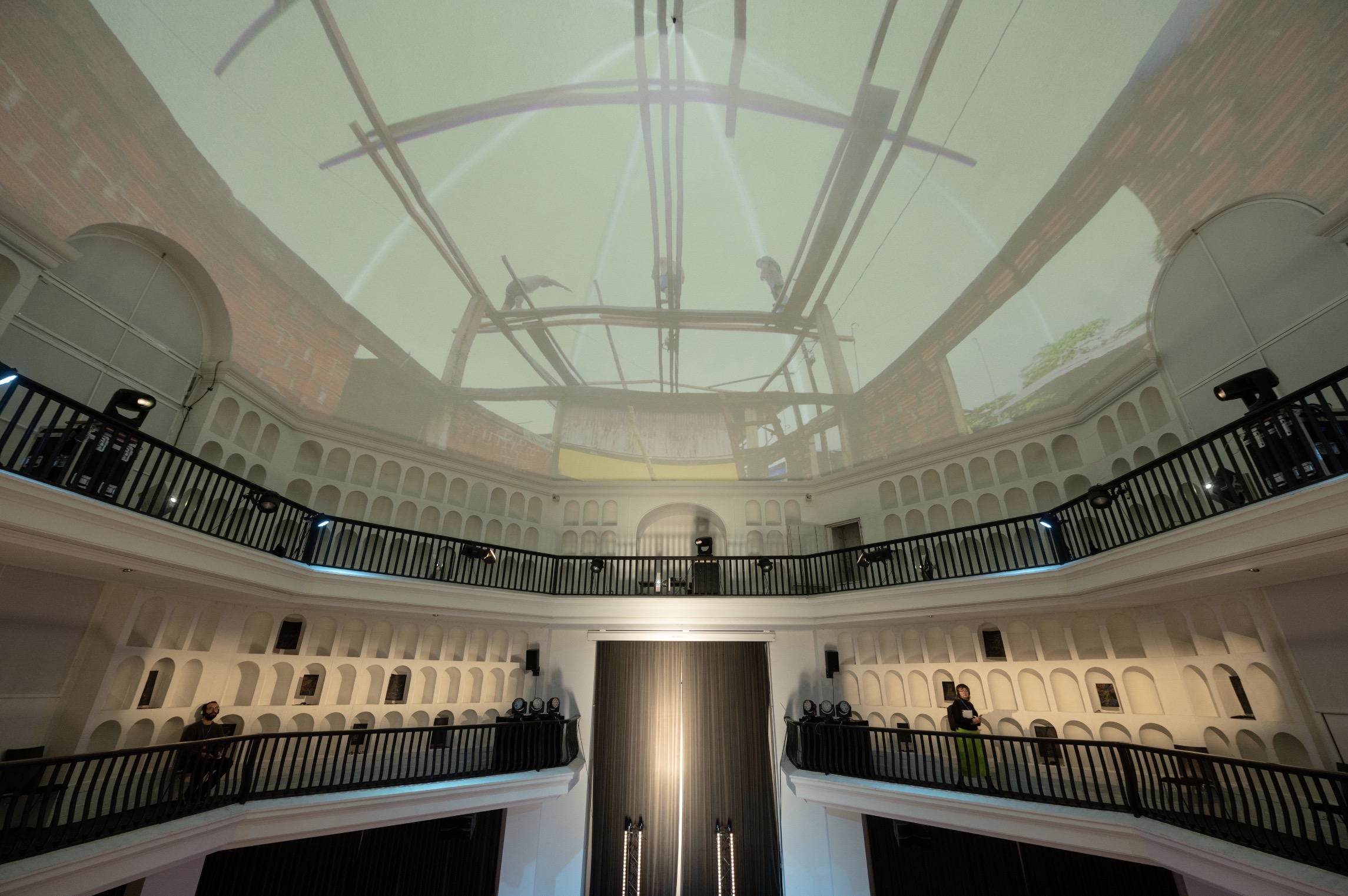
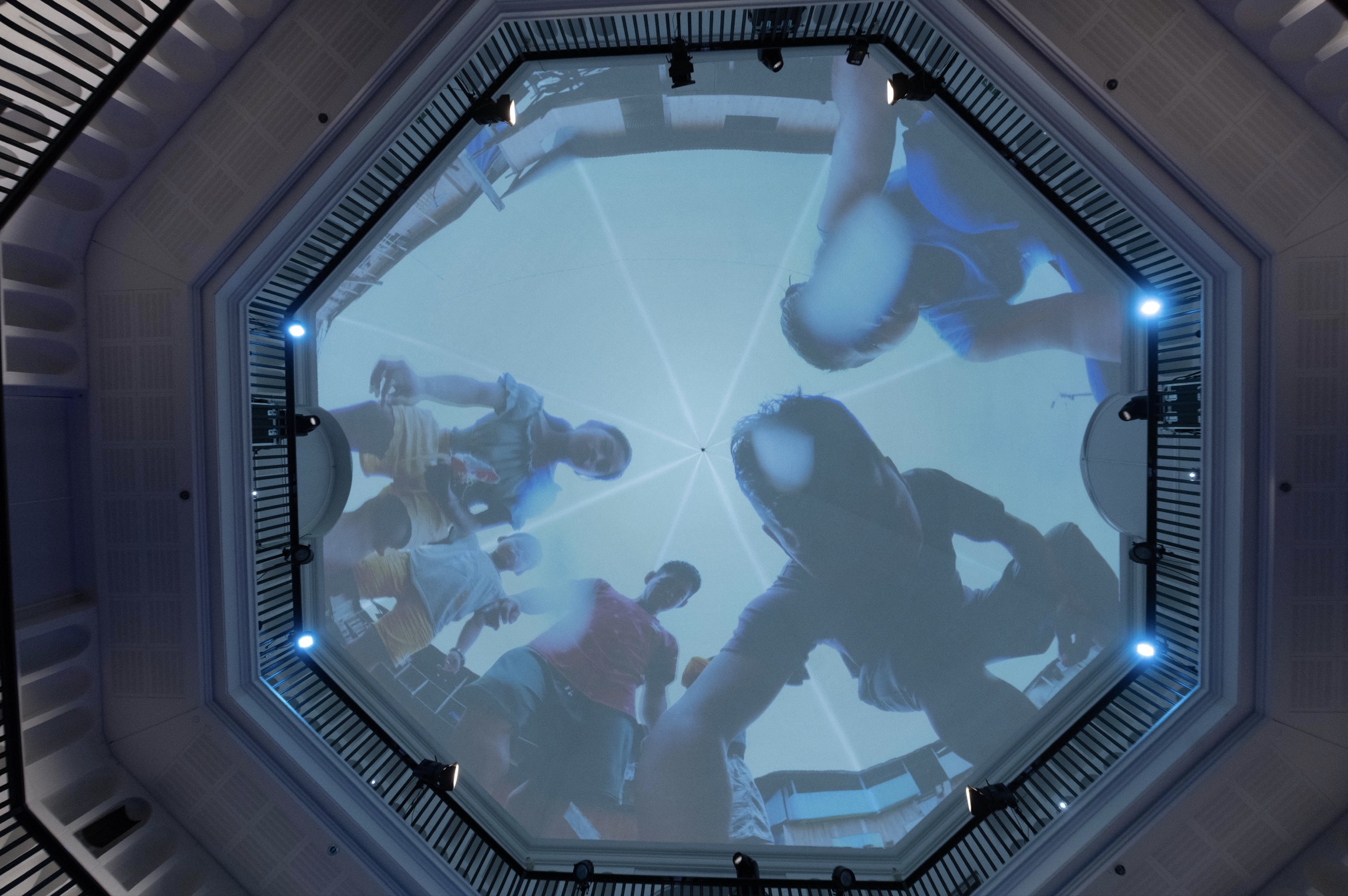
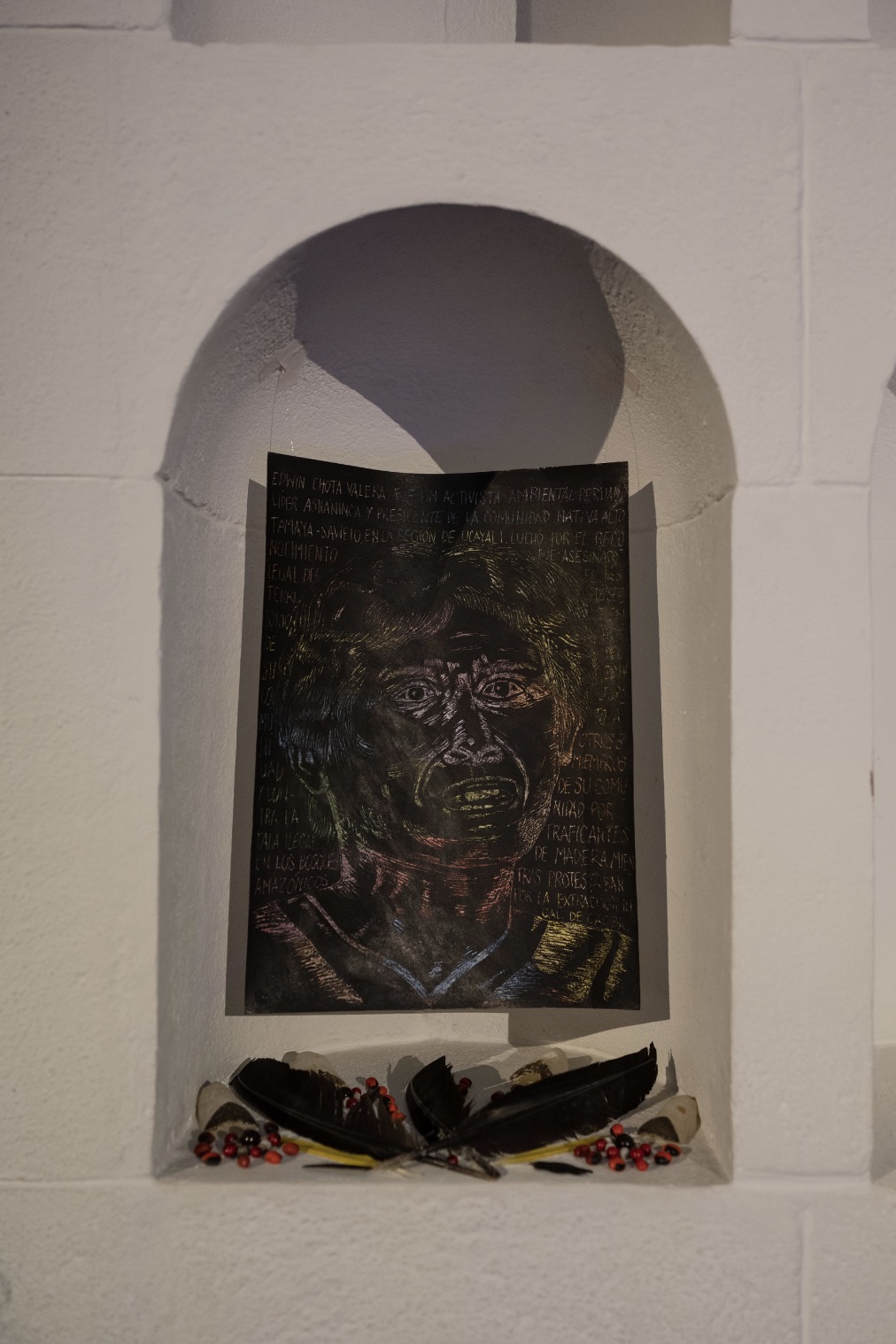
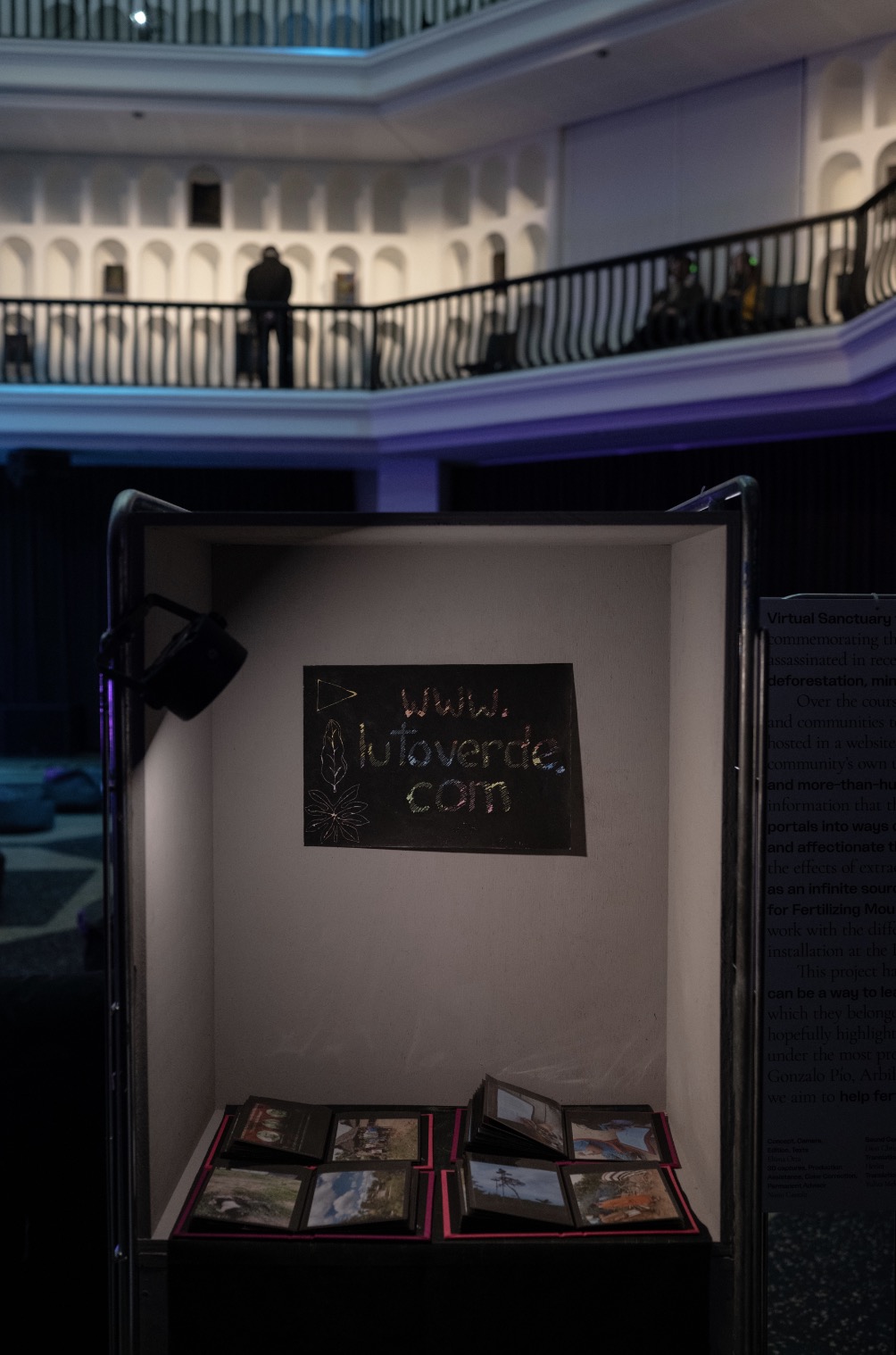
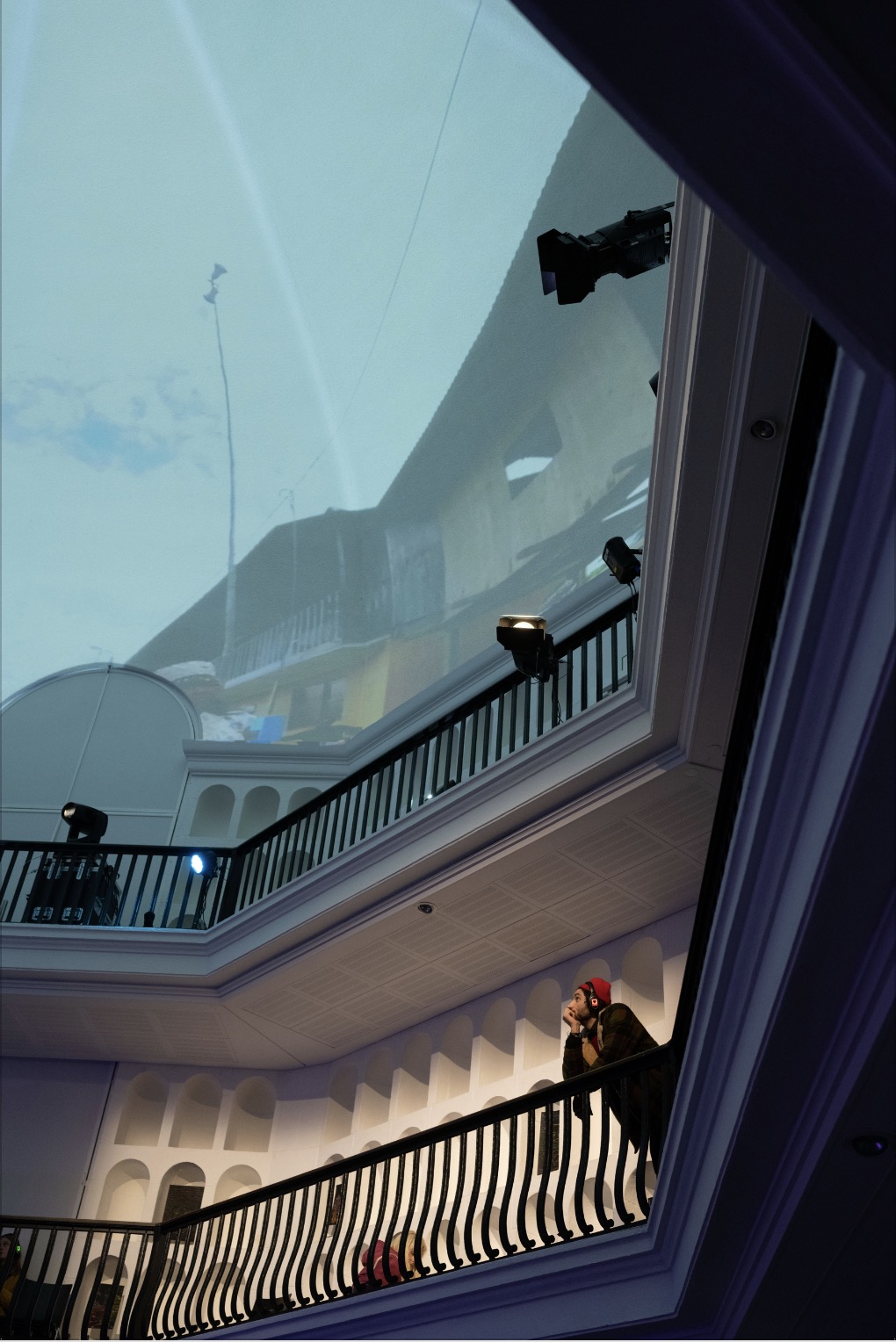
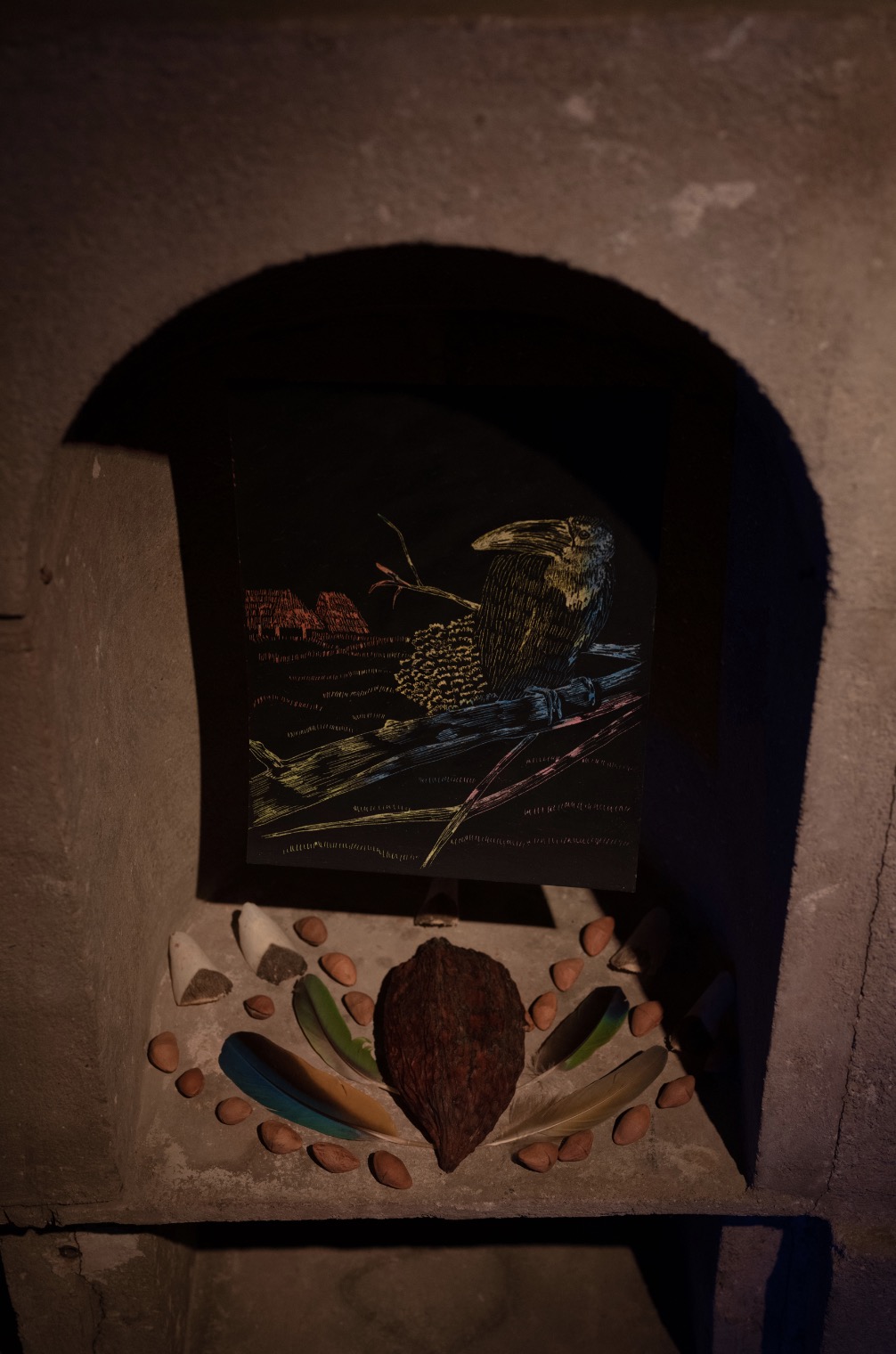
Pictures by Camille Blake / Fotografías de Camille Blake.
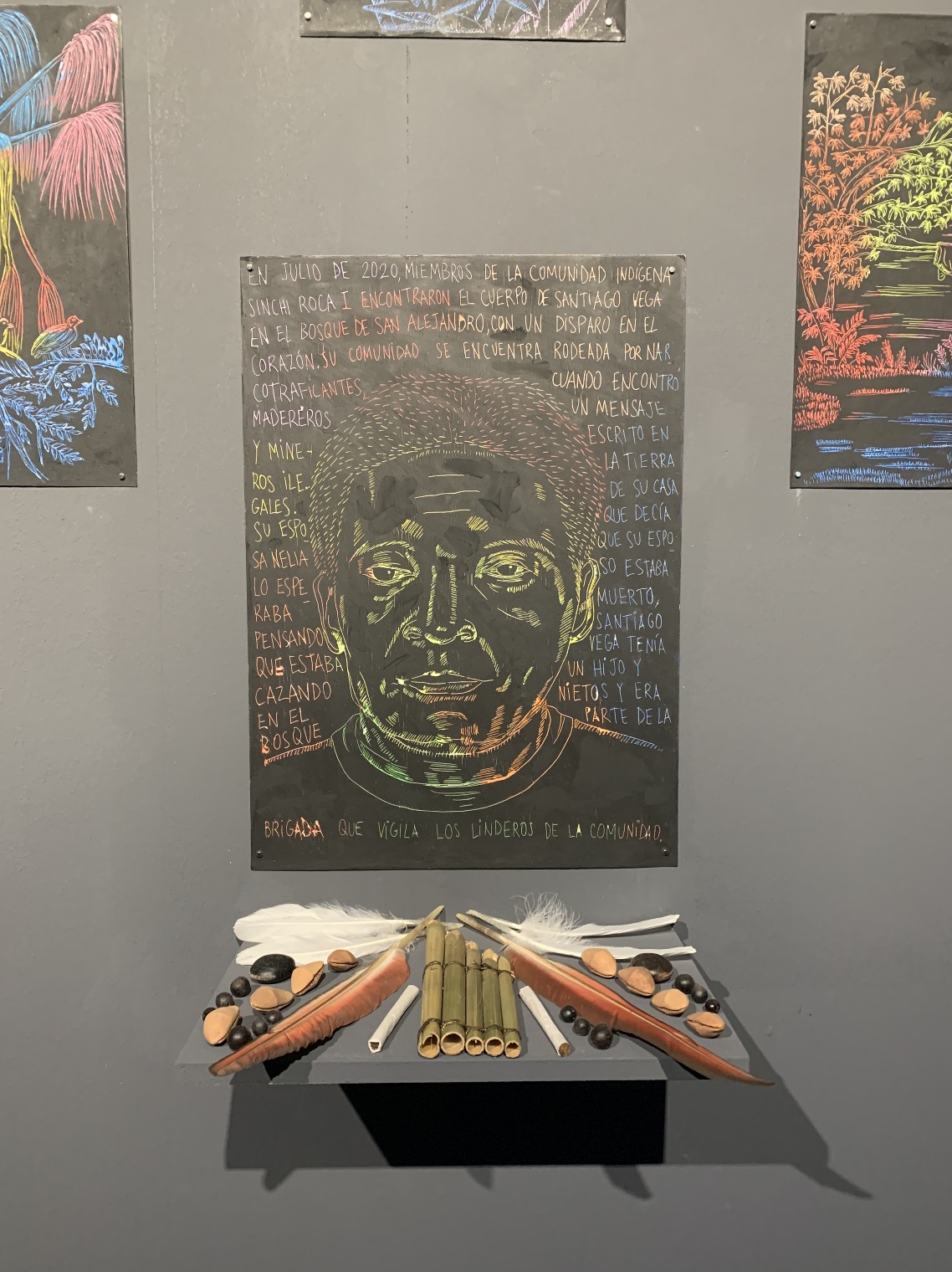
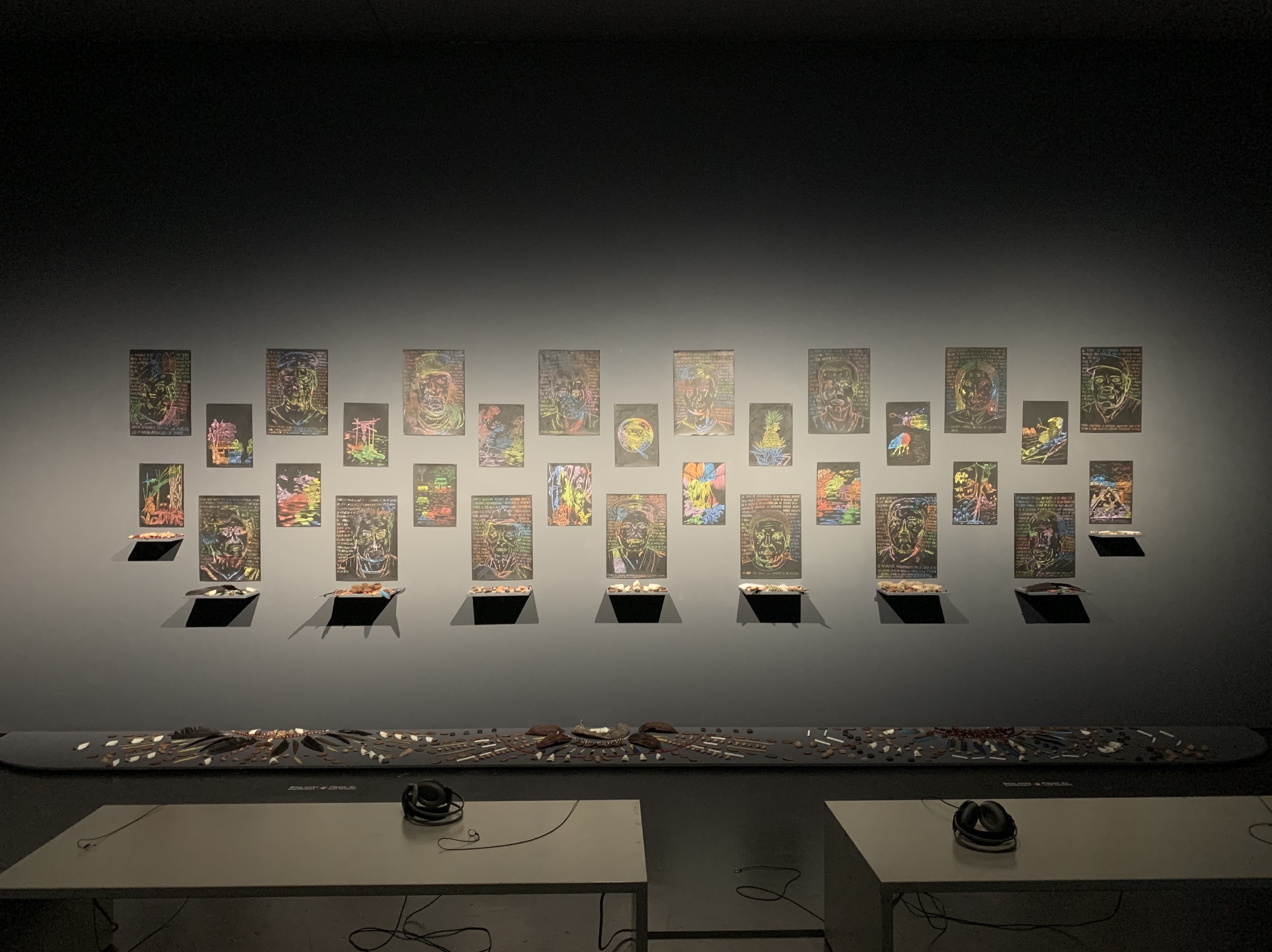
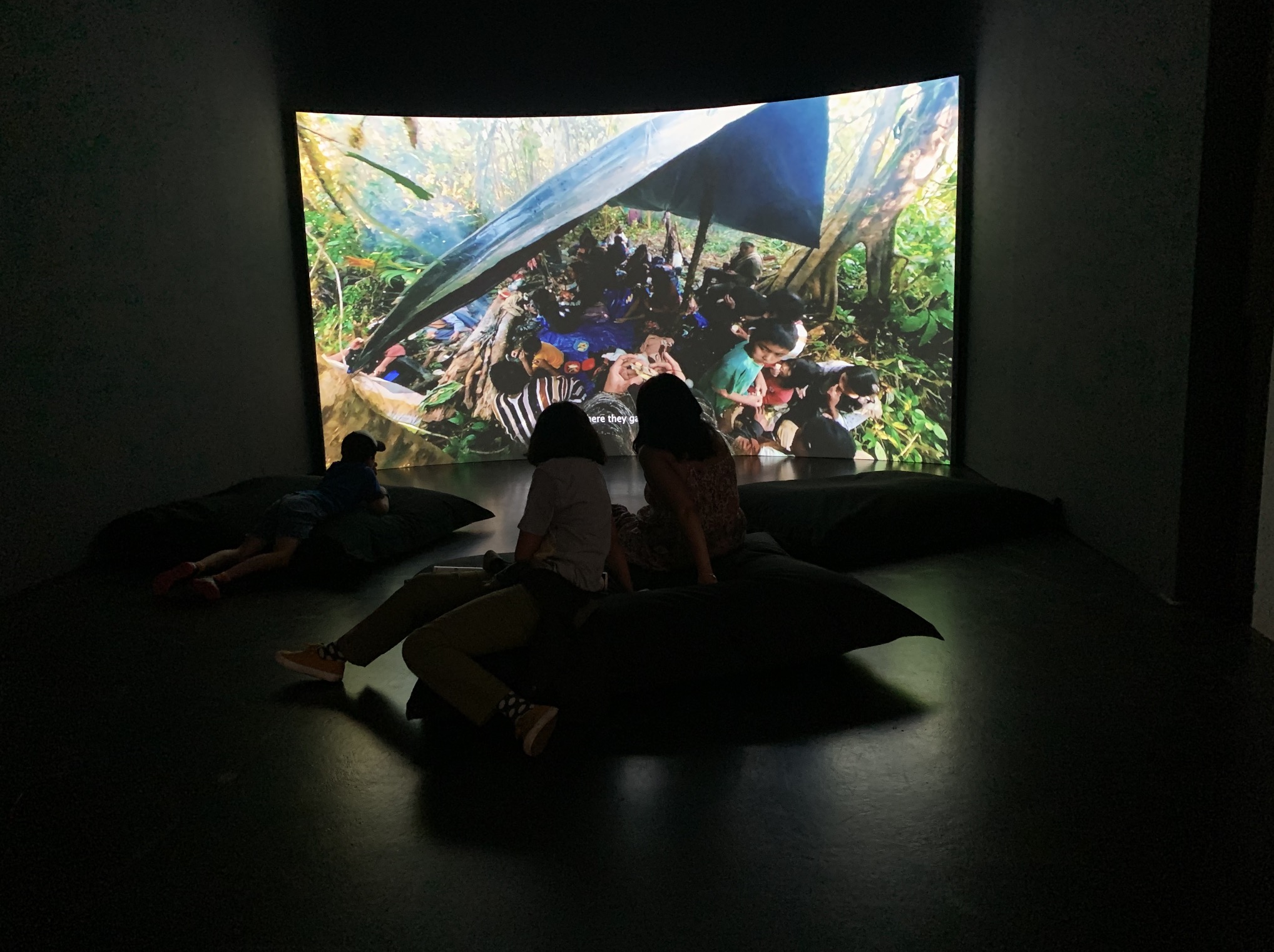
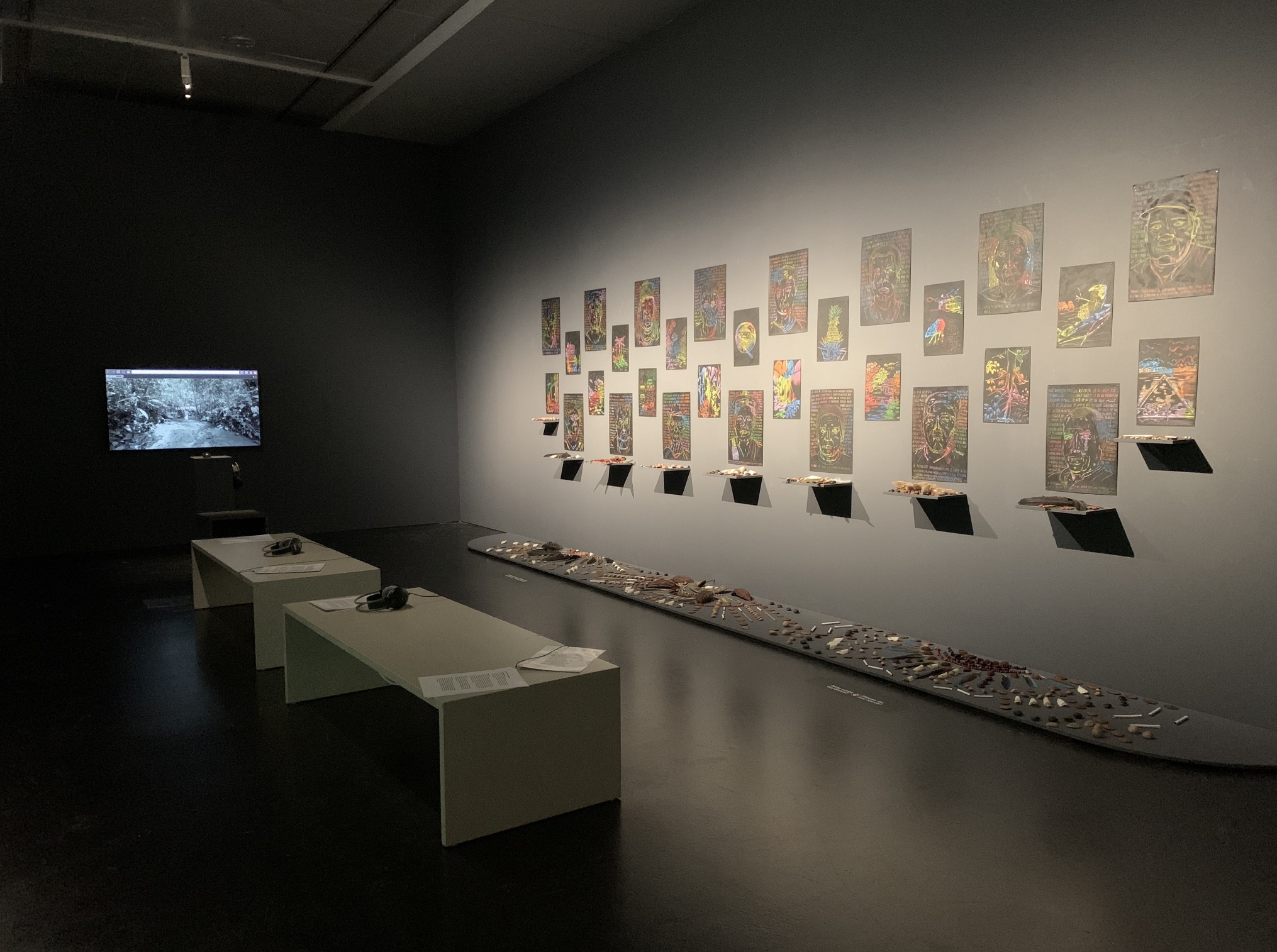
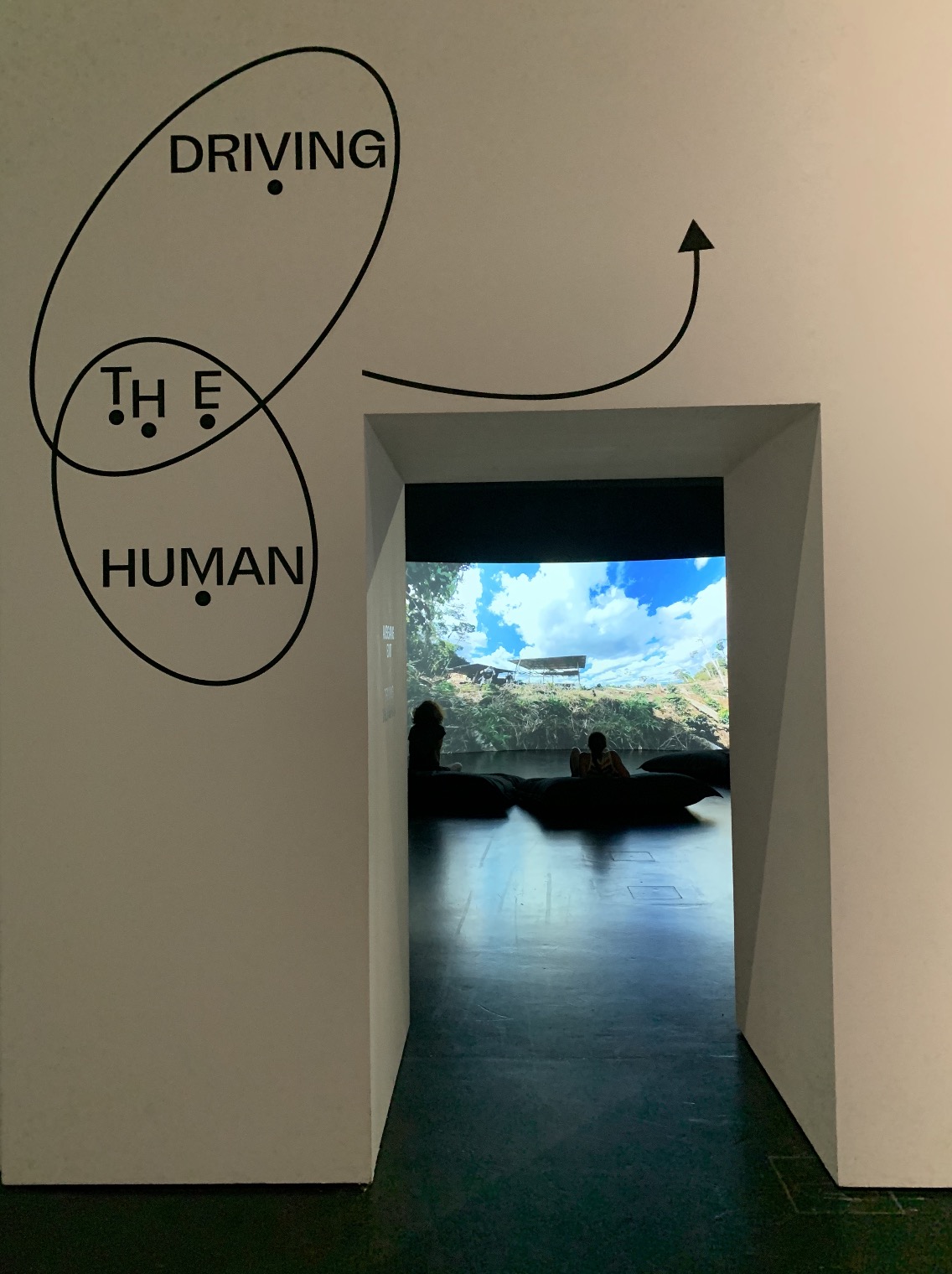
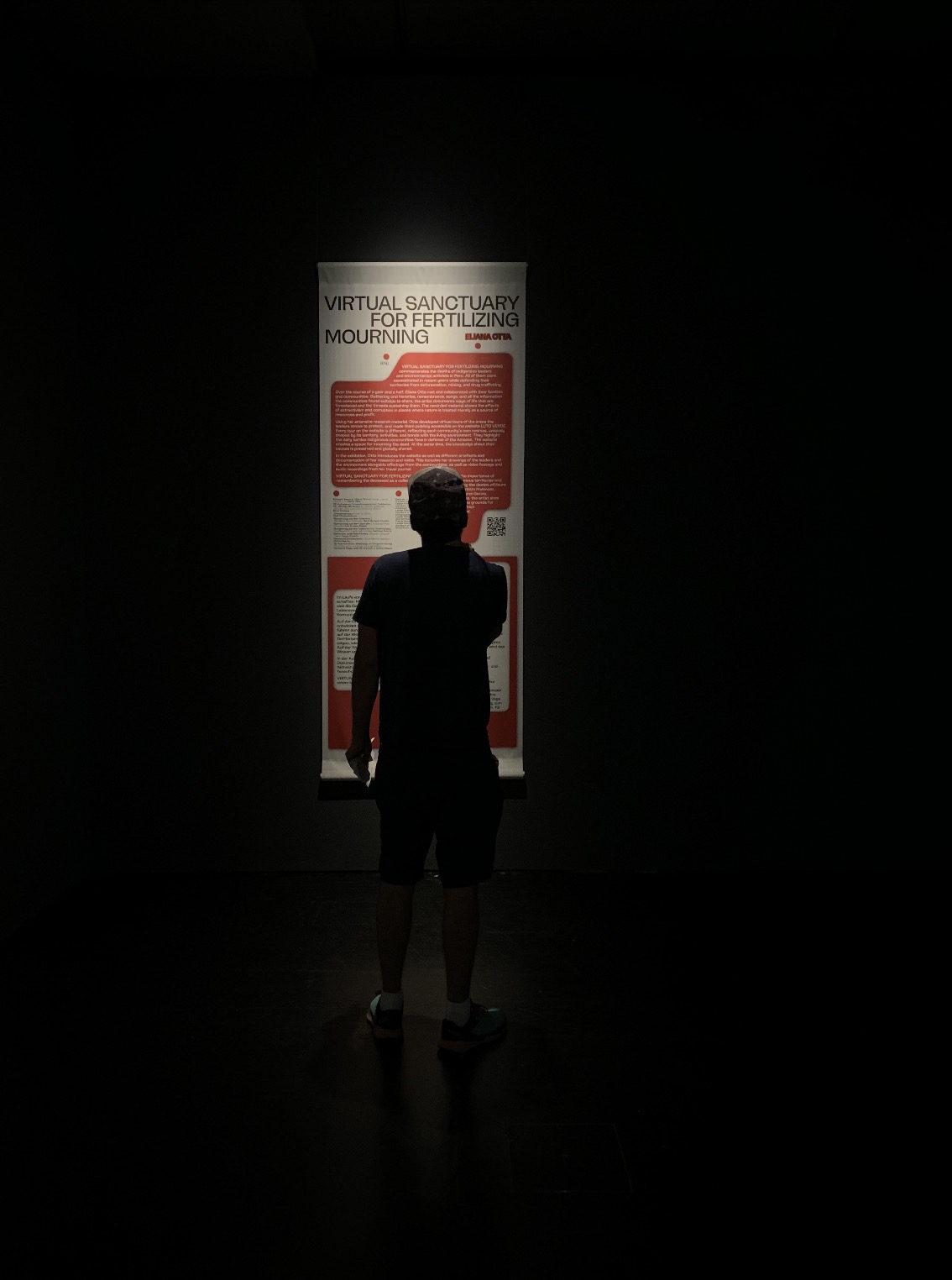
Installation views from the iteration of the project to ZKM in Karlsruhe, Germany, in the context of the exhibition Sharing Knowledge on Common Ground, second part of the cycle of exhibitions Driving the Human – Seven Prototypes for Eco-Social Renewal. The show had also a public program, including the activity Introduction and talk about the project Virtual Sanctuary for Fertilizing Mourning where I discussed with the scientist José-Carlos Mariátegui and Alistair Hudson (ZKM)
Vistas de la instalación de la iteración del proyecto en ZKM en Karlsruhe, Alemania, en el contexto de la exposición Sharing Knowledge on Common Ground, segunda parte del ciclo de exposiciones Driving the Human – Seven Prototypes for Eco-Social Renewal. La muestra contó también con un programa público, que incluyó la actividad Introducción y charla sobre el proyecto Santuario Virtual para un Duelo Fertilizante, junto al científico José-Carlos Mariátegui y Alistair Hudson (ZKM)
 Eliana Otta