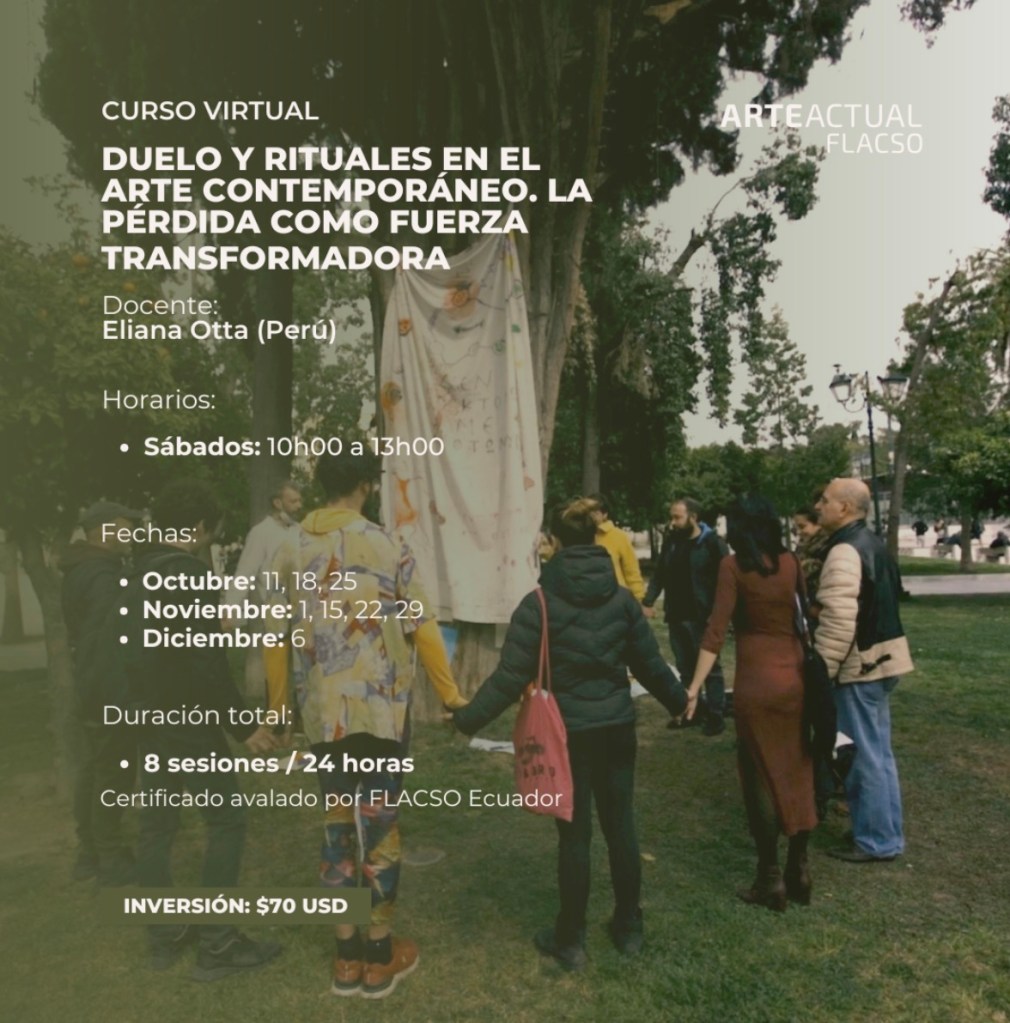
Estoy muy contenta con la oportunidad de dictar este curso a través de la plataforma online de Arte Actual Flacso Ecuador. Será la primera vez que doy este curso, y que traduzco al español el trabajo que he estado realizando en estos años generalmente en inglés, en el marco de mi investigación del doctorado «Compartiendo lo Perdido, Acercamientos al Duelo Colectivo Hacia Políticas Afectivas y Transformadoras».
Esta es la descripción del curso:
Duelo y rituales en el arte contemporáneo. La pérdida como fuerza transformadora
A partir de teoría y estudios de casos, se introducirá el duelo como un trabajo necesario para procesar experiencias de pérdida, se discutirán sus dimensiones políticas y estéticas, así como las posibilidades del arte para colectivizarlo. Reflexionando sobre fenómenos como la pandemia COVID-19, las herencias coloniales, contextos de postguerra y el calentamiento global, se motivará la creación de rituales contemporáneos con los que el arte pueda ayudar en procesos de sanación y regeneración de la vida. Se incentivará la reflexión sobre memorias personales y colectivas, los efectos de los procesos irresueltos de duelo en la salud mental, la diferenciación social del valor de la vida y sobre las posibilidades del arte para abordar problemas colectivos.
Las inscripciones están abiertas hasta el 7 de Octubre en este enlace.
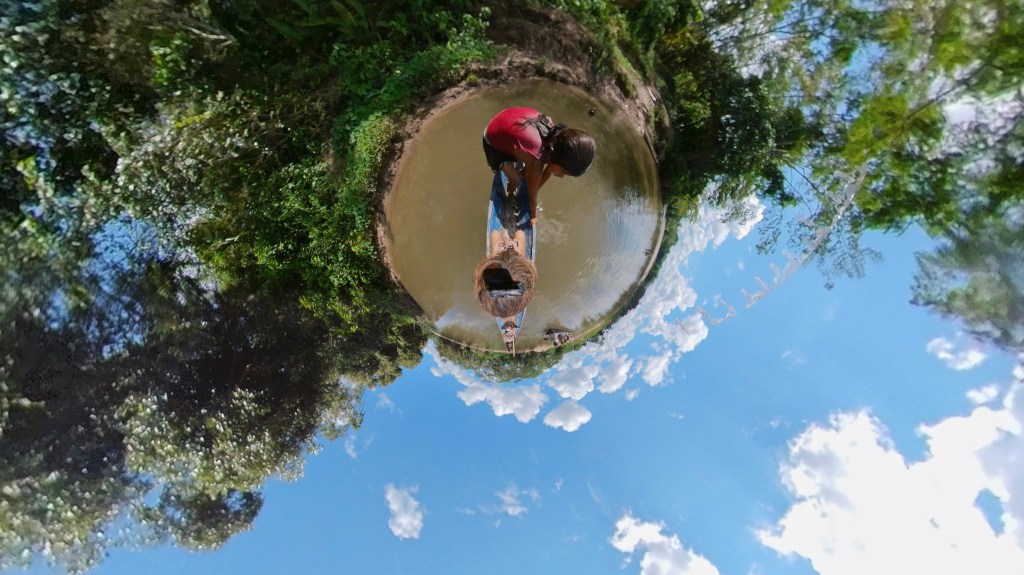
On June 8th my film Asking Trees, Birds and Ghosts About Future Images and Sounds was premiered through the Austrian National Broadcast Channel, ORF, in the framework of their Artist in Residency program and resulting from my participation in Pixel, Bytes and Film. The film is accessible in the Austrian territory through this link and is currently on view at the exhibition Earthly Communities in Kunst Merano, Italy.
El 8 de junio se estrenó mi película «Preguntando a árboles, pájaros y fantasmas sobre imágenes y sonidos futuros» a través del Canal Nacional de Radiodifusión de Austria (ORF), en el marco de su programa de Artistas en Residencia y como resultado de mi participación en Pixel, Bytes and Film. La película está disponible en Austria a través de este enlace y actualmente se exhibe en la exposición «Earthly Communities» en Kunst Merano, Italia.
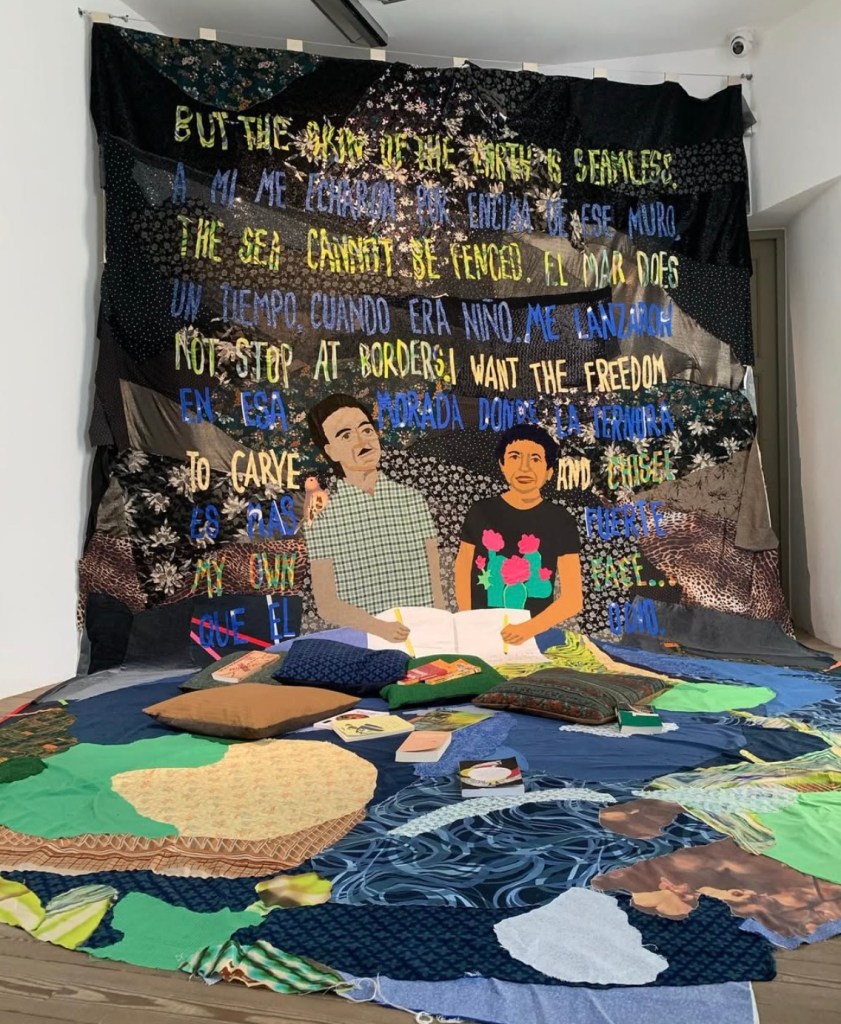
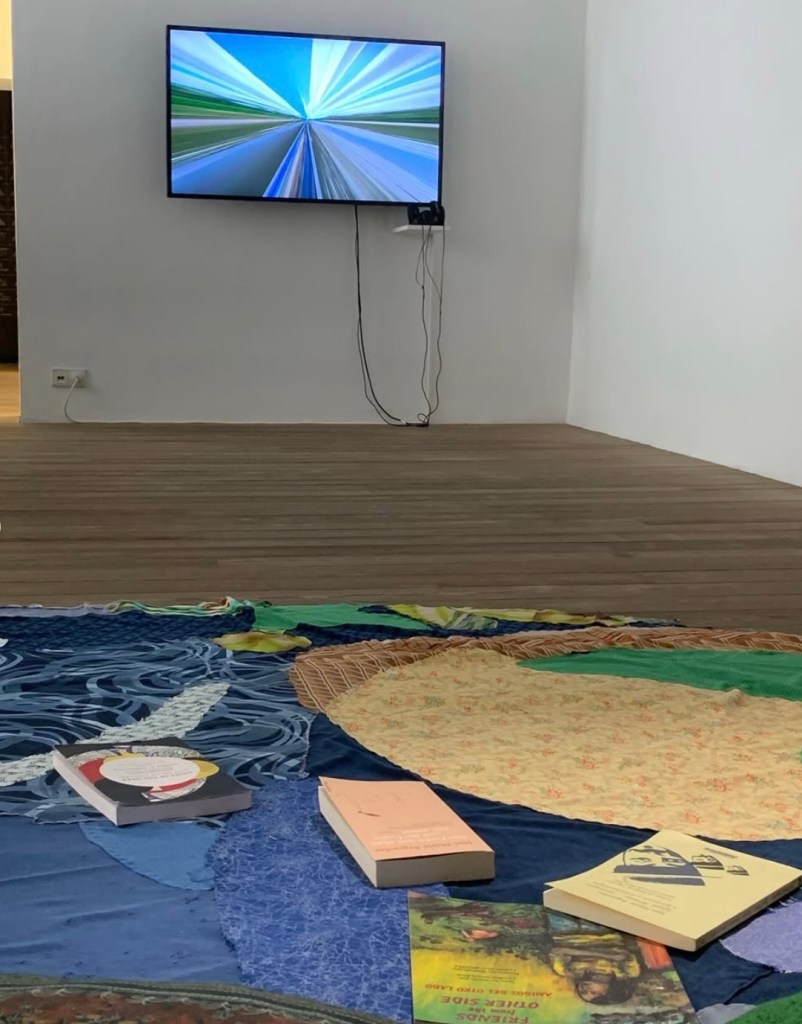
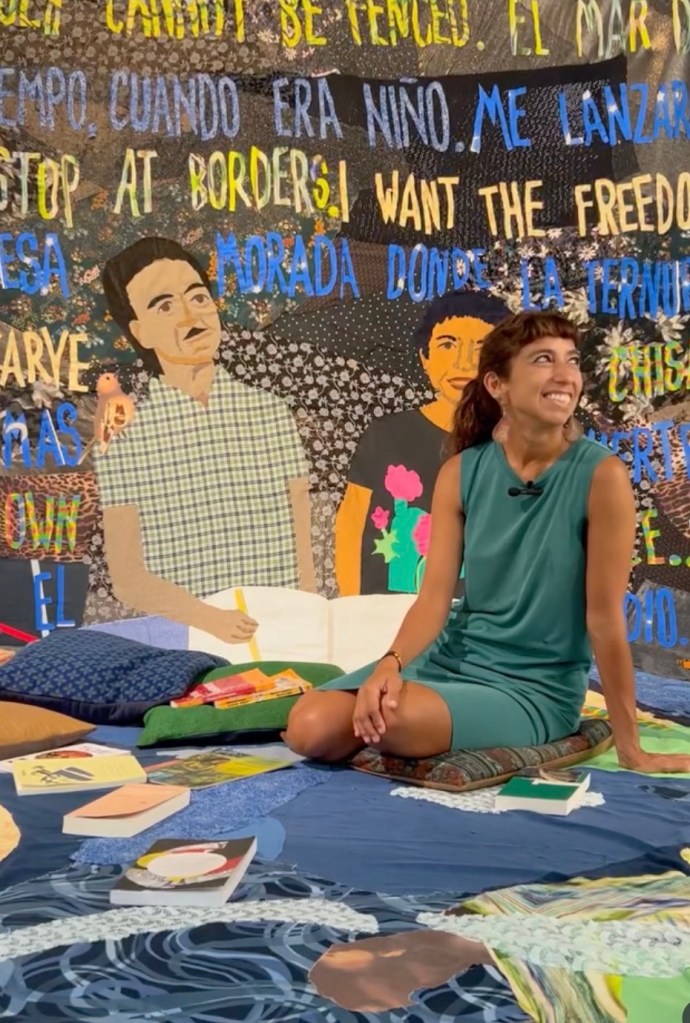
With delay I report about Earthly Communities, the collective exhibition currently on view at Kunst Merano in Italy. It is curated by the amazing duo of Simone Frangi and Lucrezia Cippitelli, who decided to include my textil installation An Imagined Friendship (Un Tambito Espiritual), where I gather José María Arguedas and Gloria Anzaldúa writing together on a table which is the world «upside down» (as if there would be up and down in the universe!). In front of the work, the audience can watch my last film work, Asking Trees, Birds and Ghosts About Future Images and Sounds.
The exhibition will close on October 12th screening Walking and Singing Endangered Worlds, the longer version of Asking Trees…. Here some info about the show, from the website of the museum:
«Duration: 22.06 – 12.10.2025 Artists: AMAZON, Minia Biabiany, Marilyn Boror Bor, Carolina Caycedo,Ismael Condoii, Luigi Coppola, Etienne de France, Alexandra Gelis, Mazenett Quiroga, Laura Huertas Millán, Eliana Otta, Amanda Piña, Naomi Rincón-Gallardo, Sallisa Rosa, Samuel Sarmiento Curators: Lucrezia Cippitelli, Simone Frangi
From 22 June to 12 October 2025, Kunst Meran Merano Arte presents the collective exhibition project Earthly Communities, which, through visual language, performative action and film production, explores ecological, economic and geopolitical issues in respect to the history of relations between Europe and Abya Yala, i.e. Latin America interpreted in a decolonial key, and starting from the South Tyrolean context. The exhibition marks the second year of the three-year curatorial research programme The Invention of Europe, curated by Lucrezia Cippitelli and Simone Frangi, dedicated to presenting a critical investigation of the idea of Europe as an ideological and physical construction, focusing on the historical processes that led to its definition at the expense of other continental spaces and the impact they have had on the contemporary world.
Following the speculative image of a human hand digging into the ground, Earthly Communities brings together artistic practices that have a connection to Abya Yala and their diasporas that investigate the invasive action of European imperialism in the contexts of agriculture, archaeology, urbanism and extractivism, revealing forms of relationships based on coloniality. (…)»
—–
Con retraso informo sobre Earthly Communities, la exposición colectiva que se exhibe actualmente en Kunst Merano, Italia. Ha sido curada por el genial dúo de Simone Frangi y Lucrezia Cippitelli, quienes decidieron incluir mi instalación textil Un Tambito Espiritual (Una Amistad Imaginada), donde reúno a José María Arguedas y Gloria Anzaldúa escribiendo juntos sobre una mesa que representa el mundo al revés (¡como si hubiera arriba y abajo en el universo!). Frente a la obra, el público puede ver mi último video, Asking Trees, Birds and Ghosts About Future Images and Sounds. La exposición cerrará el 12 de octubre con la proyección de Walking and Singing Endangered Worlds, la versión más extensa de Asking Trees…. Aquí más información sobre la muestra, disponible en la página web del museo:
«Duración: 22/06/2025 – 12/10/2025 Artistas: AMAZON, Minia Biabiany, Marilyn Boror Bor, Carolina Caycedo, Ismael Condoii, Luigi Coppola, Etienne de France, Alexandra Gelis, Mazenett Quiroga, Laura Huertas Millán, Eliana Otta, Amanda Piña, Naomi Rincón-Gallardo, Sallisa Rosa, Samuel Sarmiento Curadores: Lucrezia Cippitelli, Simone Frangi
Del 22 de junio al 12 de octubre de 2025, Kunst Meran Merano Arte presenta el proyecto expositivo colectivo Earthly Communities, que, a través del lenguaje visual, la acción performativa y la producción cinematográfica, explora cuestiones ecológicas, económicas y geopolíticas en relación con la historia de las relaciones entre… Europa y Abya Yala, es decir, Latinoamérica, interpretada en clave decolonial, a partir del contexto del Tirol del Sur. La exposición marca el segundo año del programa trienal de investigación curatorial «La invención de Europa», comisariado por Lucrezia Cippitelli y Simone Frangi, dedicado a presentar una investigación crítica de la idea de Europa como construcción ideológica y física, centrándose en los procesos históricos que llevaron a su definición en detrimento de otros espacios continentales y su impacto en el mundo contemporáneo.
Siguiendo la imagen especulativa de una mano humana excavando en la tierra, Comunidades Terrestres reúne prácticas artísticas vinculadas a Abya Yala y sus diásporas, que investigan la acción invasora del imperialismo europeo en los contextos de la agricultura, la arqueología, el urbanismo y el extractivismo, revelando formas de relación basadas en la colonialidad. (…)»
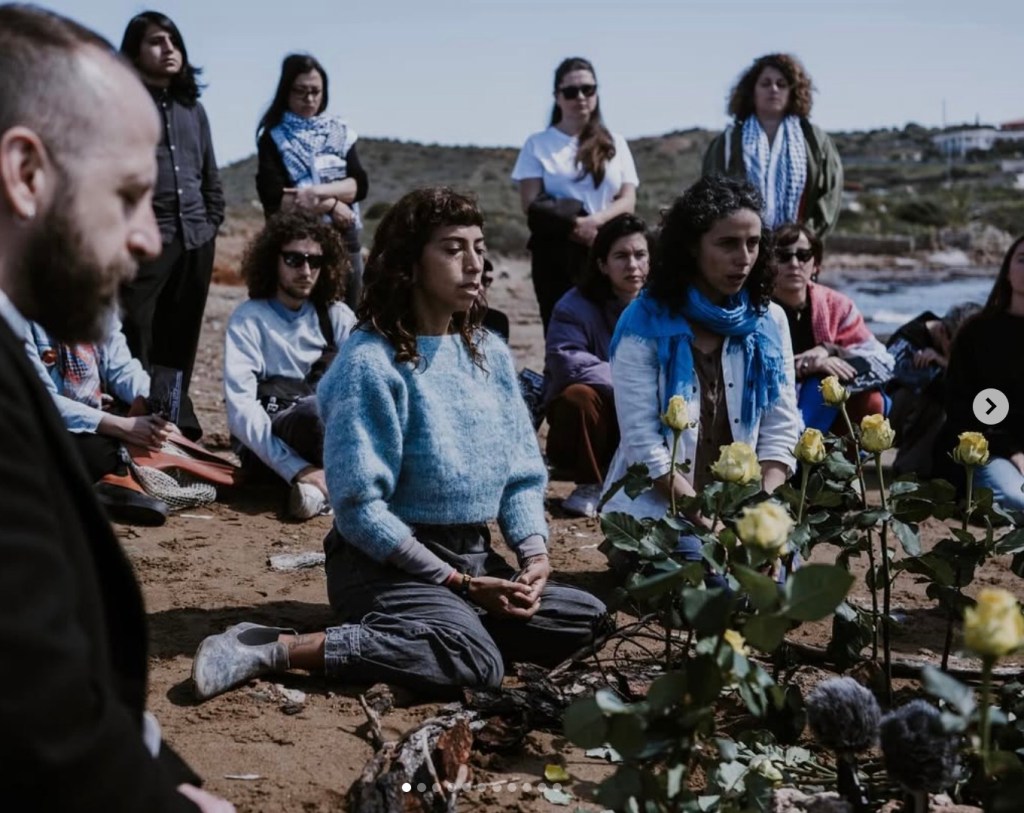
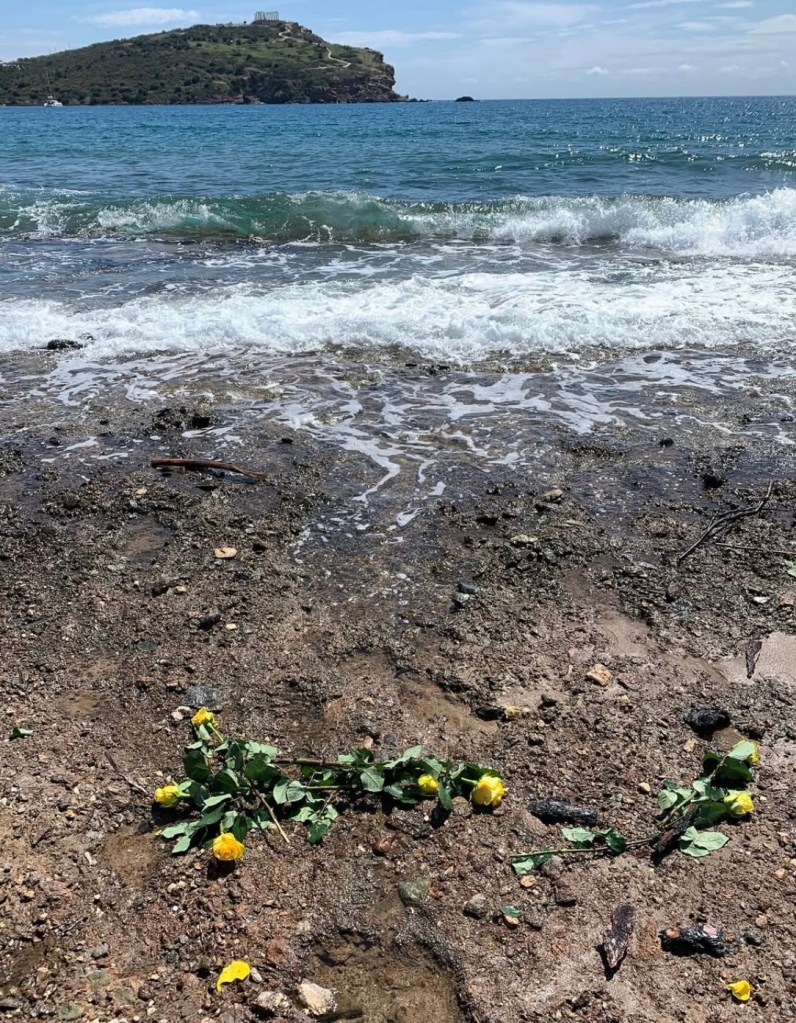
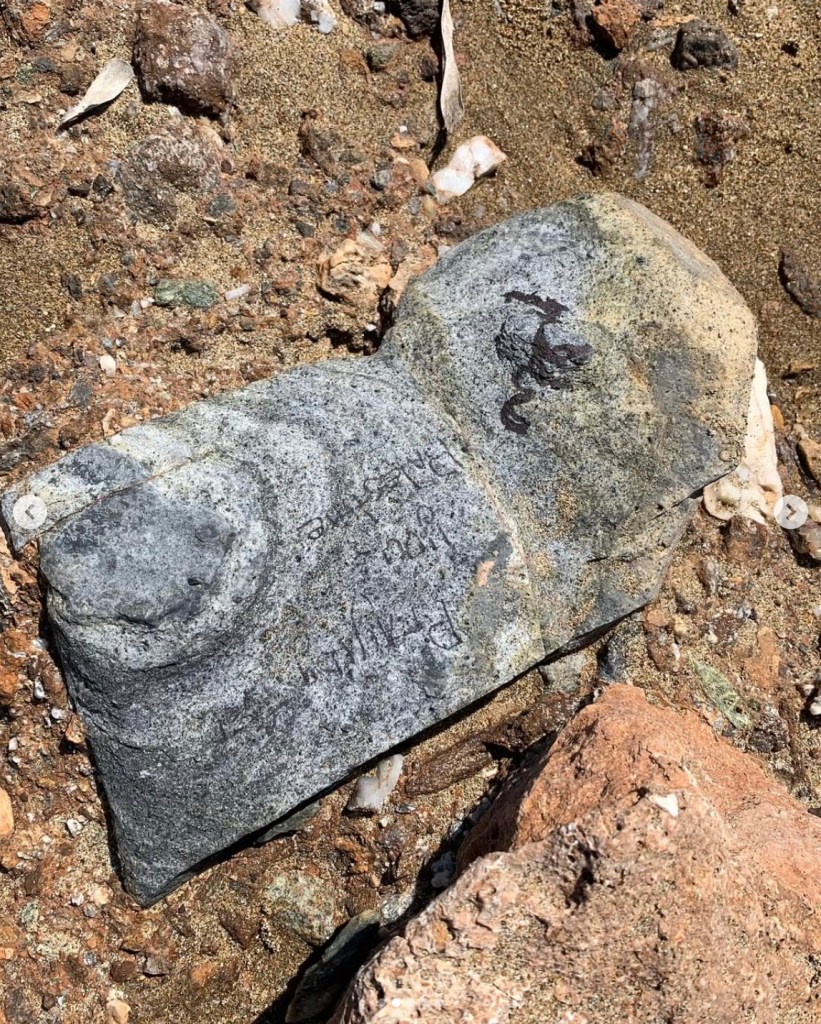
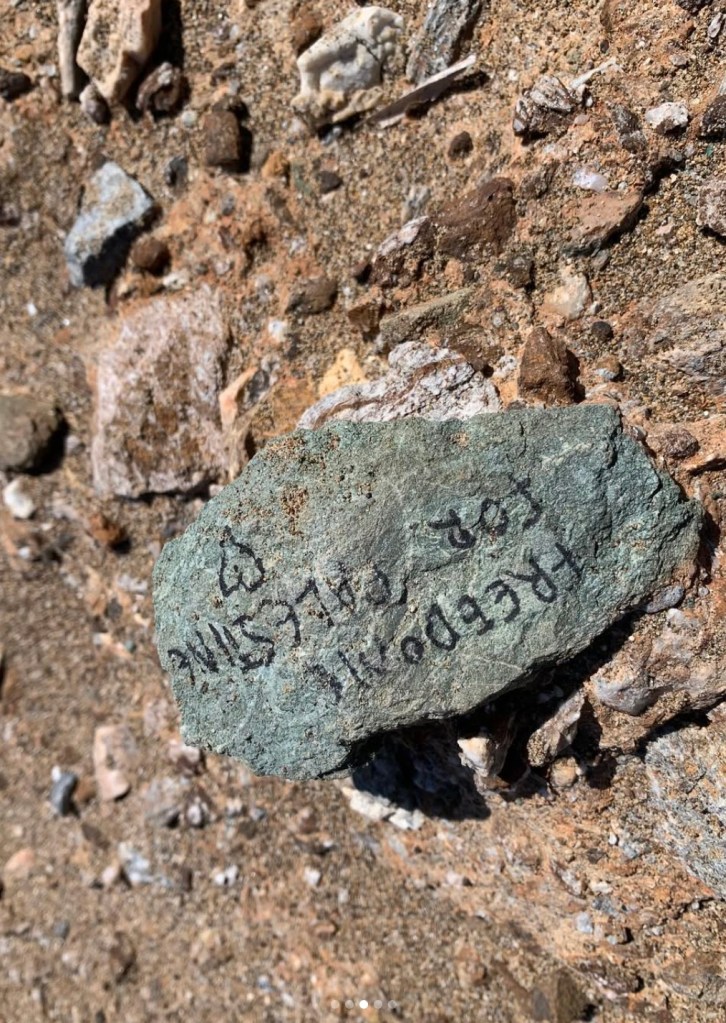
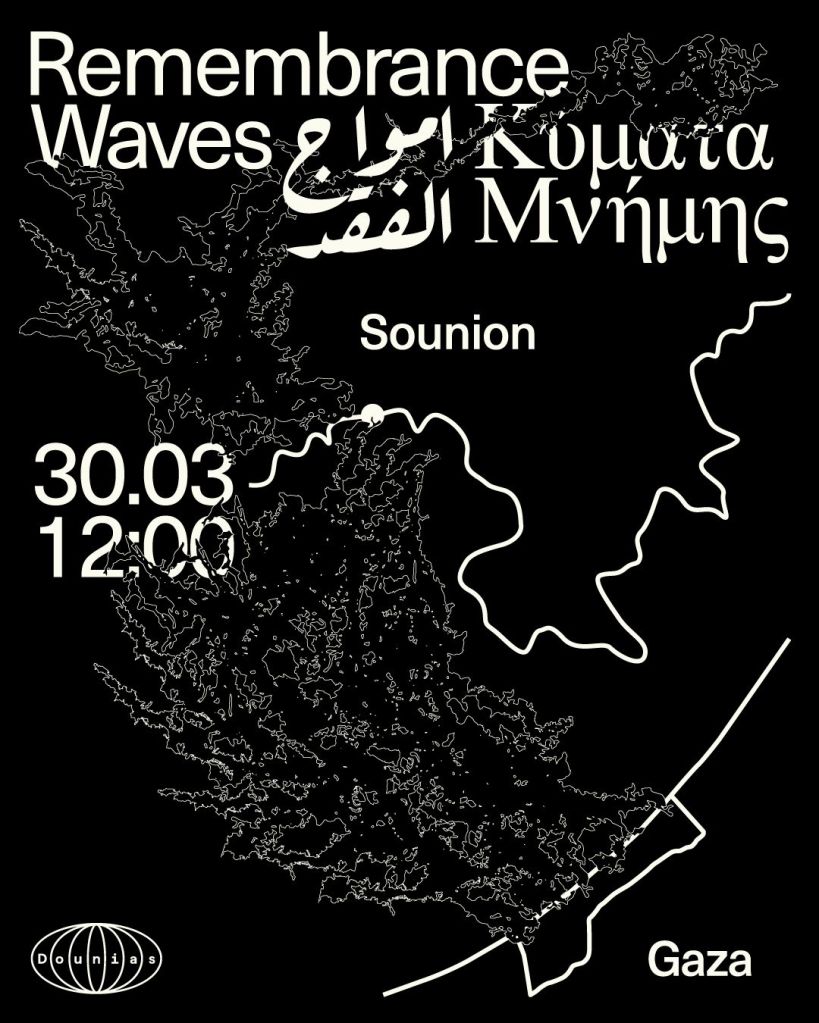
On March 30 we organised Remembrance Waves, a participative memorial for Land Day in Palestine at the shores of Sounio, Attika region in Greece.
Thanks to Carol Sansour @csansour and @douniasgreece for the invitation to conceive what turned out to be a really moving day. And many thanks to all the people who helped to shape to it, with love and trust: Marios, Artemis, Zoe, Katerina, Alex, Petros, Stella, Juan, Nuno, Sophia, Phil, Teddy.
We’ll share soon videos with proper credits and more info. For now some images of the waves crashing at our feet…
And shouts out to the beautiful card that Juan de Dios Solano designed for the occasion!!
————
Gracias a todos los que vinieron ayer a Sounio para nuestro memorial participativo “Remembrance Waves” por el Día de la Tierra en Palestina. Gracias por su apertura y sensibilidad.
Gracias a Carol Sansour y a Dounias por la invitación a concebir lo que resultó ser un día muy conmovedor. Y gracias a todas las personas que ayudaron a darle forma, con amor y confianza: Marios, Artemis, Zoe, Katerina, Alex, Petros, Stella, Juan, Nuno, Sophia, Phil, Teddy.
Próximamente compartiremos videos con los créditos correspondientes y más información. Por ahora, algunas imágenes de las olas rompiendo a nuestros pies…
¡Y un saludo a la preciosa tarjeta que diseñó Juan de Dios Solano para la ocasión!!
It has been inspiring to follow the collective process leading to this issue, with so many people working on urgent projects engaging with art, pedagogy and research as regenerative tools. Although everything always feels like a grain of sand in an implacable storm, having such works gathered is a good reminder of how many simultaneous efforts constantly battle the criminal world we live in. Explore the whole issue if you can! Link in bio :)
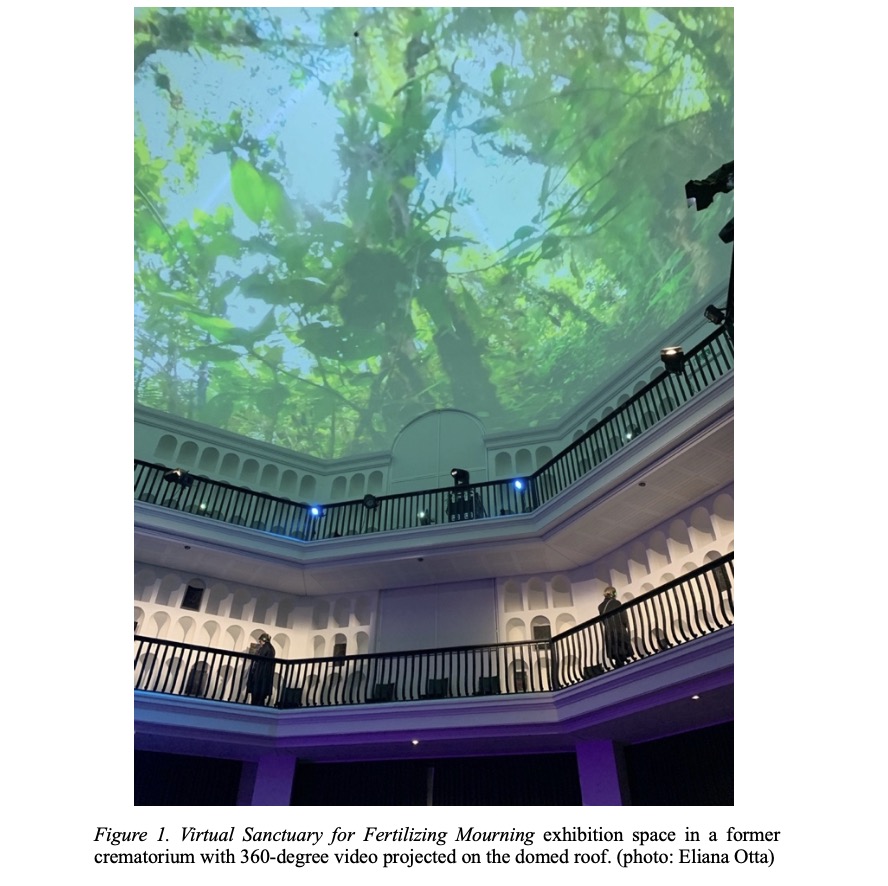
Un agradecimiento a Sue Spearey, Andrea Vela y a todos los que trabajaron en Reckoning Repairing Reworlding: The (In)humanities, Artistic Practices, and Planetary Crisis, el número especial de Studies in Social Justice, que incluye una conversación sobre Virtual Sanctuary for Fertilizing Mourning.
Ha sido inspirador seguir el proceso colectivo que condujo a este número, con tanta gente trabajando en proyectos urgentes que se involucran con el arte, la pedagogía y la investigación como herramientas regenerativas. Aunque todo siempre se siente como un grano de arena en una tormenta implacable, tener estos trabajos reunidos es un buen recordatorio de cuántos esfuerzos simultáneos luchan constantemente contra el mundo criminal en el que vivimos. Enlace en bio. Explora el número completo si puedes :)
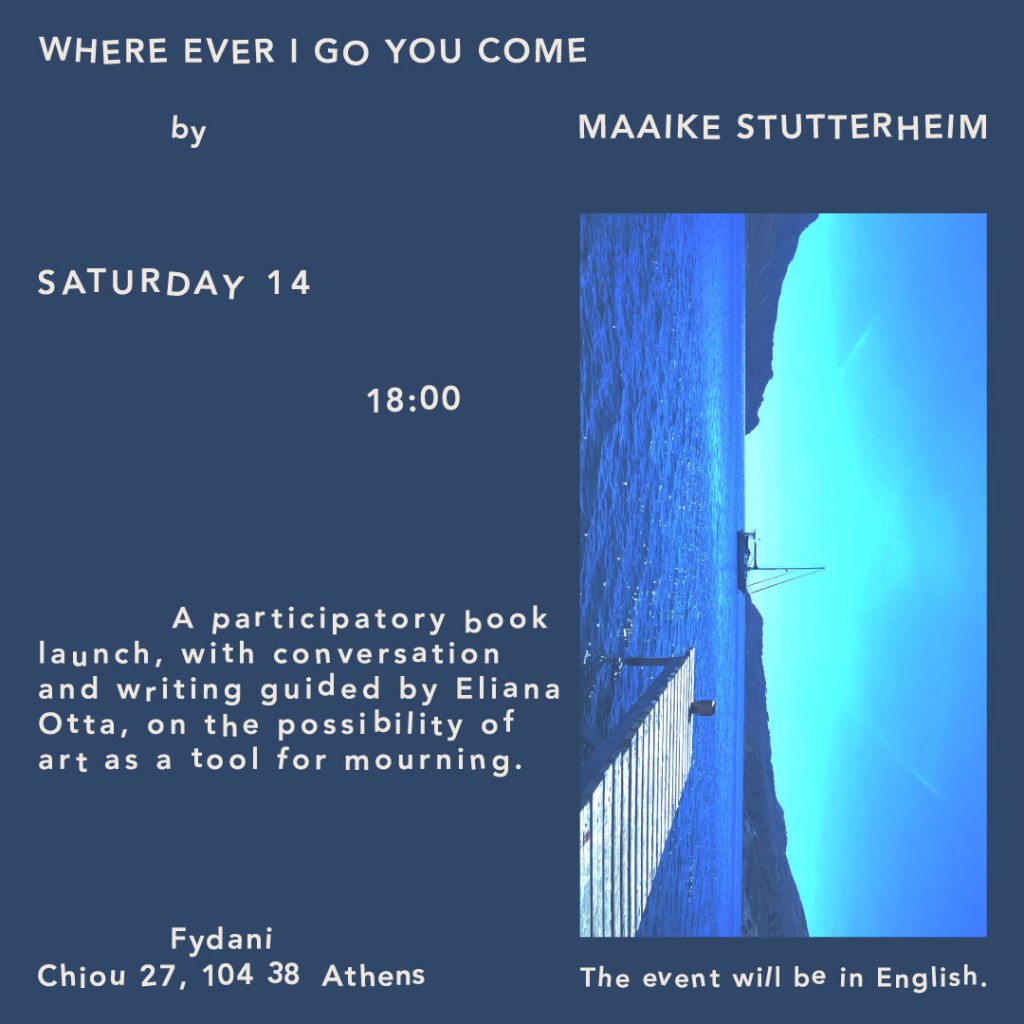
On December 14 I guided some exercises about art as a mourning practice for the launch of Maaike Stutterheim‘s book «Where ever I go you come». Here’s the descriptive text I wrote for the occassion. We thank Juan de Dios Solano for the beautiful design for social media.
WHERE EVER I GO YOU COME by Maaike Stutterheim – A participatory book launch
“One thing we all have in common
We have a mother
When I lost mine I thought I lost the ground beneath my feet”
This is how Maaike’s book begins. More words follow. Accompanied by images, old and new. Her mother, young, at the sea, pregnant, being loved, dead, at a taberna, adult, smiling, in bed.
This book is about her life and her death. This book is a work of mourning translated into art.
We are invited to observe it, talk about mourning, write, think and evoke, together. Then to talk a bit more and make a toast. The afternoon will be guided by artist and researcher Eliana Otta and Maaike will share with us her process of creating the book.
Picture by Daniela BrasilPicture by Daniela Brasil
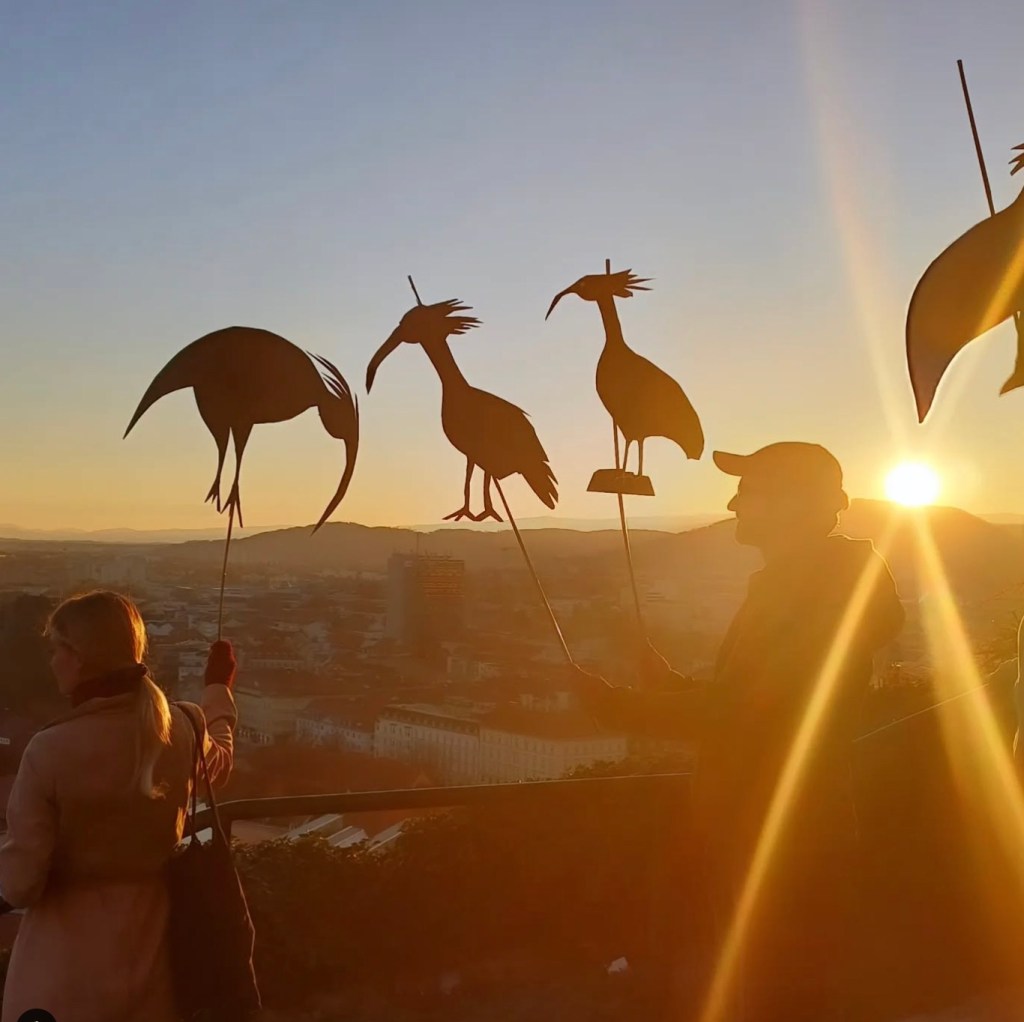
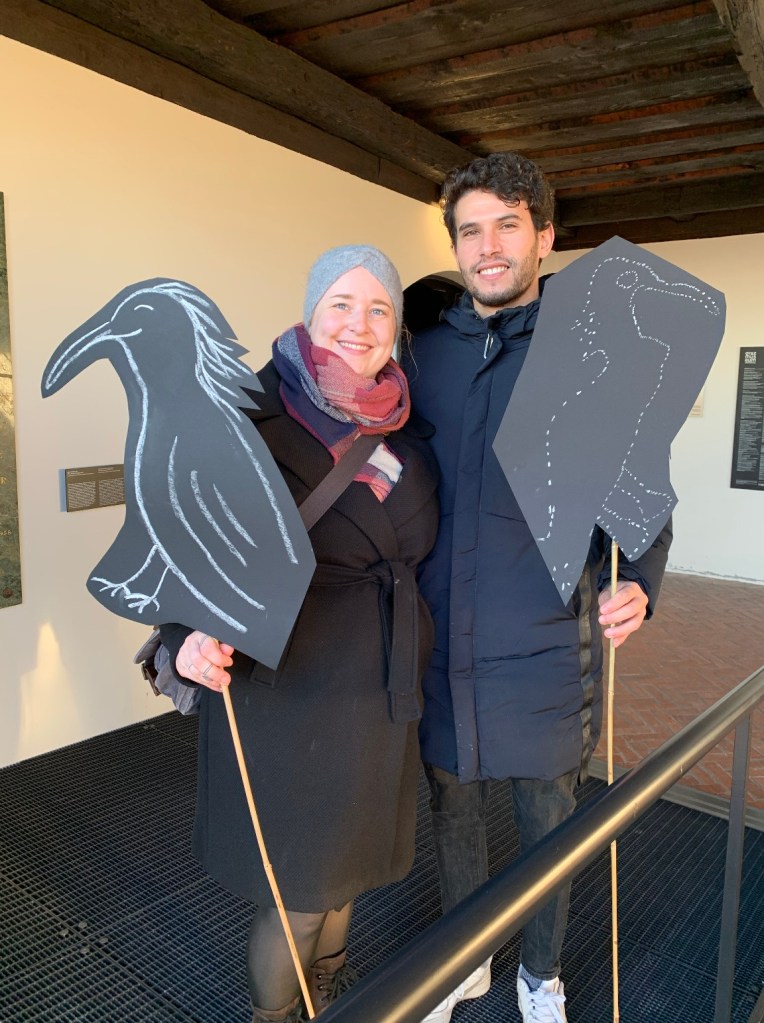
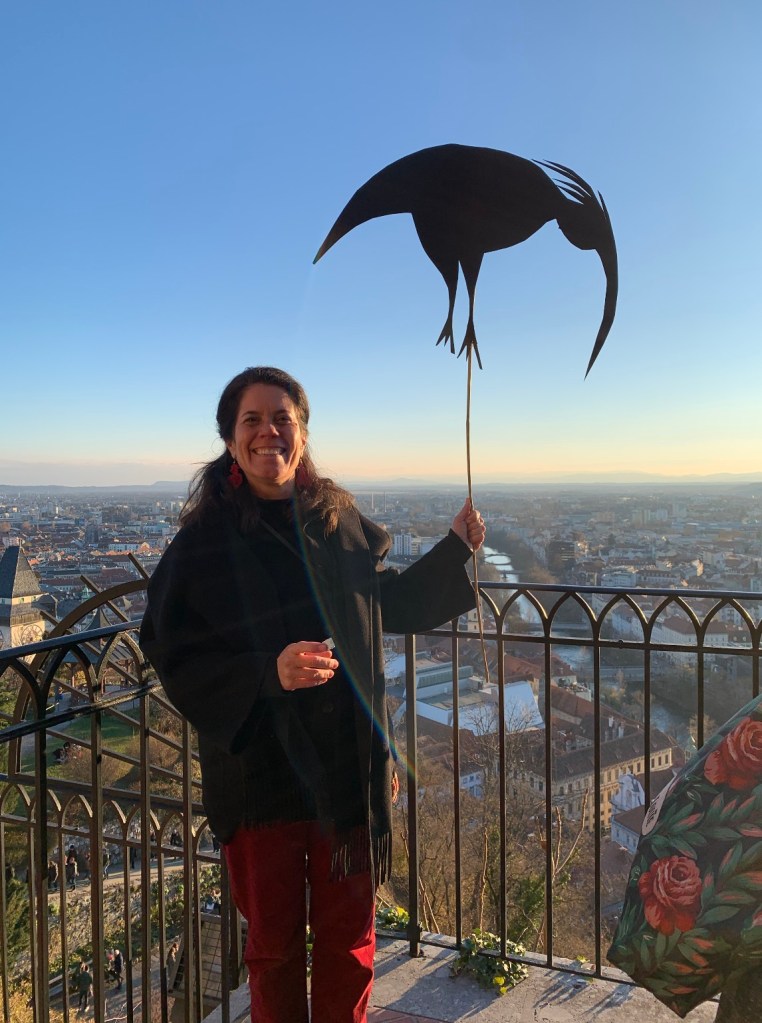
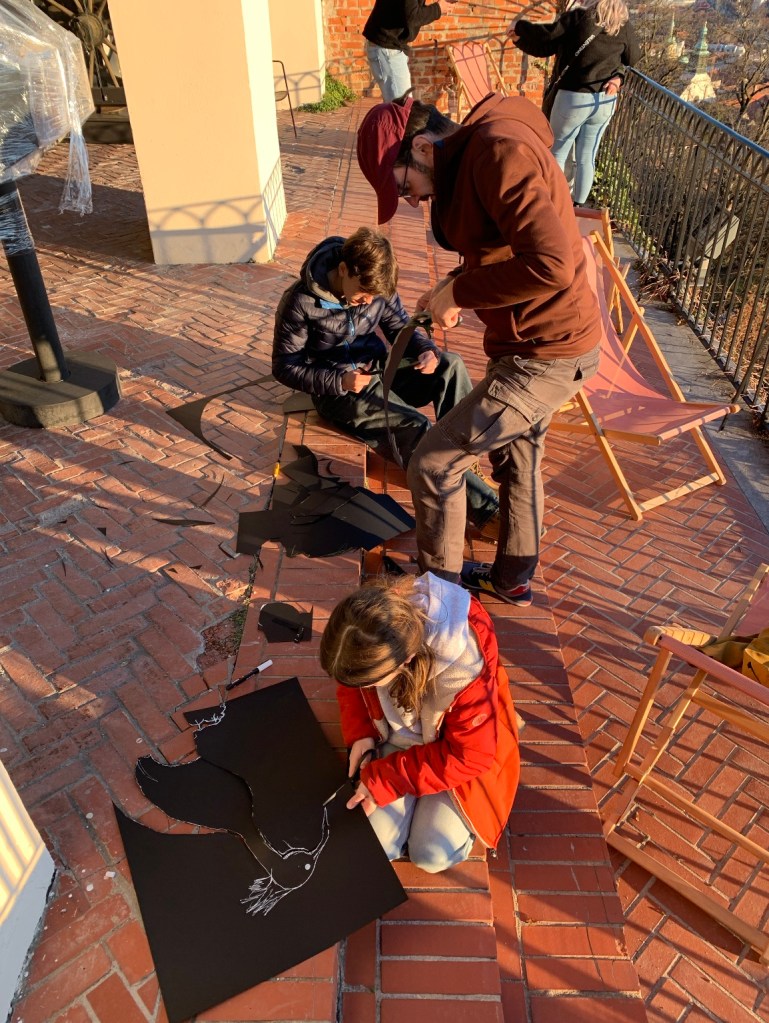
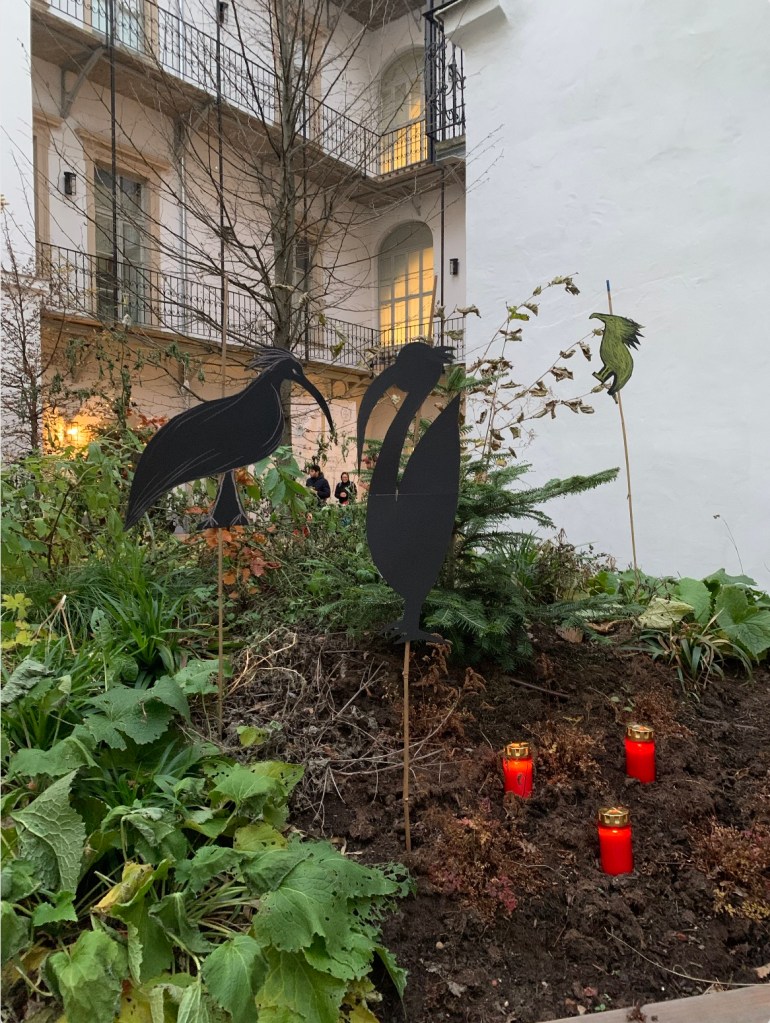
On November 30 I guided a procession dedicated to the Bald Ibis that used to live in Graz, Austria. Here’s the text inviting to the event, organized by Daniela Brasil, curator of the exhibition Habitat Graz at Graz Museum:
On the Remembrance Day for Lost Species, we embark on a historical journey to medieval Graz and follow in the footsteps of the Northern Bald Ibis to grieve for endangered and extinct species. Starting at the Graz Museum Schlossberg, where a preserved specimen of a Northern Bald Ibis is on display, we set off together on a mourning procession towards the medieval summer residence of the Northern Bald Ibis, finishing at the Graz Museum.
Following Eliana Otta’s invitation on how to hold collective mourning and regenerative processes, participants will create a collective commemorative piece to be installed in the Museum’s yard and the exhibition Habitat Graz “Altar for our more-than-human ancestors”. Martin Roland will share his collection of multi-faceted stories around the Waldrapp, going back to the symbolic and spiritual meaning humans constructed around this beautiful black bird all the way back to ancient Egypt.
With: Eliana Otta, Artist Martin Roland, Historian Österreichische Akademie der Wissenschaft Daniela Brasil, Curator Graz Museum
El 30 de noviembre guié una procesión dedicada al ibis calvo que solía vivir en Graz, Austria. He aquí el texto de invitación al acto, organizado por Daniela Brasil, comisaria de la exposición Hábitat Graz en el Museo de Graz:
En el Día del Recuerdo de las Especies Perdidas, nos embarcamos en un viaje histórico a la Graz medieval y seguimos los pasos del ibis calvo septentrional para llorar por las especies en peligro de extinción. Empezando en el Museo Schlossberg de Graz, donde se expone un ejemplar conservado de ibis calvo septentrional, partimos juntos en procesión de duelo hacia la residencia de verano medieval del ibis calvo septentrional, terminando en el Museo de Graz.
Siguiendo la invitación de Eliana Otta sobre cómo llevar a cabo procesos colectivos de duelo y regeneración, los participantes crearán una pieza conmemorativa colectiva que se instalará en el patio del Museo y en la exposición de Habitat Graz «Altar para nuestros antepasados más que humanos». Martin Roland compartirá su colección de historias polifacéticas en torno al Waldrapp, remontándose al significado simbólico y espiritual que los humanos construyeron en torno a esta hermosa ave negra hasta el antiguo Egipto.
Con: Eliana Otta, Artista Martin Roland, historiador Österreichische Akademie der Wissenschaft Daniela Brasil, conservadora del Museo de Graz
Traducción realizada con la versión gratuita del traductor DeepL.com
En octubre, la revista Arte Informado publicó esta conversación que tuvimos con José Carlos Mariátegui y Víctor Vich sobre mi proyecto Santuario Virtual para un Duelo Fertilizante.
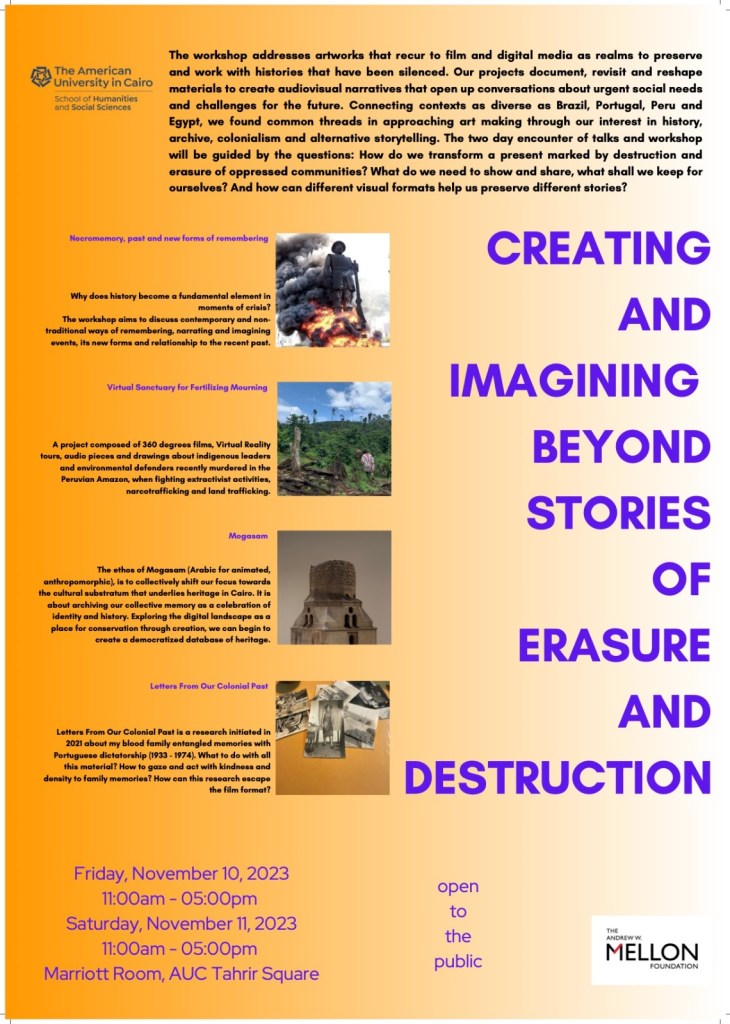
In November I participated in the two days encounter Creating and Imagining Beyond Erasure and Destruction, organized by the Department of History at the American University of Cairo, thanks to the invite of the artist Gian Spina. Here’s the text we wrote to introduce the event, in which I presented my project Virtual Sanctuary for Fertilizing Mourning:
The workshop addresses artworks that recur to film and digital media as realms to preserve and work with histories that have been silenced. Our projects document, revisit and reshape materials to create audiovisual narratives that open up conversations about urgent social needs and challenges for the future. Connecting contexts as diverse as Brazil, Portugal, Peru and Egypt, we found common threats in approaching art making through our interest in history, archive, colonialism and alternative storytelling. The two day encounter of talks and workshop will be guided by the questions: How do we transform a present marked by destruction and erasure of oppressed communities? What do we need to show and share, what shall we keep for ourselves? And how can different visual formats help us preserve different stories?
En noviembre participé en el encuentro de dos días Creando e imaginando más allá de la desaparición y la destrucción, organizado por el Departamento de Historia de la Universidad Americana de El Cairo, gracias a la invitación del artista Gian Spina. Aquí tenéis el texto que escribimos para presentar el evento, en el que presenté mi proyecto Santuario Virtual para un Duelo Fertilizante:
El taller aborda obras de arte que recurren al cine y los medios digitales como ámbitos para preservar y trabajar con historias que han sido silenciadas. Nuestros proyectos documentan, revisan y remodelan materiales para crear narrativas audiovisuales que abren conversaciones sobre necesidades sociales urgentes y desafíos para el futuro. Al conectar contextos tan diversos como Brasil, Portugal, Perú y Egipto, encontramos amenazas comunes al abordar la creación artística a través de nuestro interés por la historia, el archivo, el colonialismo y la narración alternativa. El encuentro de dos días de charlas y talleres estará guiado por las preguntas: ¿Cómo transformamos un presente marcado por la destrucción y el borrado de comunidades oprimidas? ¿Qué necesitamos mostrar y compartir, qué guardaremos para nosotros? ¿Y cómo pueden ayudarnos los diferentes formatos visuales a preservar historias diferentes?






 Eliana Otta