Where Are We Of? Where Are We From? Workshop for KILIM Hub VAHA

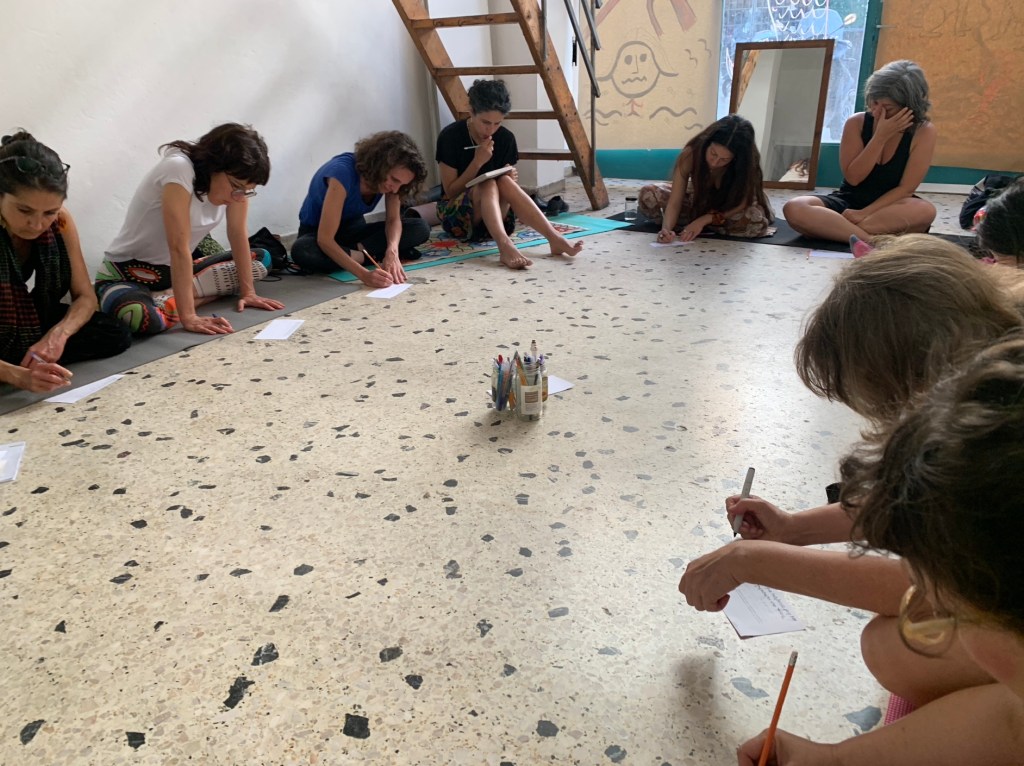
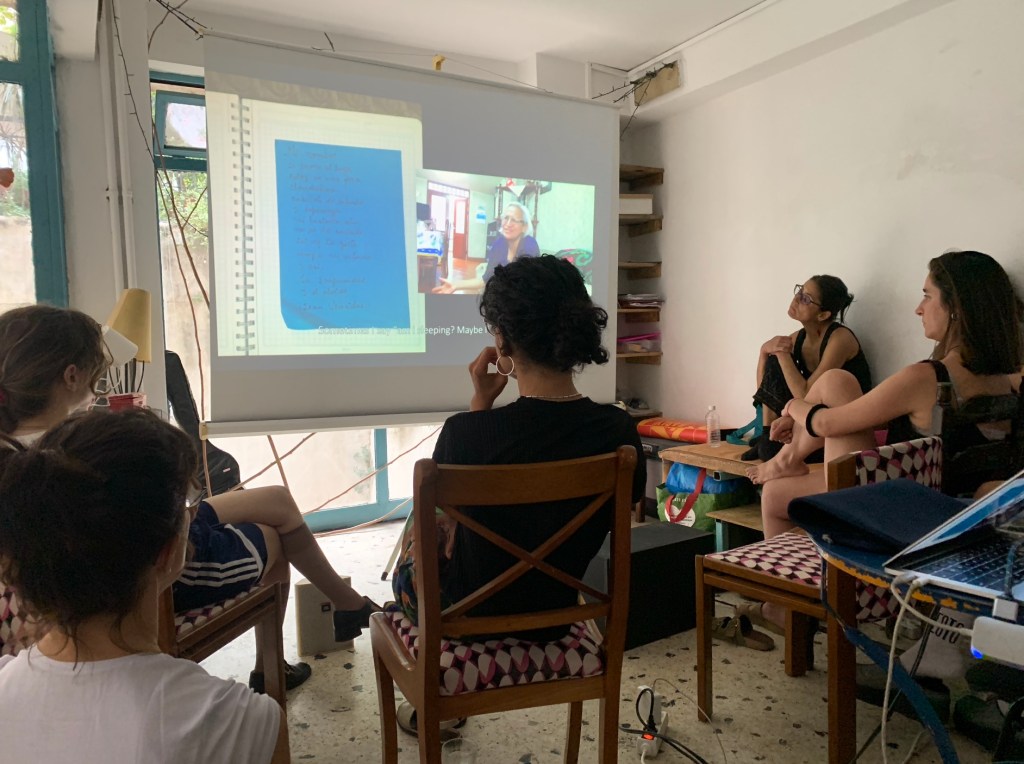
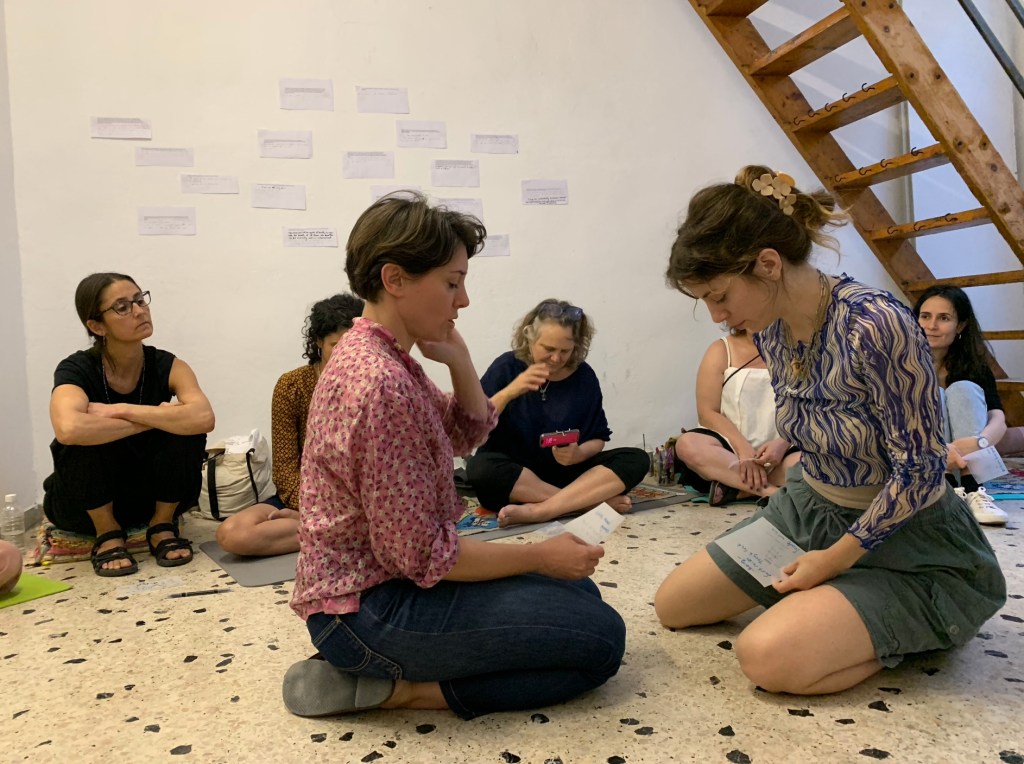
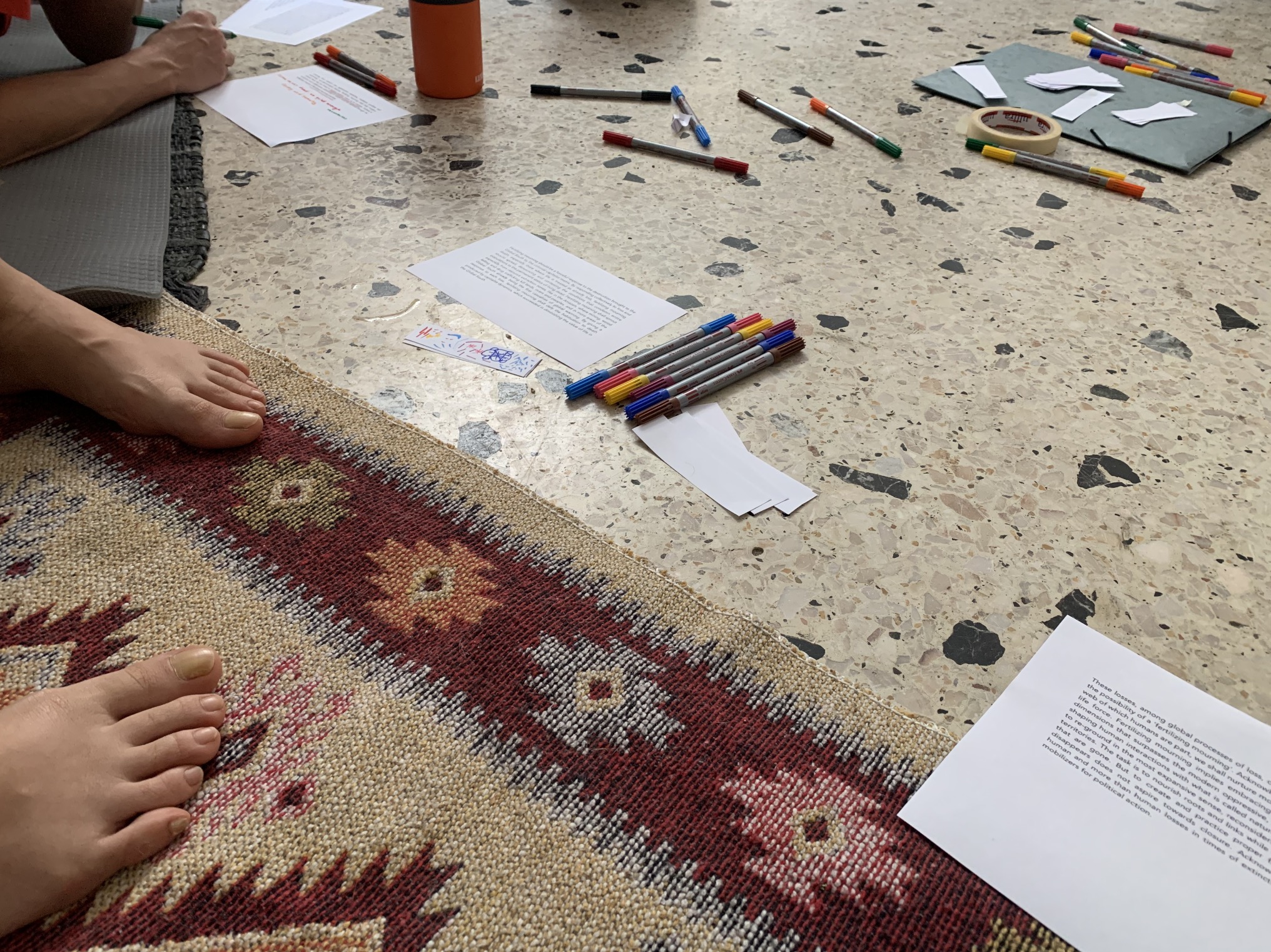
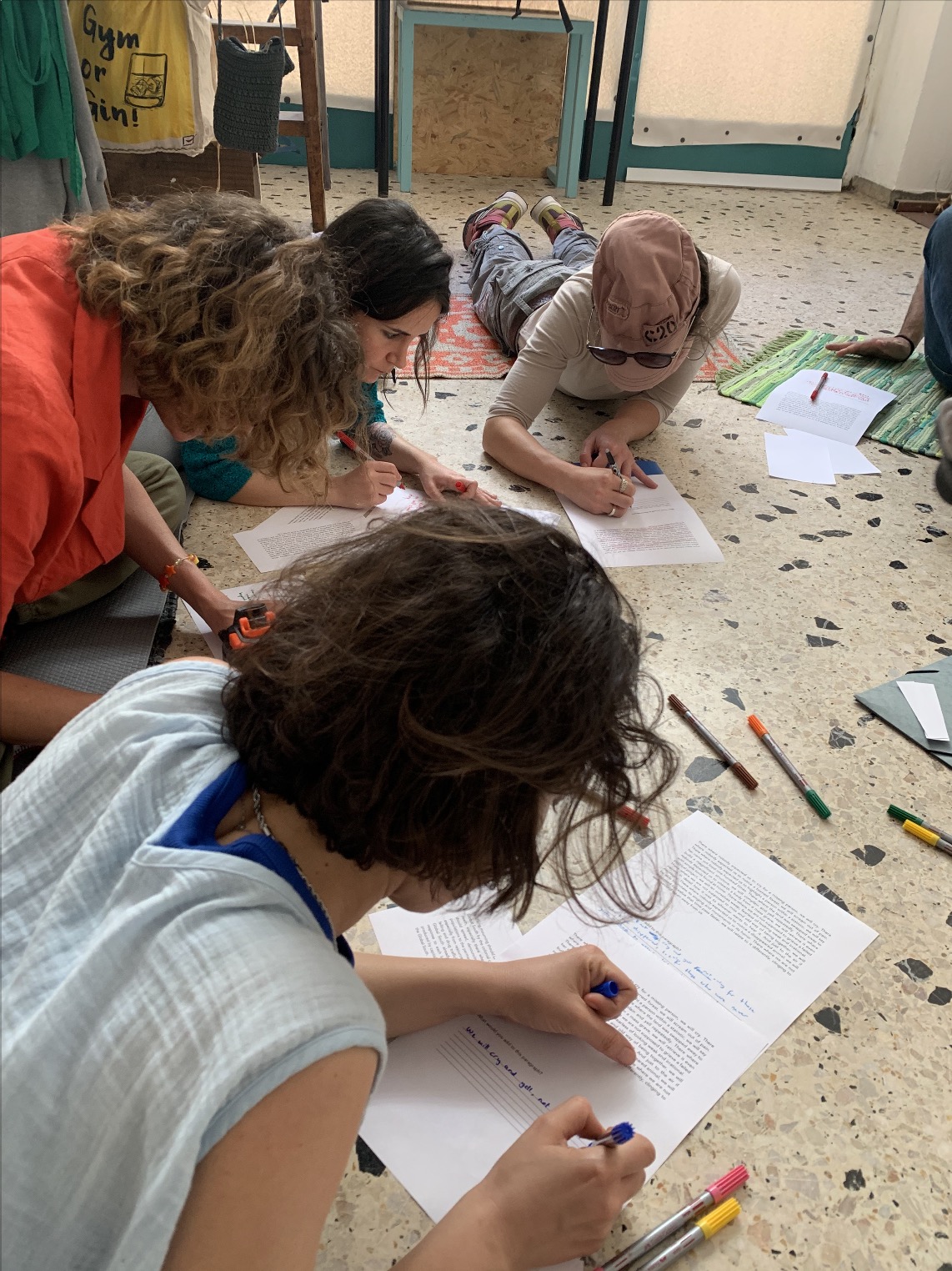
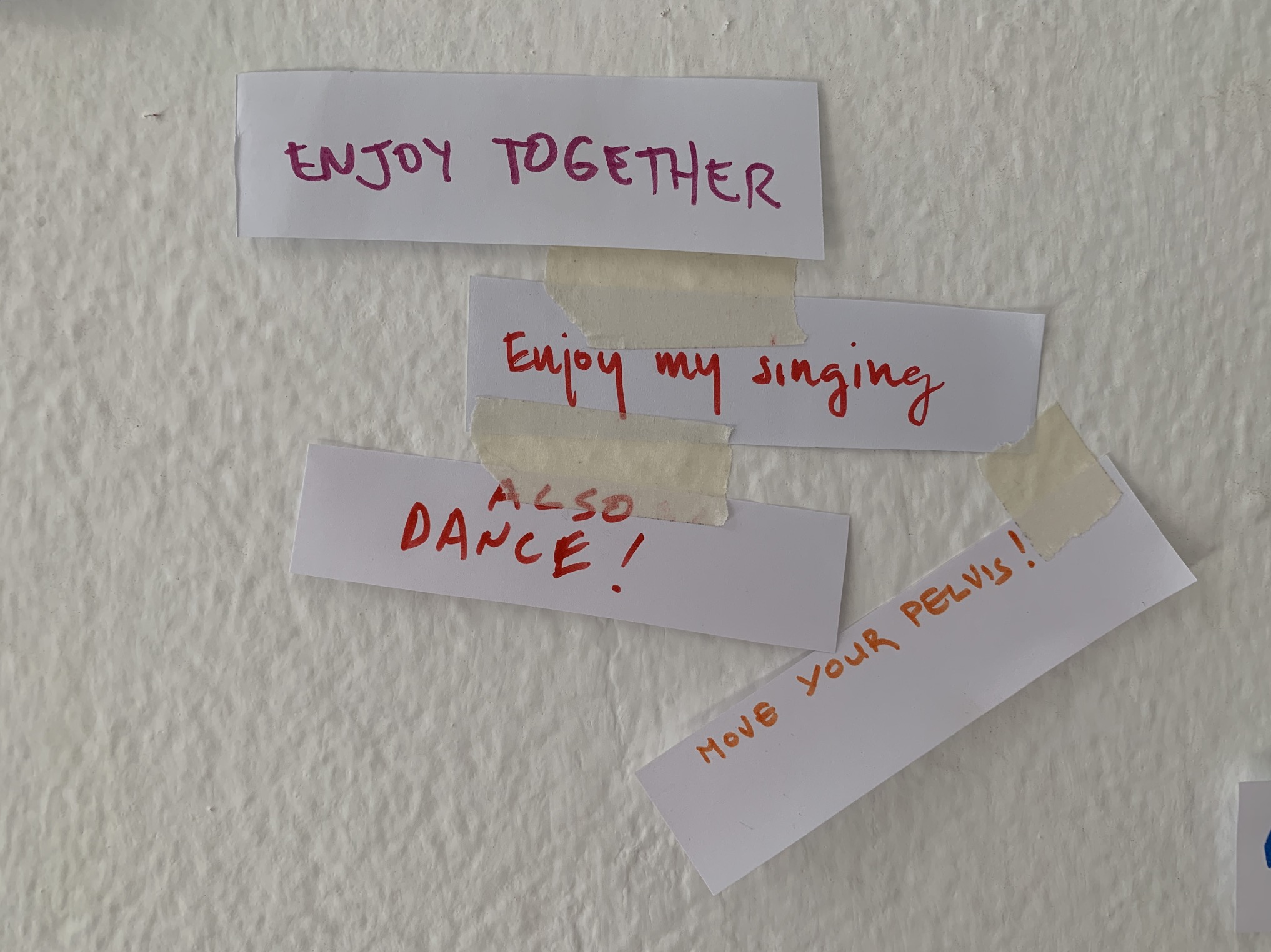
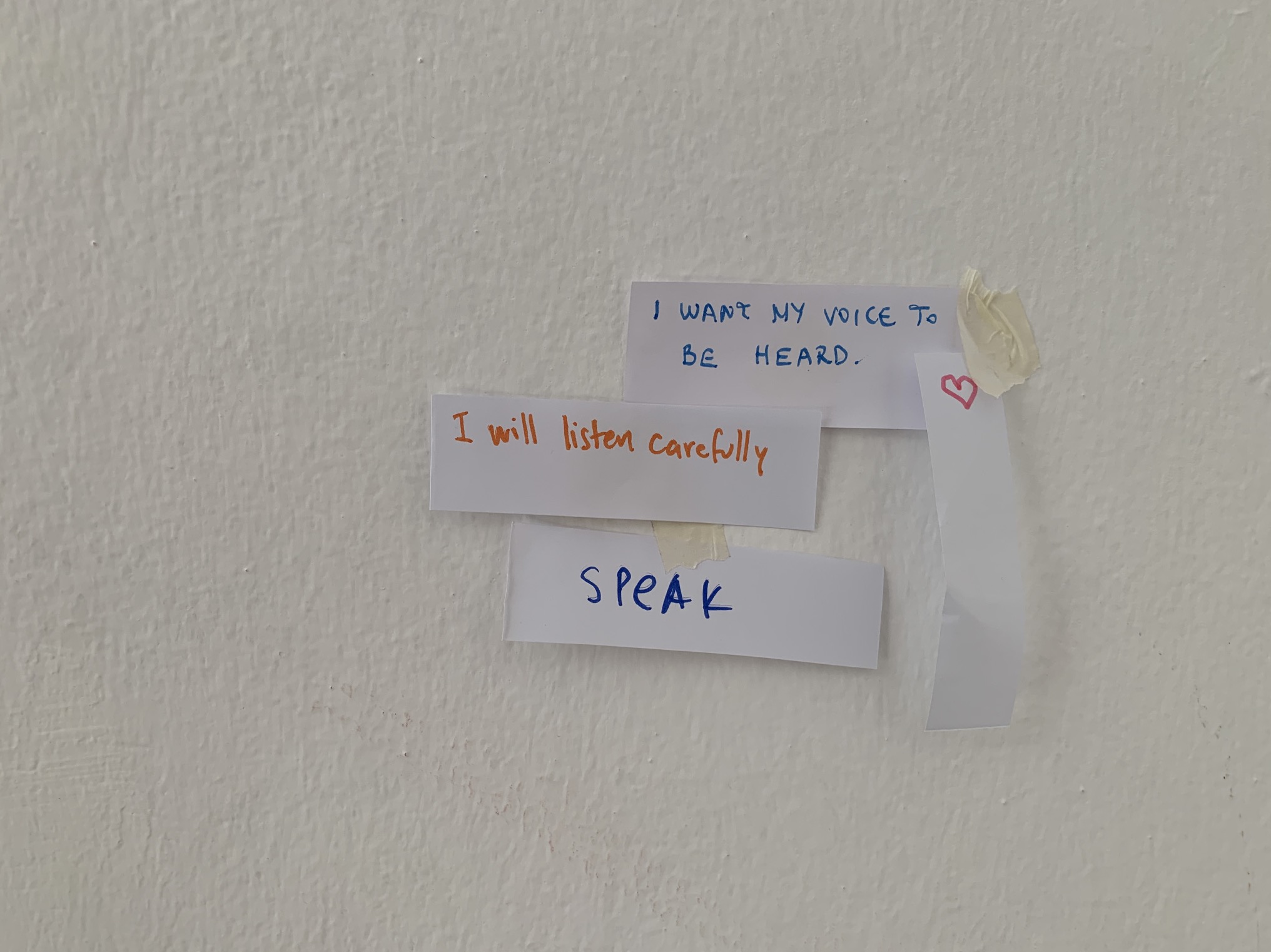
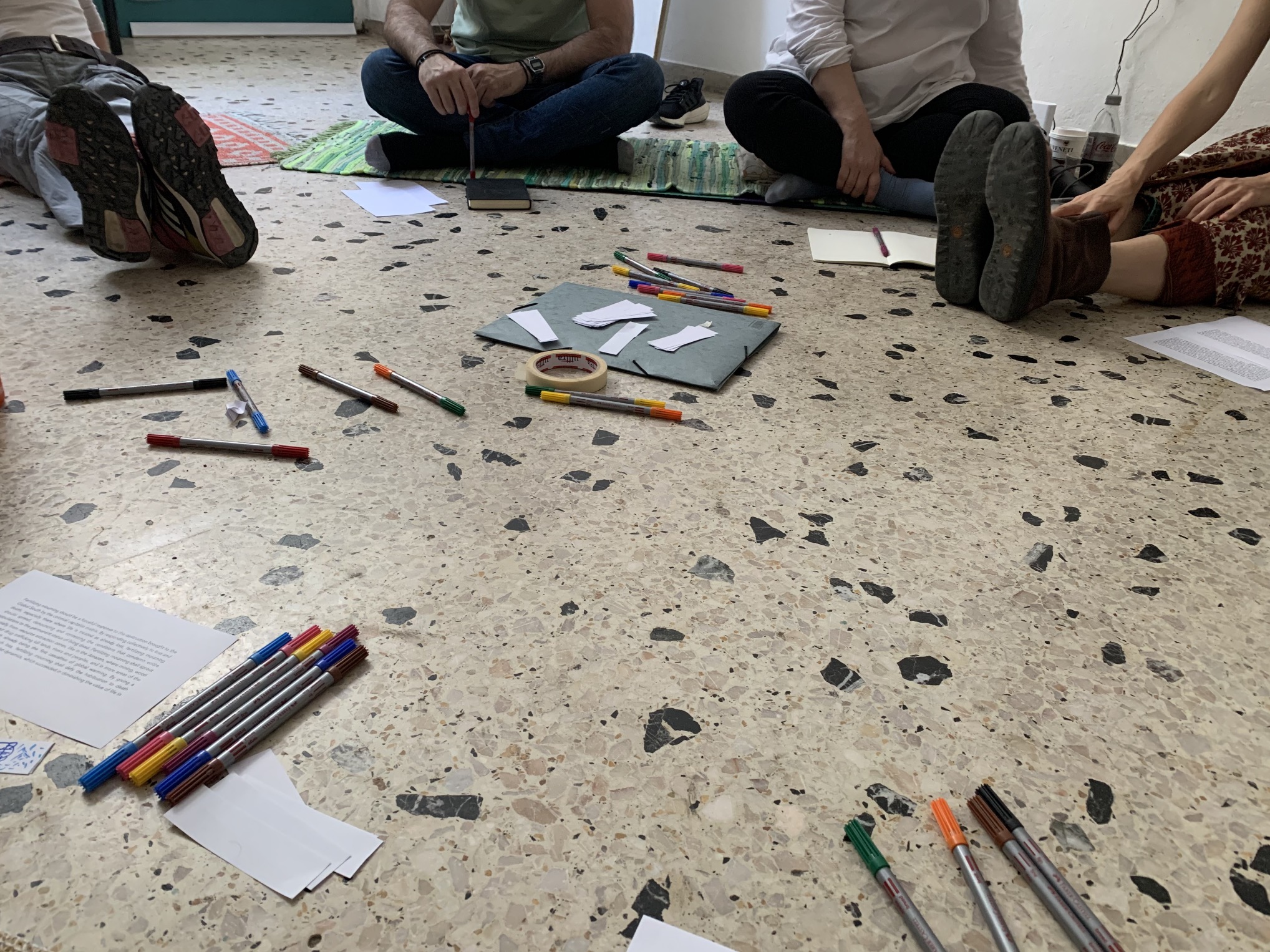
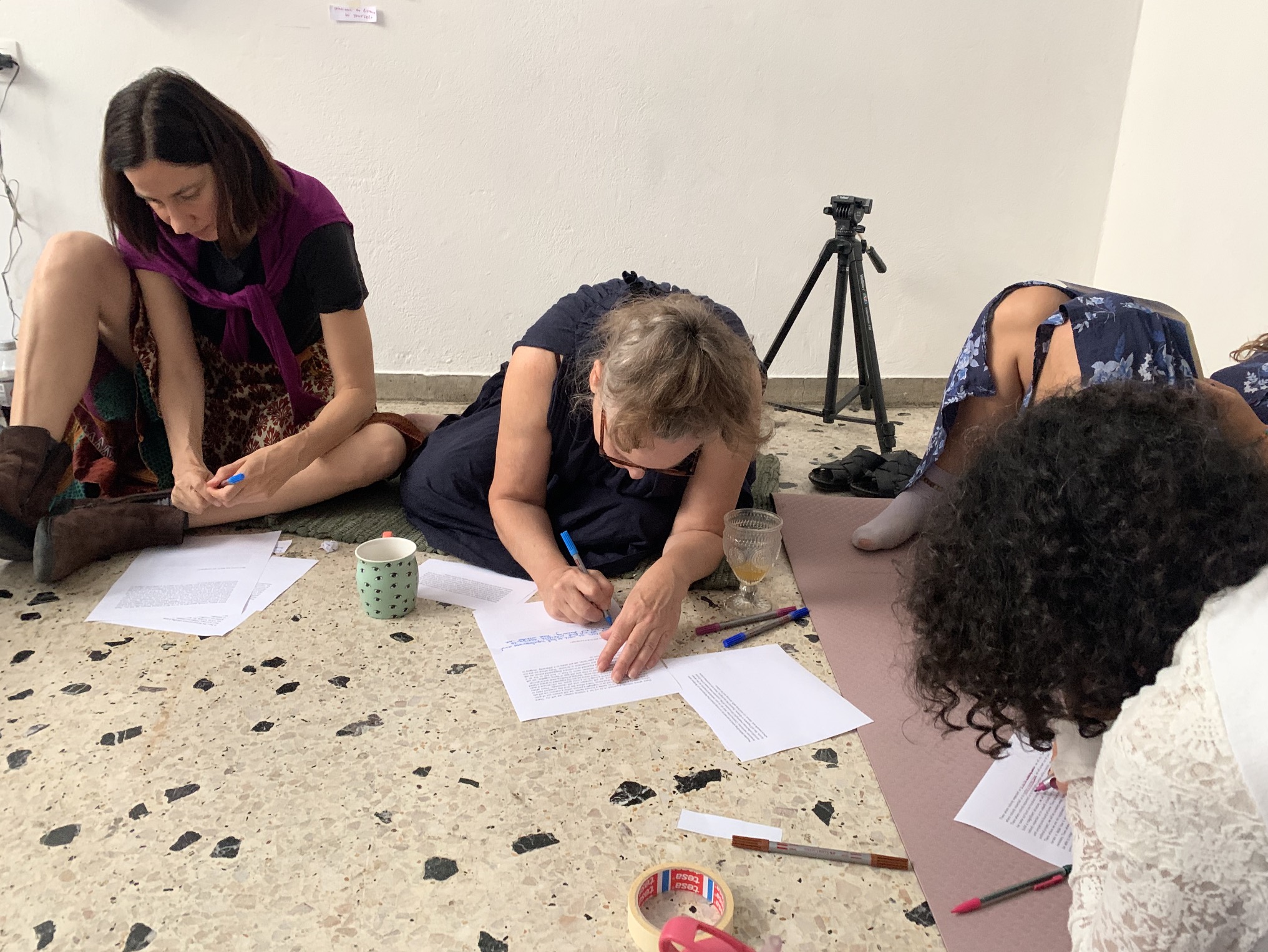
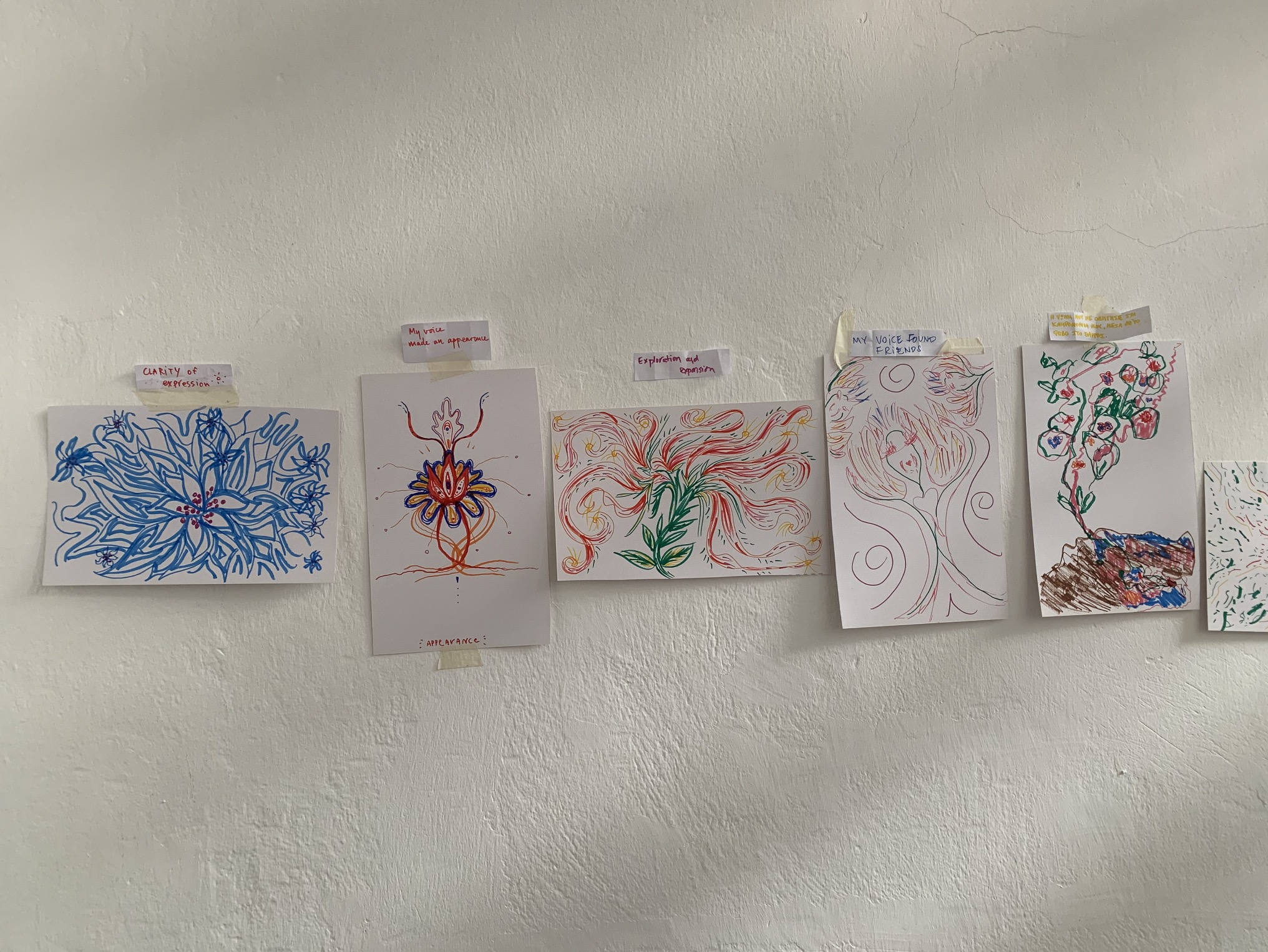
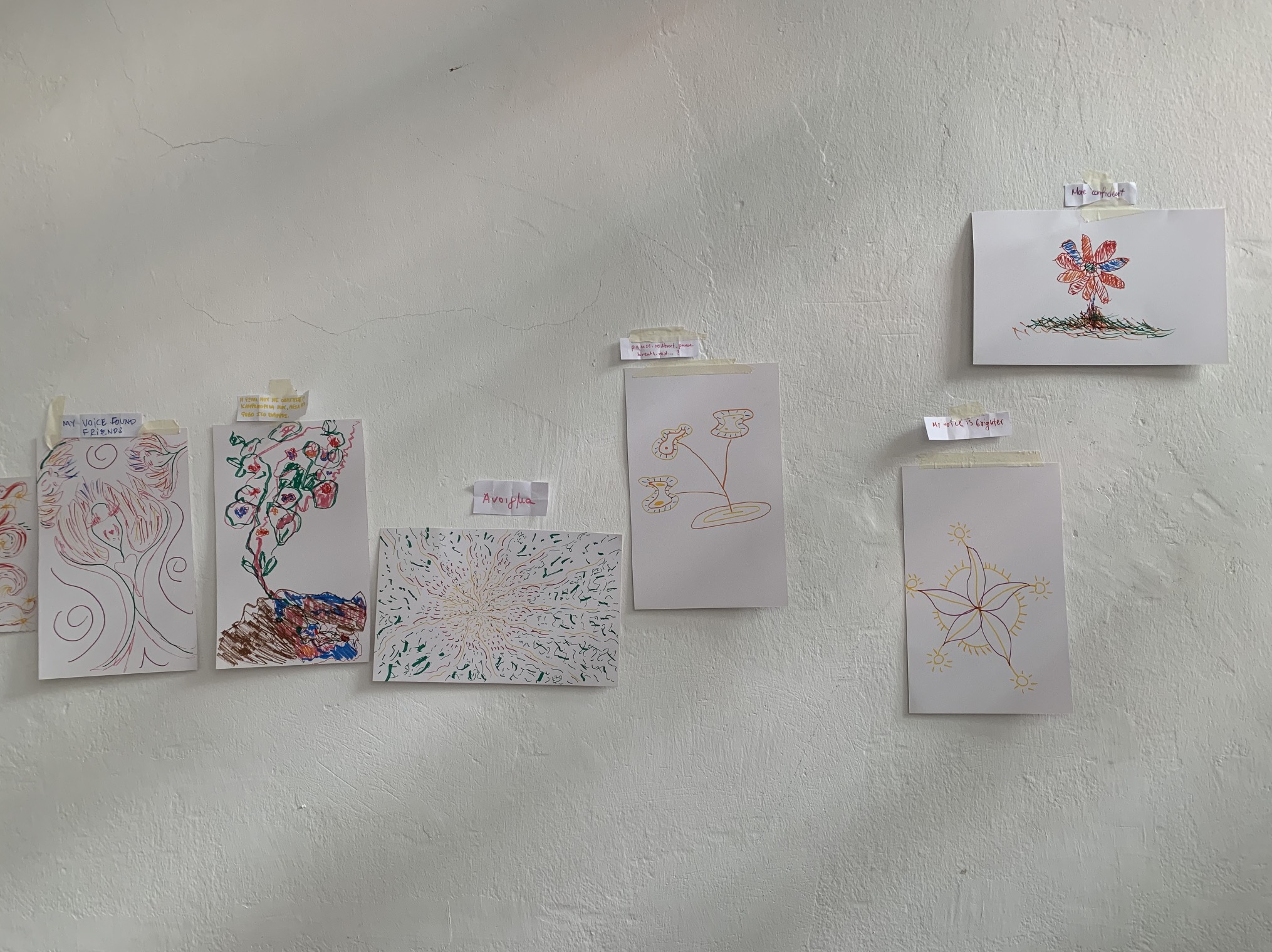
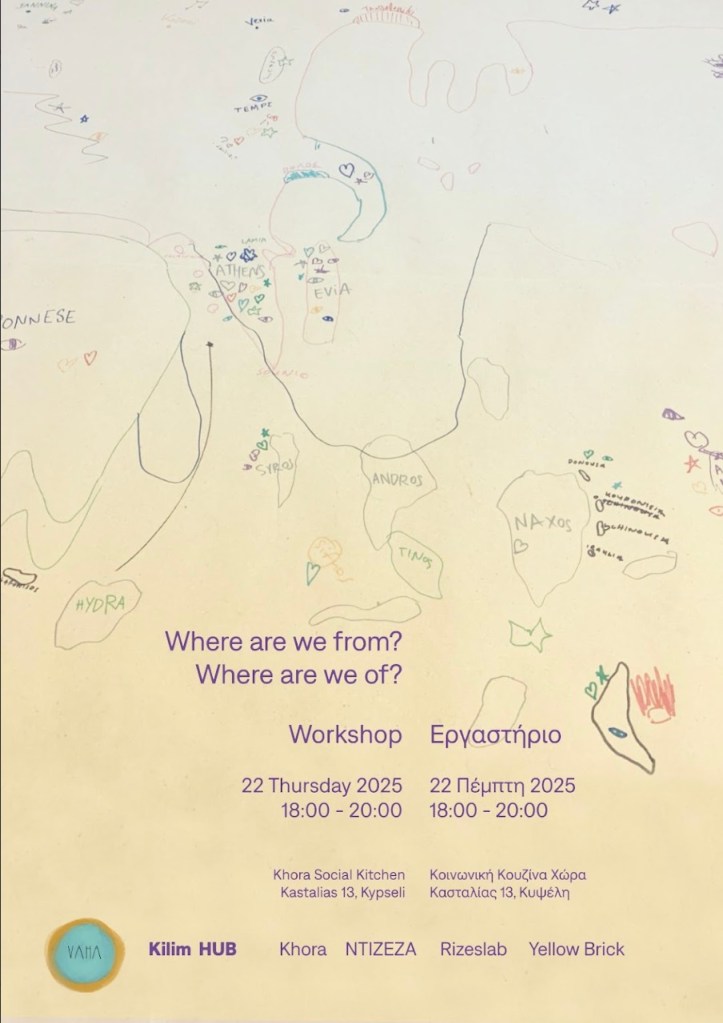
In the context of Kilim Hub @vahahubs, I made a workshop on May 22th, at Khora Athens, invited by Yellow Brick. The Kilim Hub project is still going on, stay tuned!

Where are we from? Where are we of?

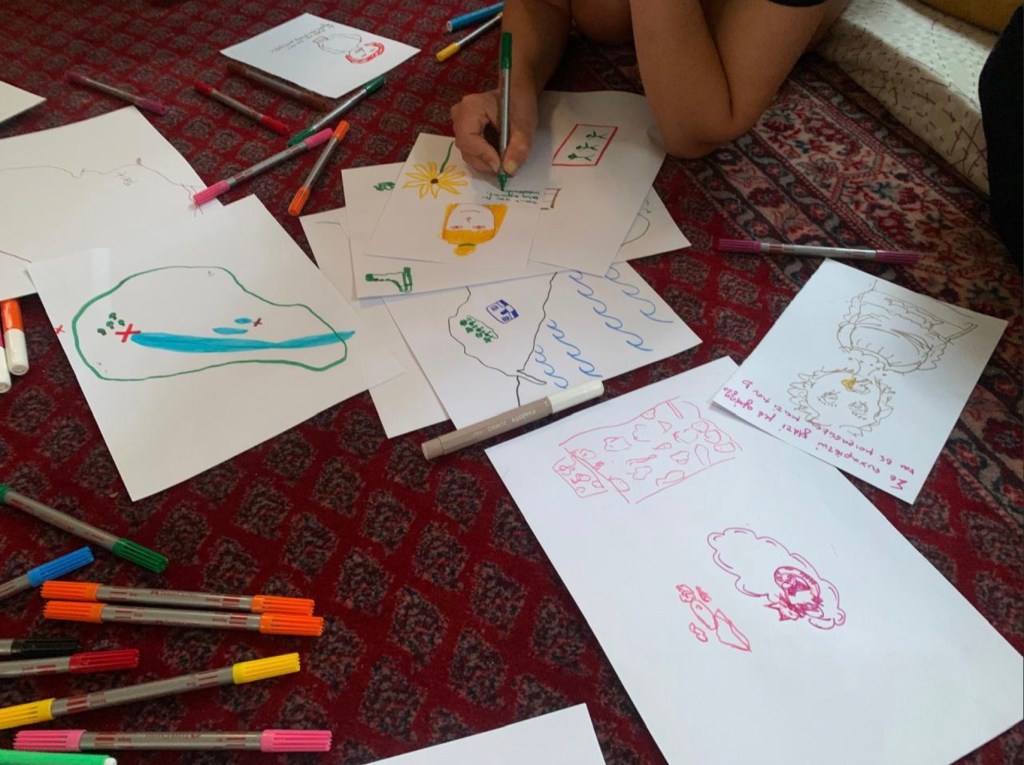
A workshop dedicated to explore and share migration stories of Khora users. In a city where migration is usually considered problematic, we’ll discuss how most people living in Athens were born somewhere else, have roots connected to other Greek cities or other countries.
We’ll discuss: what makes us feel at home? Which objects, which sounds, which smells, which languages, which songs? We’ll also talk about people that help us to live better and we’ll identify the local hero(in)es of our communities. Which persons and communities make us feel at home in Athens?
The workshop was not open to the general public but only for regular Khora users, due to the closing of its communal kitchen.

En el contexto de Kilim Hub @vahahubs, impartí un taller el 22 de mayo en Khora Atenas, invitado por Yellow Brick. ¡El proyecto Kilim Hub sigue en marcha, no se lo pierdan!

¿De dónde somos? ¿De dónde venimos?

Un taller dedicado a explorar y compartir historias de migración de usuarios de Khora. En una ciudad donde la migración suele considerarse problemática, hablaremos sobre cómo la mayoría de los habitantes de Atenas nacieron en otro lugar y tienen raíces en otras ciudades griegas o países.
Hablaremos sobre: ​​¿qué nos hace sentir como en casa? ¿Qué objetos, qué sonidos, qué olores, qué idiomas, qué canciones? También hablaremos de las personas que nos ayudan a vivir mejor e identificaremos a los héroes locales de nuestras comunidades. ¿Qué personas y comunidades nos hacen sentir como en casa en Atenas?
El taller no estuvo abierto al público general, sino solo a usuarios habituales de Khora, en el marco de las actividades de cierre de su cocina comunitaria.
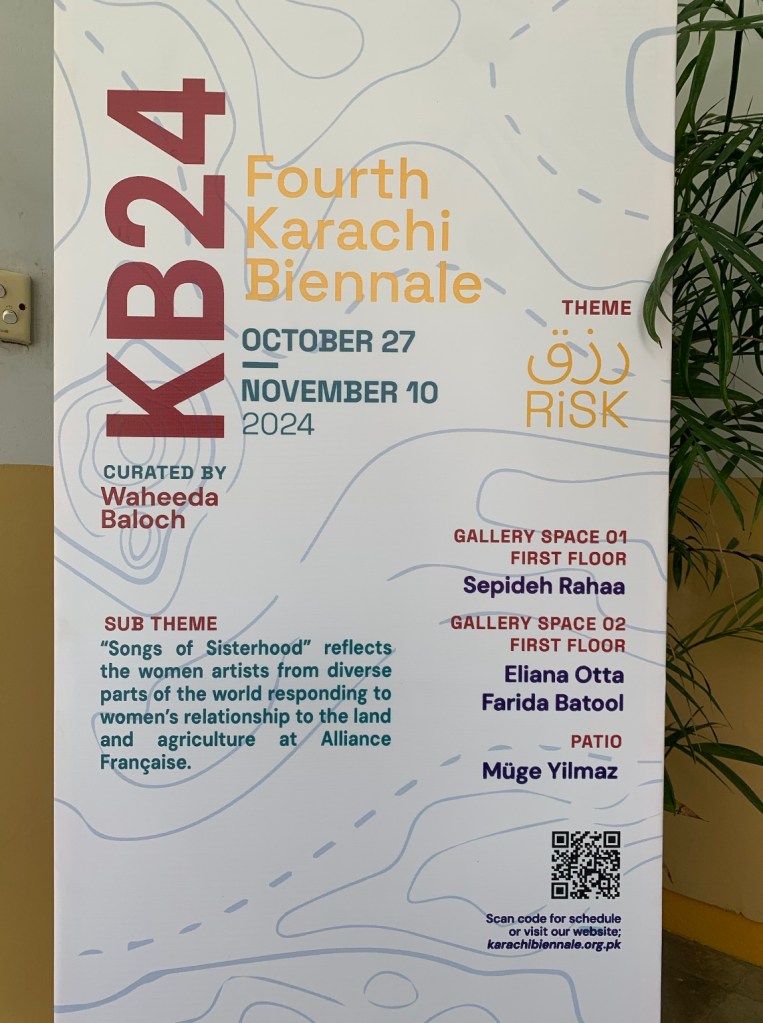
Payment to the Land at the Karachi Biennale! Pago a la Tierra en la Bienal de Karachi!

In October 2024 I travelled to Pakistán to participate in the Karachi Biennale, curated by Waheeda Baloch with the theme Risk, Food, Future and Fair Practices. This is the text I wrote about my work:

Payment to Land

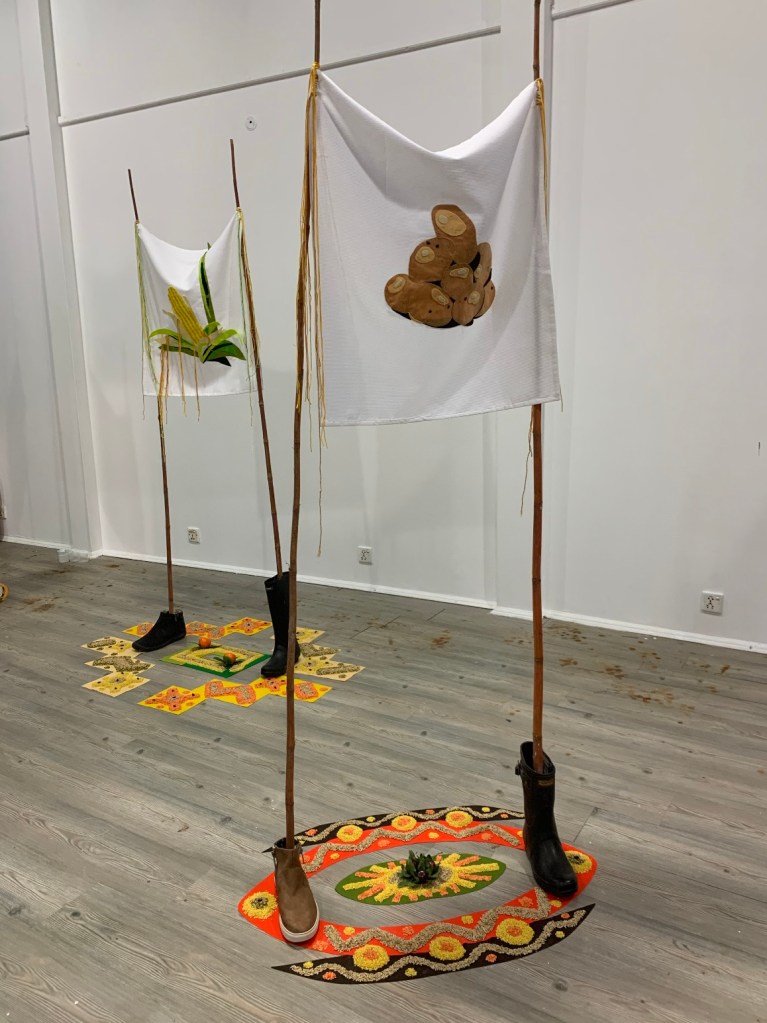
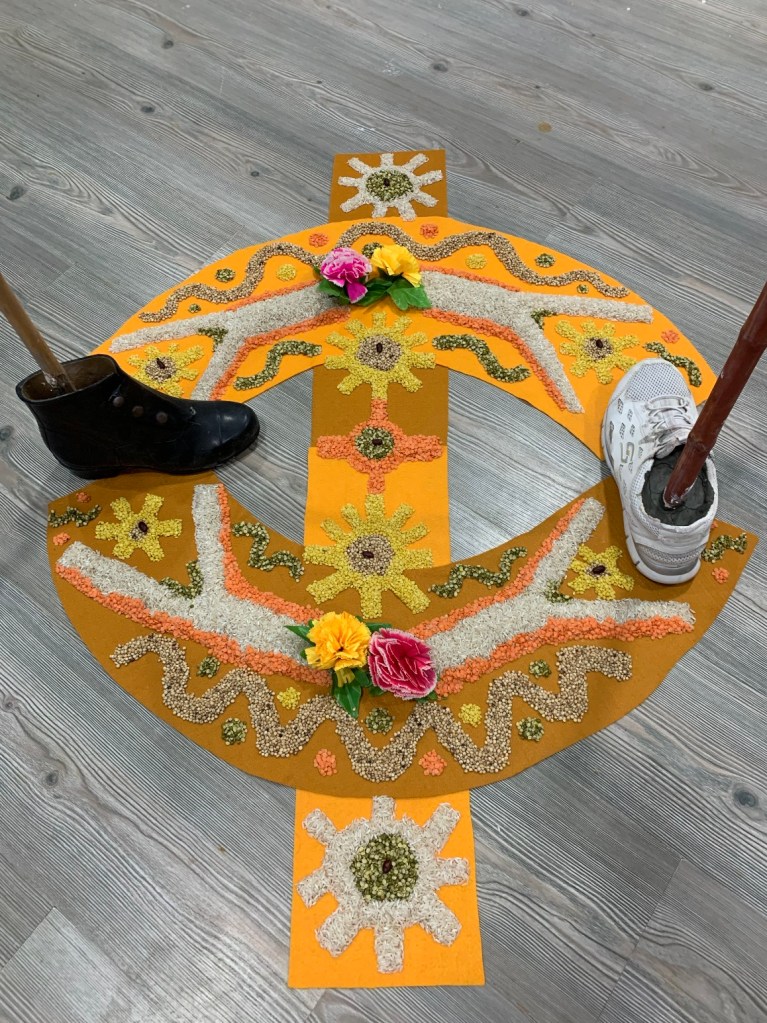
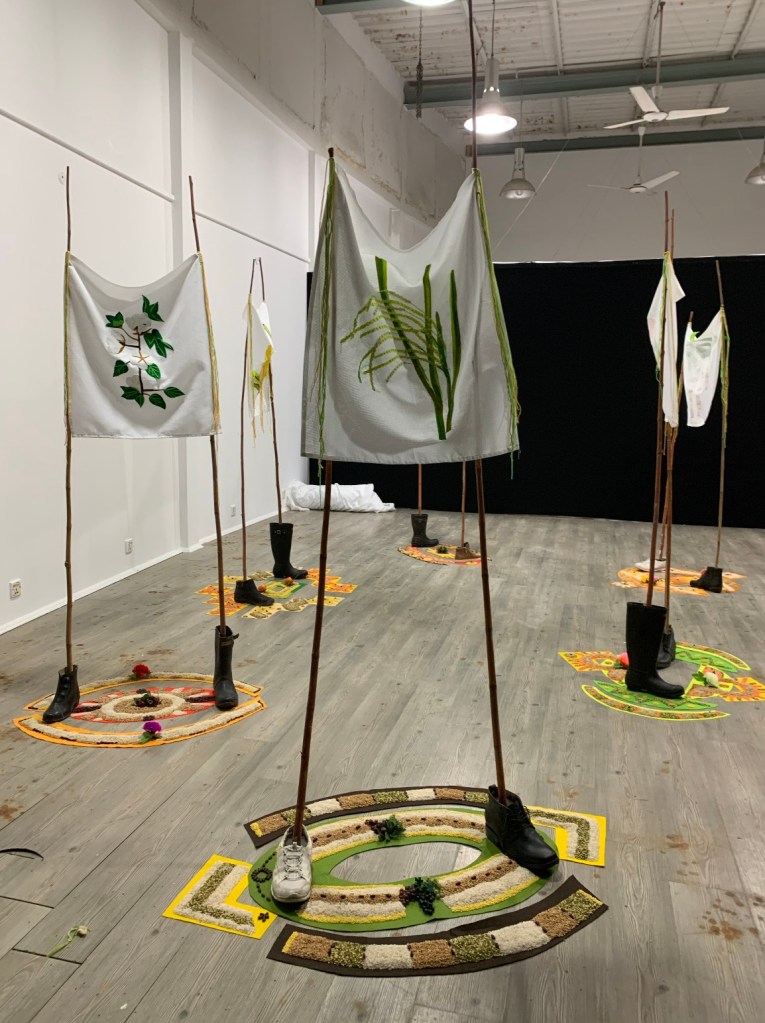
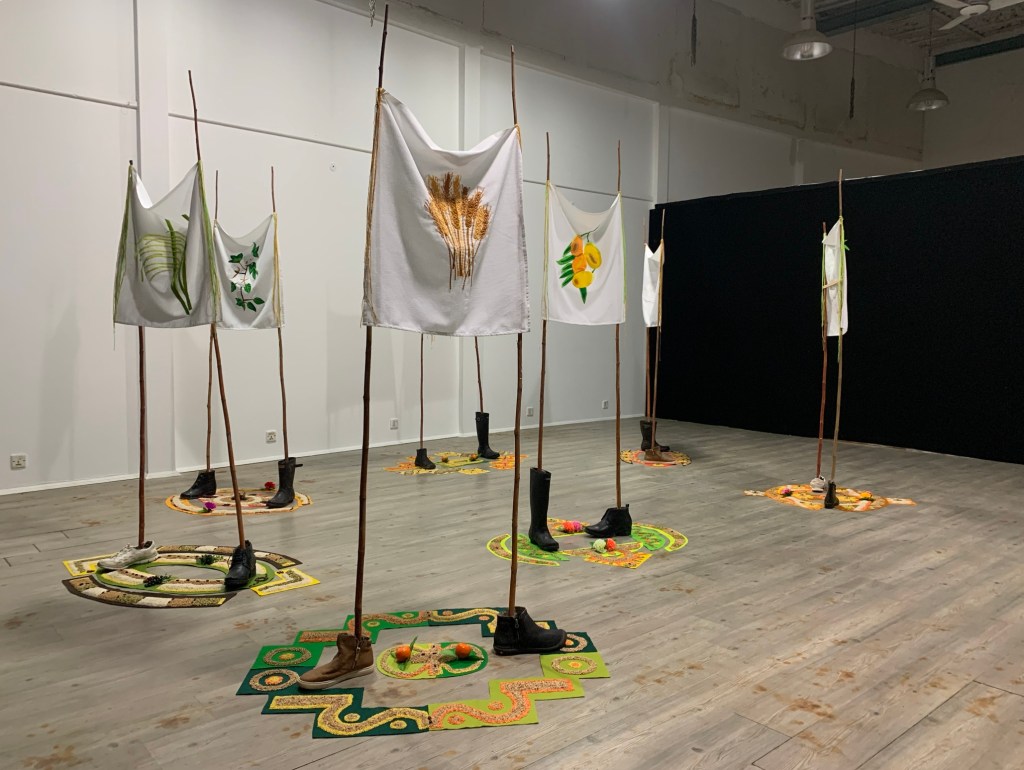
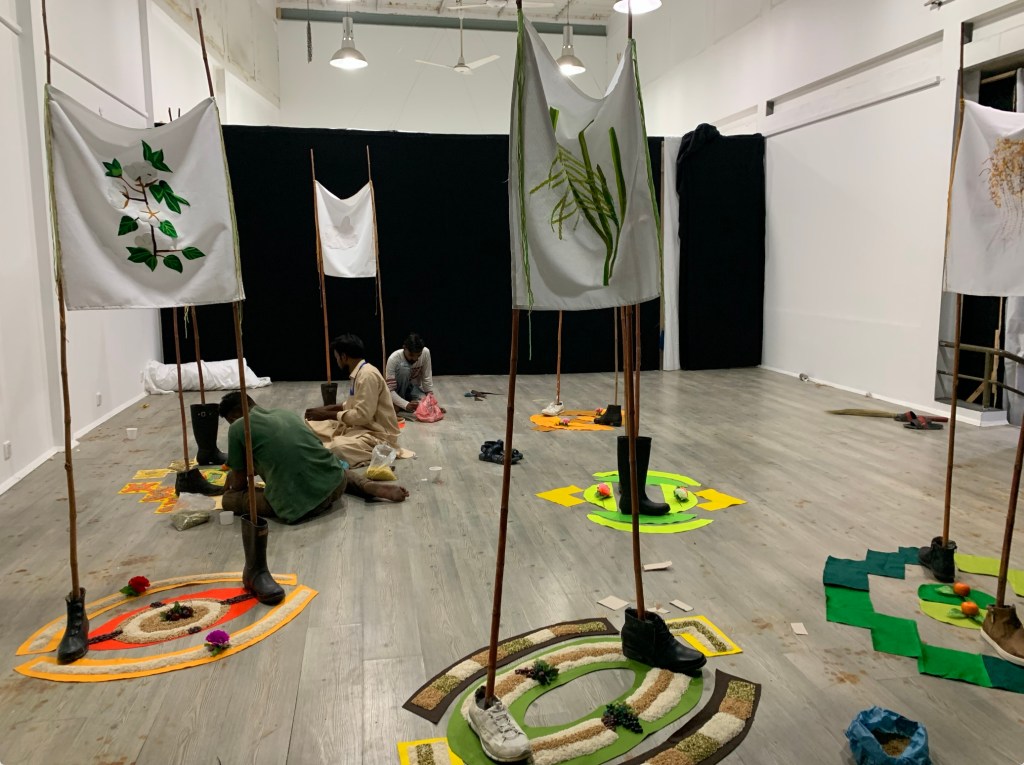
The work alludes to food crises brought on by capitalist dynamics, nature and workers’ exploitation, the alteration of environments for the sake of profit and climate change. The precarity of food production is shown through protest banners with images of agricultural produce common to Pakistan and Peru sewn into them, mounted in the shoes of workers. Grains and plants common to both countries are laid on the ground around the banners, in a reference to a traditional Peruvian practice of making offerings to the soil.

“Pago a la Tierra”, a phrase that resists translation into English, since in Spanish “tierra” means both soil and land, is the name of fertility and gratitude rituals that survive centuries of colonization in Peru. Such rites are collectively passed on, permeating urban contexts after being initially practiced in rural Andean regions. Nowadays they constitute an expanding practice to reconnect with ancestors, belonging, time and space beyond anthropocentric and westernized paradigms.

The installation invites us to view agricultural systems with care and concern, to acknowledge our dependence of the complex networks sustaining life and to rethink labor and consumption in response to current planetary challenges.

En octubre de 2024 viajé a Pakistán para participar en la Bienal de Karachi, curada por Waheeda Baloch con el tema Riesgo, alimentos, futuro y prácticas justas. Este es el texto que escribí sobre mi trabajo:

Pago a la Tierra

La obra alude a las crisis alimentarias provocadas por la dinámica capitalista, la explotación de la naturaleza y de los trabajadores, la alteración del medio ambiente en aras del beneficio y el cambio climático. La precariedad de la producción alimentaria se muestra a través de pancartas de protesta con imágenes de productos agrícolas comunes a Pakistán y Perú cosidas en ellas, montadas en los zapatos de los trabajadores. Alrededor de las pancartas se colocan en el suelo granos y plantas comunes a ambos países, en referencia a una práctica tradicional peruana de hacer ofrendas a la tierra.

«Pago a la Tierra», una frase que se resiste a ser traducida al inglés, ya que en español “tierra” significa tanto suelo como tierra, es el nombre de rituales de fertilidad y gratitud que sobreviven a siglos de colonización en Perú. Dichos ritos se transmiten colectivamente, impregnando los contextos urbanos tras haberse practicado inicialmente en las regiones rurales andinas. Hoy en día constituyen una práctica en expansión para reconectar con los ancestros, la pertenencia, el tiempo y el espacio más allá de paradigmas antropocéntricos y occidentalizados.

La instalación nos invita a mirar los sistemas agrícolas con cuidado y preocupación, a reconocer nuestra dependencia de las complejas redes que sostienen la vida y a repensar el trabajo y el consumo en respuesta a los actuales desafíos planetarios.

Towards a Vulnerable Voice for Mouries’ 2024 public program

During May I guided the workshop Towards a Vulnerable Voice, in collaboration with the Greek singer and performer Yorgia Karidi and the Greek writer and curator Angelikí Tzortzakaki. This workshop was part of our collective Mouries’ public program Healing Exercises: Inherited and (e)merging women’s knowledges for collective learning and interspecies connections. Here’s some info about it:

«What kind of knowledge, truths and secrets are hidden in our voices, waiting to be passed on? How often do we let ourselves be vulnerable when saying or singing what we feel and desire? How to build up spaces of trust that welcome someone else’s vulnerable sounds? 

For centuries, women and feminised bodies have been traditionally silenced, repressed, mocked or criminalised. Their voices had a similar fate and in many cases still do. To counteract the multiple oppressions, they have developed networks of resistance by bringing their vulnerability forward, despite it being stereotypically considered and portrayed as a synonym of weakness and passivity. Often at risk, they have shared and transmitted tools to support each other while making themselves heard by learning how to take up space and hold that space together. 

In this workshop we’ll explore how to collectively access what our voices, sounds and bodies have to tell us about who we are and who we can be.»


Durante el mes de mayo dirigí el taller Hacia una voz vulnerable, en colaboración con la cantante e intérprete griega Yorgia Karidi y la escritora y curadora griega Angelikí Tzortzakaki. Este taller formaba parte del programa público de nuestro colectivo Mouries, Ejercicios Sanadores: Saberes Heredados y Emergentes de mujeres para el aprendizaje colectivo y las conexiones interespecies. Aquí un poco de información al respecto:

«¿Qué tipo de conocimientos, verdades y secretos se esconden en nuestras voces, esperando a ser transmitidos? ¿Con qué frecuencia nos permitimos ser vulnerables al decir o cantar lo que sentimos y deseamos? ¿Cómo construir espacios de confianza que acojan los sonidos vulnerables de otra persona?

Durante siglos, las mujeres y los cuerpos feminizados han sido tradicionalmente silenciados, reprimidos, escarnecidos o criminalizados. Sus voces han corrido una suerte similar y, en muchos casos, siguen haciéndolo. Para contrarrestar las múltiples opresiones, han desarrollado redes de resistencia sacando a relucir su vulnerabilidad, a pesar de que se la considera y retrata estereotipadamente como sinónimo de debilidad y pasividad. A menudo en situación de riesgo, han compartido y transmitido herramientas para apoyarse mutuamente al tiempo que se hacían oír aprendiendo a ocupar un espacio y a mantenerlo juntas.

En este taller exploraremos cómo acceder colectivamente a lo que nuestras voces, sonidos y cuerpos tienen que decirnos sobre quiénes somos y quiénes podemos ser.»

PAIN COLLECTIVELY SUNG, JOYS AND TEARS TOGETHER WE HUM / CANTAMOS EL DOLOR COLECTIVAMENTE, TARAREAMOS JUNTAS ALEGRIAS Y LAGRIMAS

On May, I guided the workshop Pain Collectively Sung, Joys and Tears together we Hum, in collaboration with Xanthoula Dakovanou, as part of Healing Exercises: Inherited and (e)merging women’s knowledges for collective learning and interspecies connections, the 2023 public program organized by the collective I belong to, Mouries.

Description of the workshop:

A vocal music therapy workshop focused on the creation of contemporary vocal rituals, based on the ancient tradition of laments, as a way of addressing every-day loss related to the different crises that we traverse (sanitary, ecological, political). 

We’ll consider our different relationships to our voices, their relation to our contexts and their gendered aspects, as departure points to share questions and experiences. The core of the workshop is a weekend dedicated to explore experiences of loss to create our own lamentations, supported by the music therapist and the group. We will do voice exercises, collective readings and discussion, drawing, writing and a closing farewell ritual. 


En mayo, guié el taller Pain Collectively Sung, Joys and Tears together we Hum, en colaboración con Xanthoula Dakovanou, como parte de Healing Exercises: Heredando y (e)fusionando saberes de mujeres para el aprendizaje colectivo y las conexiones interespecies, el programa público 2023 organizado por el colectivo al que pertenezco, Mouries.

Descripción del taller:

Un taller de musicoterapia vocal centrado en la creación de rituales vocales contemporáneos, basados en la antigua tradición de los lamentos, como forma de abordar las pérdidas cotidianas relacionadas con las diferentes crisis que atravesamos (sanitarias, ecológicas, políticas).

Consideraremos nuestras diferentes relaciones con nuestras voces, su relación con nuestros contextos y sus aspectos de género, como puntos de partida para compartir preguntas y experiencias. El núcleo del taller es un fin de semana dedicado a explorar experiencias de pérdida para crear nuestros propios lamentos, con el apoyo del musicoterapeuta y del grupo. Haremos ejercicios de voz, lecturas y debates colectivos, dibujo, escritura y un ritual de despedida final.

Una «conversación» en la Bienal de Mercosur

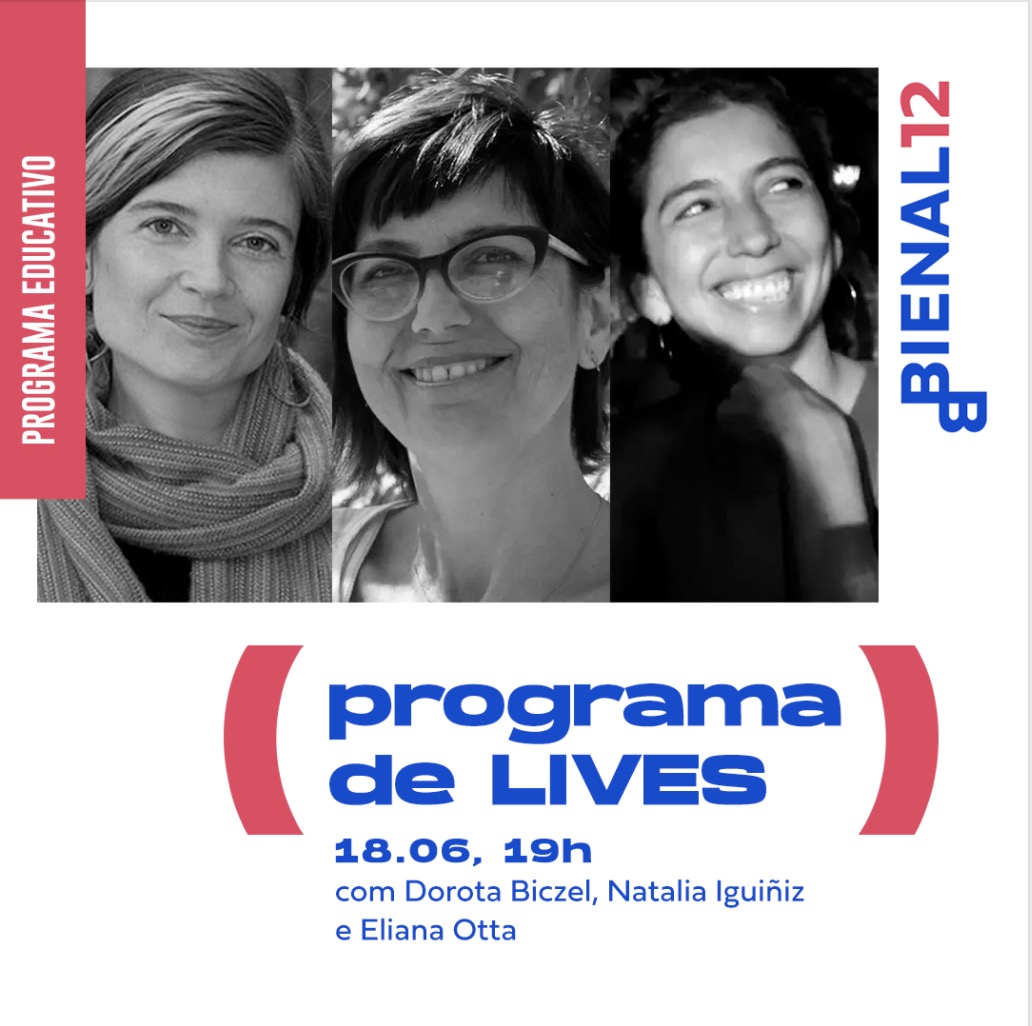
En este link se puede ver la conversación que sostuvieron en el marco del LIVE del programa educativo, Dorota Biczel, una de las curadoras de la Bienal de Mercosur de este año, y Natalia Iguíñiz. Yo participé con una carta transformada en video para la ocasión, pues por la diferencia horaria y la mala conexión del lugar donde me encontraba, no pude estar en línea.

Screen Shot 2020-06-23 at 4.50.02 PM

Palabras de Mujeres en la Bienal do Mercosur (Online)

Un poco tarde comparto la noticia de mi participación en la Bienal de Mercosur, versión online, que ha sido curada por Andrea Giunta y Dorota Biczel. Esta edición, llamada Femininos, Visualidades, Afetos, cuenta con artistas con un trabajo muy valioso siempre, pero probablemente más en estos momentos, como Cecilia Vicuña, Ana Gallardo, Jota Mombaca, y otras…

Yo participo con mis piezas de la instalación Carmen y con el video Palabras de Mujeres, que puede verse completo en línea.


A bit late I share the news of my participation in the Bienal de Mercosur, online, curated by Andrea Giunta and Dorota Biczel. This edition, called Femininos, Visualidades, Afetos, includes artists whose work is always extremely valuable, but probably more in the present times, such as Cecilia Vicuña, Ana Gallardo, Jota Mombaca, among others…

I participate with my pieces from the installation Carmen and the video Palabras de Mujeres (Women´s words), which can be seen online in this link.


Palabras de Mujeres en Γ γυναικόπαιδα/ gynaikopaida

Thrilled to participate in this encounter at Twixt Lab:

More info: https://gynaikopaida.tumblr.com/

gynaikopaida

Neutral noun, in plural, gynaikopeda, women and children (in conflict times the reference indicates them as the most common, helpless and defenseless victims).

#1 and #2
Departing from an artistic and theoretical approach of parenthood, the presentations aim to question the prevailing motherhood and fatherhood conceptualizations, the social mechanisms of inclusion and exclusion and the condition of biological and non-biological parenthood in social and legal context. Adopting a dialectical method between personal and political, we will attempt rethinking “art and parenthood” in a context where roles and identities are highlighted as topics of open and continuous negotiation.

Talks, interventions, performative actions, films and videos, painting, sculpture, photographs and literature, will constitute a field of meetings where moms and dads, daughters, sons, cousins, brothers, aunts and further relatives, will converse on gender identities, birth, medicalization and performativity of the female, feminized or effeminate body. Which is the role of works and expressions approaching body and memory politics, stereotypical -or not- representations of kinship and children, in a social context redefined by “different parenthood”? How can these “kinship articulations” constitute a referential artistic field that can be studied or archived?

The gynaikopeda encounters will take place in TWIXTlab on the 30th of May and the 6th of June, with the contributions of groups, duos, individuals, parents, those who want or don’t want to become parents, as well as those who held a position in respect.

^^^^^The talks and presentations will be held in greek or in other languages (unless decided otherwise during the events)

Participants

Rainbow Families

Stella Bellia (Rainbow Families president, kindergarten teacher, McS theater in education)
Paraskevi Damaskou (Rainbow Families member, actress, ΒcS in psychology)
Vanessa Veneti (Rainbow Families member, self-defense instructor)

OVO Hellas: «Gynecologic and Obstetric Violence: Now and then»

The Pink House, Antwerp, Ersi Varveri and Gijs Waterschoot

Ianthi Aggelioglou (visual artist), Sam Albatros, Ayşenur Babuna (entrepreneur, activist), Aggeliki Bozou (visual artist, performer), Despoina Gamvroudi (visual artist), Fotini Gouseti (visual artist, researcher), Sofia Grigoriadou (visual artist, PhD candidate, Panteion University), Tatiana Ilichenko (visual artist), Dimitra Kondylatou (visual artist), Αpostolos Lampropoulos (academic, professor of comparative literature, Université Bordeaux Montaigne), Tatiana Mavromati (photographer), George Miliarakis, Persefoni Myrtsou (visual artist, PhD candidate, Humboldt University), Μaria Nikiforaki (visual artist), Eliana Otta (visual artist), Κelly Ousantzopoulou (social anthropologist), Μaroula Papanastasi (aesthetician), Nikos Polymenakos (musician), Prokni (performer), Εlpida Rikou (social anthropologist, visual artist), Panos Sklavenitis (visual artist), Vasiliki Sifostratoudaki (visual artist), Naira Stergiou (visual artist, PhD candidate, ASFA), Maria Tzeferi (photographer), Μichailangelos Vlassis-Ziakas (visual artist), Τina Voreadi (visual artist).

organized and curated by Eva Giannakopoulou